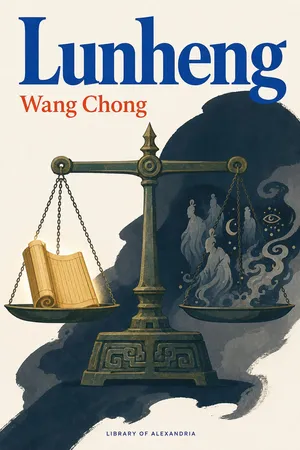
Does virtue lead to success? Does heaven answer human conduct? In Han-dynasty China, Wang Chong put cherished beliefs to the test.
Written in the first century CE, Lunheng is a wide-ranging work of Chinese philosophy that questions omens, supernatural stories, and the authority of received wisdom. Wang Chong examines accounts of Confucius and other sages, asking whether their lives reveal divine foreknowledge or the ordinary work of observation, inference, and fallible judgment. He weighs competing explanations rather than accepting a claim simply because an honored text preserves it.
His inquiry reaches from ghosts and rainmaking rituals to the relationship between character and worldly achievement. Talent and moral effort, he argues, cannot guarantee good fortune: timing, circumstance, and fate also shape a life. In debates about human nature, he considers both good and bad tendencies rather than reducing people to a single moral pattern. Though deeply skeptical of many traditional claims, Wang Chong values learning and moral cultivation. The enduring force of his essays lies in this combination of intellectual independence and a serious desire to understand how the world works.
What readers find inside:
- Fate and opportunity - Essays explore why ability and virtue do not reliably bring recognition or success.
- Nature and heaven - Wang Chong challenges the belief that natural events reward or punish human behavior.
- Ghosts and portents - Familiar supernatural claims meet explanations grounded in fear, imagination, and natural processes.
- Sages under scrutiny - Revered figures and inherited accounts are examined rather than placed beyond question.
- Human nature - Arguments about goodness and badness become an inquiry into differing human dispositions.
For readers of classical Chinese thought, histories of skepticism, and philosophical essays that challenge comfortable assumptions, Lunheng offers an encounter with a distinctive ancient voice.
Begin with Wang Chong's questions and reconsider what makes a belief worth holding.