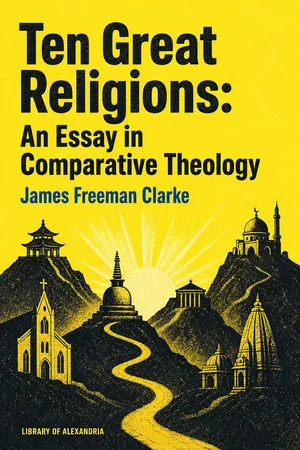
What can the faith of another culture reveal about our own deepest questions? James Freeman Clarke explores the beliefs that divide religious traditions and the spiritual aspirations that draw them together.
In Ten Great Religions: An Essay in Comparative Theology, the nineteenth-century Unitarian minister examines major faiths through their histories, sacred writings, practices, and moral teachings. His inquiry ranges across traditions including Hinduism, Buddhism, Confucianism, Zoroastrianism, Judaism, Islam, and Christianity, asking how different communities understand divine reality, human duty, and the purpose of life.
Clarke writes from a Christian and Unitarian perspective, but with a sustained interest in learning from beliefs beyond his own. His comparisons reflect the assumptions of his century as well as its widening encounter with world traditions. Read today, the work offers both an influential early example of comparative religious study and an invitation to think carefully about the relationship between conviction, sympathy, and understanding.
What readers find inside:
- Sacred traditions - Accounts of major faiths connect their central beliefs with their historical development.
- Texts and teachings - Religious writings provide a basis for exploring ideas about humanity and the divine.
- Ethical questions - Comparisons bring moral duty, justice, and spiritual aspiration into focus.
- Shared concerns - Different traditions offer distinct responses to enduring questions of meaning and conduct.
- A historical perspective - Clarke's approach reveals the possibilities and limitations of nineteenth-century interfaith inquiry.
This book will appeal to readers of religious history, students interested in the origins of comparative religion, and spiritual seekers who value thoughtful encounters with other beliefs.
Begin an inquiry into the many ways humanity has sought truth, moral purpose, and a higher life.