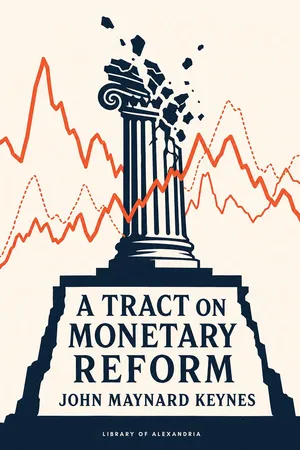
What happens when money stops holding its value? Keynes shows why stable prices matter not only to markets, but to everyone who earns, saves, borrows, or invests.
Written amid the economic disruption following the First World War, A Tract on Monetary Reform (1923) examines the consequences of inflation and deflation for everyday life. John Maynard Keynes traces how changes in the value of money redistribute wealth, unsettle contracts, and complicate business decisions. Currency instability is not merely a technical problem: it changes the relationship between effort, income, and security.
Keynes challenges the belief that sound policy must mean rigid obedience to the gold standard. He considers the tension between stabilizing domestic prices and maintaining fixed exchange rates, arguing for monetary management responsive to economic conditions. Written before his later work on employment and output, this book reveals an important stage in his thinking. Its lasting appeal lies in the connection it draws between financial institutions and human consequences-a connection that still matters whenever inflation dominates the headlines.
What readers find inside:
- Inflation and deflation - Keynes explains how rising and falling prices affect different groups in society.
- Savings and contracts - Changes in purchasing power alter the real value of debts, incomes, and accumulated wealth.
- The gold standard - The book questions whether a fixed metallic anchor can deliver the stability an economy needs.
- Prices and exchange rates - Keynes explores the competing demands of domestic stability and external currency commitments.
- Policy and judgment - His argument places practical economic needs above automatic rules for managing money.
For economics students, readers of financial history, and anyone seeking context for debates about inflation and central banking, this is a focused encounter with Keynes's early monetary thought.
Begin with the value of money, and discover how much of economic life depends upon it.