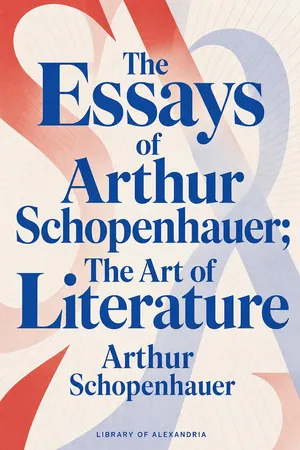
Good writing begins with something worth saying. Good reading demands more than accepting someone else's thoughts.
In The Art of Literature, Arthur Schopenhauer brings his direct, questioning intelligence to books, authors, and the life of the mind. These essays explore literary style, criticism, reputation, and genius, asking what separates lasting intellectual achievement from writing that merely attracts attention. Throughout, he treats language not as decoration but as an expression of thought.
Schopenhauer is especially provocative on the relationship between reading and independent judgment. Books can nourish the intellect, yet consuming the thoughts of others is no substitute for forming ideas of our own. His reflections on authorship and literary taste challenge readers to look beyond fashionable opinions and judge the substance behind the words. Whether discussing clarity of expression or the recognition of talent, he makes the encounter between philosophy and literature personal, demanding, and alive.
What readers find inside:
- Writing and style - Reflections on clarity, expression, and the connection between an author's language and ideas.
- Reading and reflection - A challenge to balance the influence of books with the work of thinking independently.
- Literary judgment - Questions about taste, criticism, and the standards by which writing deserves attention.
- Genius and recognition - An examination of intellectual originality and the uncertain relationship between merit and reputation.
- The writer's responsibility - A searching view of authorship as the communication of thought rather than the pursuit of effect.
For readers of philosophical essays, writers interested in style, and book lovers who want to examine their reading habits, this work offers both intellectual companionship and productive disagreement.
Begin these essays and reconsider what you ask of a book-and what you bring to it.