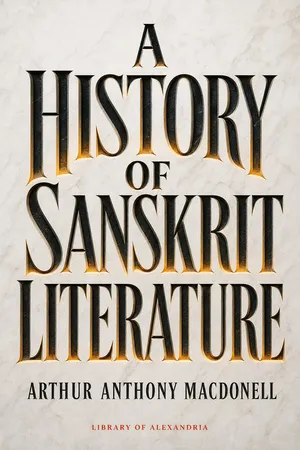
Behind India's great epics and sacred hymns lies a vast world of poetry, philosophy, drama, and inquiry. Discover how these traditions developed and what connects them.
In A History of Sanskrit Literature, Arthur Anthony Macdonell traces the development of a literary culture whose influence reaches far beyond any single genre. Beginning with Vedic writings, he explores the religious and philosophical traditions associated with the Upanishads, the great narratives of the Mahabharata and Ramayana, and the artistry of classical Sanskrit poetry and drama.
The survey also looks beyond imaginative and sacred writing to grammar, science, and other branches of learning. By placing these subjects within a broad literary history, Macdonell helps readers see how language, belief, storytelling, and intellectual inquiry developed together. His work remains valuable as a historical scholarly perspective and a starting point for discovering connections among texts often encountered separately.
What readers find inside:
- Vedic beginnings - Sacred hymns and early compositions reveal the foundations of Sanskrit literary culture.
- Philosophical questions - The Upanishads open a path into enduring inquiries about existence and spiritual knowledge.
- Epic traditions - The Mahabharata and Ramayana bring questions of duty and human conduct into expansive narratives.
- Poetry and drama - Classical writers, including Kalidasa, demonstrate the expressive range of Sanskrit art.
- Knowledge and language - Grammar and scientific writing show a literary tradition extending into systematic study.
For students of Indian literary history, readers of comparative literature, and anyone curious about the background of Hindu sacred texts, this survey provides a framework for further exploration.
Begin a journey through the writings that helped shape India's literary and intellectual life.