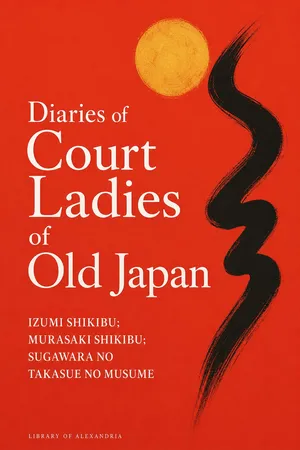
Behind the ceremonies of imperial life, women recorded a more private world: desire, disappointment, faith, and the ache of passing time.
Diaries of Court Ladies of Old Japan brings together the writings of Izumi Shikibu, Murasaki Shikibu, and Sugawara no Takasue no Musume, the author of the Sarashina Diary. Their accounts reveal Heian-era Japan through personal experience rather than official history, tracing the emotional lives of women for whom literary skill was both a social accomplishment and a means of self-expression.
Poems carry messages between lovers; clothing, manners, and ceremonies reveal distinctions of rank; recollections turn toward loss and Buddhist reflection. Izumi Shikibu's writing explores passionate attachment, while Murasaki Shikibu observes court society with a searching eye. The Sarashina Diary follows memories, literary longing, and spiritual concerns. Together, these voices preserve the texture of a vanished social world without losing the immediacy of individual feeling. Their lasting appeal lies in that balance: unfamiliar customs surrounding hopes and sorrows that remain close to our own.
What readers find inside:
- Three distinct voices - Personal accounts offer different perspectives on love, society, memory, and belief.
- Poetry in daily life - Verse becomes a way to court, respond, remember, and convey feelings that cannot be spoken directly.
- Imperial society - Observations of ceremony and social conduct show how rank and expectation shaped women's lives.
- Private emotions - Longing, solitude, and grief emerge within the formal rhythms of aristocratic life.
- Impermanence and faith - Reflections on passing beauty and Buddhist concerns give these writings their contemplative depth.
A rewarding choice for readers of classical Japanese literature, women's personal narratives, and cultural history, this collection invites both close attention and quiet reflection.
Enter the world of Heian women and discover the intimate lives behind its formal beauty.