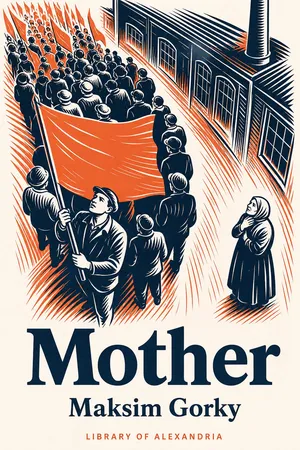
She has spent a lifetime learning to keep silent. Her son's dangerous convictions will teach her how to speak.
Set amid the factories and workers' homes of Tsarist Russia, Maksim Gorky's Mother follows Pelagueya Nilovna, a woman shaped by poverty and an abusive marriage. When her son Pavel begins bringing revolutionary comrades and forbidden literature into their home, her first response is fear. Yet their fellowship, convictions, and willingness to sacrifice gradually draw her into a world she had never imagined entering.
Through secret meetings, police searches, a May Day demonstration, arrests, and a courtroom confrontation, Nilovna moves from anxious witness to committed participant. Her growing solidarity with the workers does not simply erase her religious faith or her fears for Pavel. Instead, Gorky makes those tensions central to a story about political awakening as an intimate human experience. The novel's enduring force lies in the connection between public struggle and private transformation: a woman who has long endured suffering begins to believe that she can act against it.
What readers find inside:
- A changing inner life - Nilovna's gradual awakening gives the revolutionary struggle a deeply personal center.
- Factory life - Industrial labor, poverty, and exhaustion reveal the pressures shaping a working-class community.
- Underground resistance - Forbidden pamphlets and clandestine gatherings turn ordinary homes into places of risk and solidarity.
- Public defiance - The May Day march and Pavel's trial bring the conflict with Tsarist authority into the open.
- Faith and conviction - Nilovna's religious beliefs meet new ideas about justice, sacrifice, and collective responsibility.
For readers of Russian classics, politically engaged fiction, and stories of women finding their voices, Mother offers a searching portrait of courage learned through love and shared purpose.
Enter Nilovna's world and follow the small, perilous steps by which silence becomes resistance.