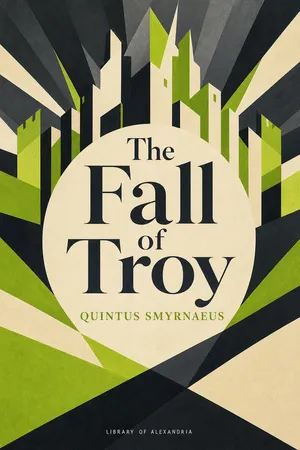
The Iliad ends with Troy still standing. Here is the epic story of what happens next.
In The Fall of Troy, Quintus Smyrnaeus takes up the Trojan War after Hector's funeral and follows its final struggles to the destruction of the city and the Greeks' departure. Across fourteen books, new champions enter the fighting, great warriors meet their deaths, and a long siege reaches its devastating conclusion through the deception of the Wooden Horse.
The Amazon queen Penthesileia and Memnon, son of the Dawn, bring fresh hope to the Trojans. Achilles faces his own death, while the contest for his armour sets Ajax against Odysseus with tragic consequences. Philoctetes returns with the bow of Heracles, and Cassandra's warnings go unheard. Writing in the Homeric tradition, Quintus pairs fierce combat with laments, heroic rivalries, and vivid comparisons drawn from storms, animals, and the changing seasons. The result is both a bridge between the Iliad and the Odyssey and a poem with its own vision of courage, suffering, and loss.
What readers find inside:
- New defenders - Penthesileia and Memnon enter the war as the Trojans struggle to hold back the Greek army.
- Achilles and Ajax - The death of one hero and the anguish of another reveal the destructive pressures of honour and rivalry.
- The bow of Heracles - Philoctetes returns to play a decisive part in the war's final phase.
- The Wooden Horse - Cunning achieves what years of fighting could not, while Cassandra's warnings are ignored.
- A city's suffering - The sack of Troy gives the epic's battles a stark human consequence.
This poem will appeal to readers of Homer seeking the next chapter, lovers of Greek mythology, and anyone drawn to ancient poetry that looks beyond glory to the losses war leaves behind.
Enter the final days of the Trojan War and follow its heroes to the night that changes everything.