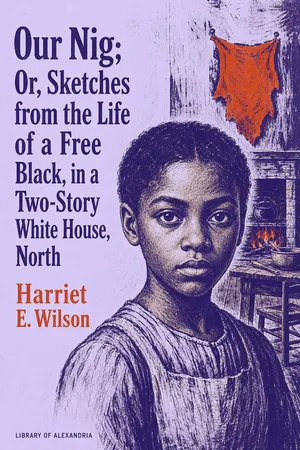
A respectable Northern home can conceal a world of cruelty. For one young Black girl, survival means learning when to endure-and when to resist.
Published in 1859, Harriet E. Wilson's Our Nig follows Frado, the daughter of a white mother and a Black father, who is abandoned as a child at the Bellmont household in New England. There she becomes an unpaid servant, subjected to exhausting labor and the violence of Mrs. Bellmont and her daughter Mary. Sympathy from others in the family offers little protection, but Frado's wit, pranks, and stubborn spirit refuse to disappear.
Drawing on Wilson's own experiences, this autobiographical novel exposes the gap between Northern opposition to slavery and the treatment of Black people within Northern homes. Faith, education, work, and charity become tests of a society's professed principles. Widely recognized as the first novel published in the United States by an African American woman, it remains a searching account of racial injustice and the struggle to build an independent life.
What readers find inside:
- Domestic oppression - The Bellmont household reveals how racial violence can flourish behind a respectable exterior.
- A defiant heroine - Frado answers humiliation with humor, resourcefulness, and acts of resistance.
- Kindness and complicity - Characters who offer comfort also expose the limits of sympathy without action.
- Spiritual searching - Religious encouragement exists alongside conduct that contradicts Christian beliefs.
- Life beyond service - Poverty, illness, and abandonment test Frado's efforts to support herself after leaving the household.
This novel will speak to readers of African American classics, autobiographical fiction, and literature that challenges familiar accounts of antebellum America.
Enter Frado's world and discover a voice that makes the cost of indifference impossible to ignore.