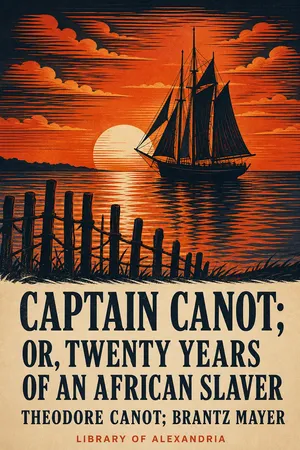
How does a man describe the suffering he helped create-and still defend his part in it? This slave trader's memoir offers a disturbing view of the Atlantic trade from within.
In Captain Canot; Or, Twenty Years of an African Slaver, Italian-born sailor Theodore Canot recounts his years in the slave trade along the West African coast. Baltimore writer Brantz Mayer shaped his testimony into a narrative that moves from merchant vessels to trading stations at the Rio Pongo and New Sestros, through captures, escapes, and imprisonment in France. Maritime danger shares the page with the business of buying, confining, and transporting enslaved people.
The account exposes the networks that sustained the trade: merchants, local rulers, ship captains, corrupt officials, and markets across the Atlantic. Canot's moments of sympathy sit beside calculations of human beings' monetary value, revealing the gulf between recognition and responsibility. Mayer's framing also reflects nineteenth-century debates over abolition and colonization. Neither narrator offers a neutral window onto Africa; the book's lasting value lies partly in what its assumptions and evasions reveal about the people who profited from enslavement.
What readers find inside:
- Coastal trading stations - Accounts of the Rio Pongo and New Sestros show how the trade operated on shore.
- Ships and naval patrols - Voyages, pursuit, and capture reveal the maritime struggle surrounding the traffic in enslaved people.
- Commercial networks - Encounters with traders and African leaders trace the interests and power relationships behind the trade.
- Moral contradictions - Canot's descriptions expose the coexistence of personal sympathy, financial calculation, and self-excuse.
- Contested historical testimony - Mayer's narrative framing places the account within the political arguments and prejudices of its era.
For readers of Atlantic history, maritime memoirs, and primary accounts of slavery, this is a challenging document that rewards attention to both what is said and how it is justified.
Begin this troubling account to examine the voices, interests, and evasions behind a system that shaped the Atlantic world.