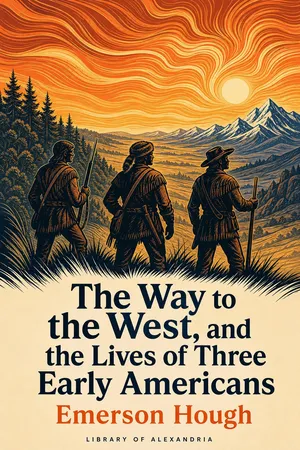
An ax, a rifle, a river crossing: the making of a nation begins with the means of moving through it.
In The Way to the West, and the Lives of Three Early Americans, Emerson Hough tells the story of American expansion through the equipment, landscapes, and people that carried settlement westward. From the Alleghanies and the Mississippi to the Rocky Mountains and the Pacific, he follows a changing frontier and asks how its demands shaped American character. The ax and long rifle become more than practical tools: they are central to his argument about self-reliance, mobility, and national ambition.
Three biographical portraits give this broad history a human focus. Daniel Boone embodies the forest frontier of Kentucky; Davy Crockett brings the Tennessee backwoods, public life, and frontier legend into view; and Kit Carson represents the mountain scout whose knowledge helped others navigate the country beyond the Rockies. Hough links their lives to successive stages of expansion rather than treating them as isolated heroes. His admiration for individual endurance sits alongside concern about the destruction of forests, the displacement of peoples, and the pressures of industrial power. Read today, the book offers both an expansive historical narrative and a revealing example of how the frontier was interpreted and remembered.
What readers find inside:
- Daniel Boone - Kentucky settlement and frontier conflict anchor a portrait of the forest pioneer.
- Davy Crockett - The hunter, soldier, and congressman brings together public history and the growth of an American legend.
- Kit Carson - The scout and mountain man illustrates the importance of experience and geographical knowledge in western exploration.
- Tools and Routes - Axes, rifles, waterways, and overland crossings explain the practical forces behind migration.
- The Costs of Expansion - Hough's account raises questions about environmental destruction, displacement, and the fate of individual independence.
A rewarding choice for readers of American frontier history, admirers of pioneer biography, and anyone interested in the relationship between national identity and historical myth.
Begin with the tools of the pioneer and follow Hough's account of a nation moving westward.