What happens when the life someone longs for cannot fit the world they inhabit? Willa Cather explores that tension in fiction-and brings an equally searching eye to the writers she reads.
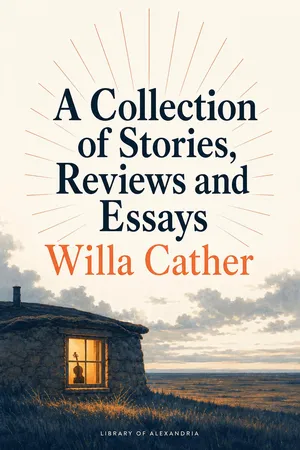
A Collection of Stories, Reviews and Essays brings together twelve works of short fiction and eleven pieces of literary criticism. The stories move from frontier Nebraska to New York City, following people whose hopes collide with isolation, social expectations, and the demands of work. In Peter, a Bohemian-born violinist faces the loss of his cherished instrument; in Ardessa, a secretary's confidence in her indispensable position comes under pressure. Across these different settings, Cather makes displacement both a practical struggle and an intimate emotional experience.
The criticism reveals a writer thinking closely about her craft. Cather considers figures including Mark Twain, Walt Whitman, Edgar Allan Poe, Henry James, and Kate Chopin with admiration that never rules out disagreement. When I Knew Stephen Crane offers a personal recollection of an encounter with another writer, while On the Art of Fiction addresses literary principles directly. Read beside the fiction, these pieces illuminate the relationship between artistic conviction and the difficult lives that give stories their substance.
What readers find inside:
- Frontier lives - Nebraska settings give shape to struggles over immigration, isolation, and belonging.
- Urban ambition - Office life and social position expose the uncertainty beneath confidence and status.
- Art and identity - Music and literature become expressions of longing, purpose, and personal dignity.
- Literary judgments - Cather weighs American writers with candor, close attention, and a willingness to dissent.
- A writer's craft - Her reflections on fiction reveal the value she places on precision and artistic integrity.
This collection will appeal to readers of classic American short fiction, admirers of Cather's prairie novels, and anyone interested in writers discussing the demands of their art.
Begin with a story or a critical portrait, and discover the concerns that connect Cather's imagined lives with her literary convictions.