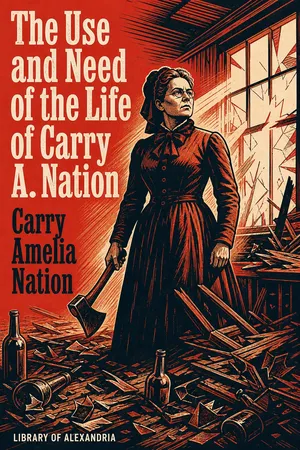
Before she became a symbol of prohibition, Carry A. Nation knew the damage alcohol could do at home. Her autobiography reveals the grief, faith, and defiance behind her campaign against the saloon.
In The Use and Need of the Life of Carry A. Nation, Nation traces her path from childhood in Kentucky and Missouri to adult struggles in Texas and Kansas. She recounts a first marriage shadowed by alcohol, the demands of caring for an ill daughter, and the poverty that tested her resolve. These personal experiences stand beside the public confrontations that made her famous: attacks on saloons, arrests, imprisonment, and an uncompromising insistence that the liquor trade must be challenged.
This is both a life story and an argument for direct action. Nation invokes Christian duty, describes visions and answered prayers, and challenges politicians, ministers, and legal officials whom she believed had failed their communities. Her accounts of Kansas saloons and the laws meant to restrain them offer a sharply partisan primary source for American social history. The book endures not because its author stands outside the controversy, but because she places readers directly inside it.
What readers find inside:
- Private hardship - Marriage, bereavement, illness, and financial struggle shape Nation's account of her calling.
- The Kansas campaigns - Saloon-smashing and its consequences appear from the perspective of the woman who carried the hatchet.
- Faith in action - Prayer and religious conviction underpin her understanding of reform and personal responsibility.
- Law and resistance - Nation sets out her moral and legal defense of action against illegal liquor establishments.
- Women and public power - Her views on suffrage, church life, and political failure illuminate the conflicts surrounding women's activism.
For readers of women's autobiography, students of the temperance movement, and anyone interested in the uneasy relationship between conscience and the law, this is a forceful encounter with a reformer speaking for herself.
Step beyond the familiar hatchet-wielding image and meet the woman who made her convictions a public battle.