What if the differences between lead and gold were stages in a natural process that human skill could bring to perfection?
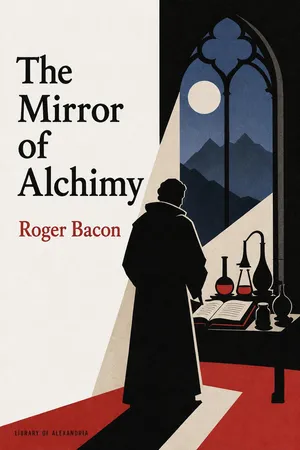
The Mirror of Alchimy, traditionally attributed to Roger Bacon, presents a compact account of medieval alchemical theory. Its seven chapters move from the definition of the art to the origins and properties of metals, the preparation of an elixir, and the proposed transformation of imperfect metals into gold or silver. At its centre is the belief that art can carry forward what nature has begun.
The treatise explains metallic matter through two principles: Argent-vive, or mercury, and sulphur. Their purity and proportions are said to determine the character of different metals. Discussions of vessels, furnaces, sustained heat, and changing colours show how alchemical writers connected a theory of nature with the work of the practitioner. Read as a historical text rather than a statement of modern chemistry, it reveals a world in which observation, inherited authority, and the search for hidden processes belonged to the same inquiry.
What readers find inside:
- Metallic origins - An account of how metals were believed to form within the earth and acquire their distinct qualities.
- Mercury and sulphur - The two principles used to explain metallic purity, imperfection, and the possibility of change.
- Vessels and heat - Reflections on the conditions the alchemical process was thought to require.
- Colours of transformation - Black, white, peacock, and red appear as signs of progress toward the desired result.
- Elixir and projection - The closing argument describes how a prepared substance was believed to perfect other metals.
For readers interested in the history of alchemy, medieval natural philosophy, or the roots of chemical thought, this short work offers direct access to the questions and assumptions that sustained the pursuit of transmutation.
Begin an encounter with a tradition that sought the possibilities of transformation within nature itself.