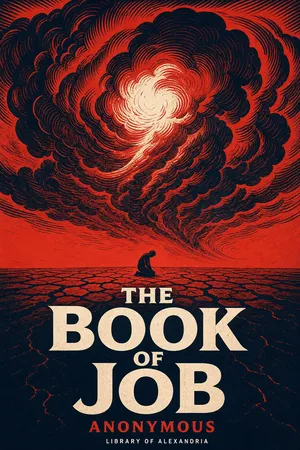
Why do the innocent suffer-and what happens when faith demands an answer? This ancient biblical poem gives that question a voice of extraordinary honesty.
In The Book of Job, a righteous man loses his children, his wealth, and his health. Three friends come to comfort him, but their consolation becomes accusation: they insist that suffering must be the consequence of wrongdoing. Job refuses to confess to sins he has not committed. In grief and anger, he calls on God to hear his case.
Part of the Hebrew Bible and the Christian Old Testament, this work of wisdom literature sets poetic debate within a prose narrative. Its speakers wrestle with justice, human knowledge, and the meaning of devotion when prosperity disappears. When God answers from the whirlwind, the response turns toward the vastness of creation rather than a simple explanation of pain. The tension between honest protest and confident religious argument has kept the work alive for readers across centuries.
What readers find inside:
- A heavenly challenge - The opening narrative tests whether righteousness depends on protection and prosperity.
- Disputed consolation - Eliphaz, Bildad, and Zophar offer arguments that Job challenges in his defense of his innocence.
- Another voice - Elihu questions both Job and the older speakers, offering a different view of suffering and divine communication.
- The whirlwind speeches - God's questions range across earth, sea, stars, and living creatures, including Behemoth and Leviathan.
- Loss and restoration - The ending brings rebuke and renewal without supplying Job with a direct account of why he suffered.
For readers of sacred scripture, lovers of ancient poetry, and anyone reflecting on grief or belief, this is a work that allows difficult questions to remain difficult. Its force lies not in easy reassurance, but in the seriousness with which it treats suffering and the desire to be heard.
Enter the debate and encounter an enduring exploration of faith under the pressure of loss.