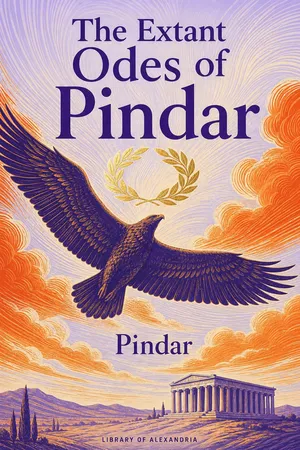
What makes a victory worth remembering? For the ancient Greeks, a champion's triumph could reveal the bonds between human effort, heroic legend, and the gods.
In The Extant Odes of Pindar, athletic achievement becomes the starting point for poetry about excellence and its limits. The forty-four surviving victory odes are grouped as Olympian, Pythian, Nemean, and Isthmian, reflecting the great festivals of the Greek world. Composed to honor successful competitors, they move far beyond the contest itself, placing the victor, his family, and his city within a larger landscape of sacred places and inherited stories.
Pindar brings the legends of Herakles, Achilles, Peleus, and Jason into conversation with the ambitions of living people. The fourth Pythian ode unfolds the story of Jason and the Argonauts; elsewhere, praise of strength and skill opens into reflection on wealth, humility, and divine favor. Brilliant images and sudden shifts of thought give these poems their distinctive energy. Their enduring appeal lies in the tension between the desire for lasting fame and the recognition that every human achievement has limits.
What readers find inside:
- Ancient athletics - Songs honor victors at the Olympian, Pythian, Nemean, and Isthmian games.
- Heroic mythology - Familiar Greek legends connect individual achievement with a shared cultural past.
- Jason and the Argonauts - The fourth Pythian ode gives the legendary expedition an expansive poetic treatment.
- Excellence and restraint - Praise of courage and accomplishment is balanced by warnings against arrogance.
- Wealth and remembrance - The poems consider how prosperity, generosity, and virtue shape a lasting reputation.
For readers of classical poetry, lovers of Greek mythology, and anyone curious about the place of sport in ancient life, these songs offer a rich encounter with Greek values beyond the battlefield and the tragic stage.
Begin with a champion's victory and discover the larger human questions carried by the song.