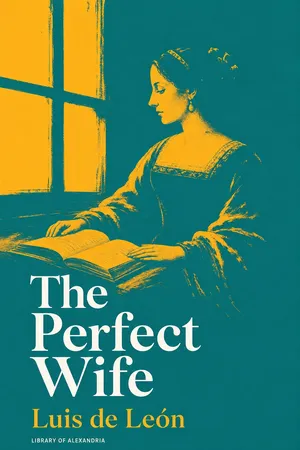
What did a virtuous marriage look like in Renaissance Spain? A friar's counsel to a newly married woman opens a revealing window onto faith, gender, and everyday domestic life.
Written around 1583, Luis de León's The Perfect Wife is a sustained commentary on Proverbs 31 and its portrait of the virtuous wife. The poet, theologian, and Salamanca professor brings scripture, classical learning, and close social observation to questions of household management, child-rearing, dress, speech, and religious conduct. For him, the care of a household is not separate from spiritual life: it is one of the places where virtue must be practised.
His argument also reaches beyond the wife's responsibilities. Husbands who demand devotion while offering harshness receive pointed rebukes, and outward displays of piety are measured against the less conspicuous demands of daily duty. At once moral instruction and a document of its age, this work invites readers to examine both the spiritual dignity it grants domestic labour and the restrictive expectations it places on women. Its forceful prose makes those tensions worth encountering firsthand.
What readers find inside:
- Proverbs 31 - A verse-by-verse reading connects the biblical ideal of a virtuous woman with married life.
- Household responsibilities - Work, children, and the treatment of servants become subjects of moral reflection.
- Marriage and respect - Counsel to husbands insists on honour and tenderness rather than harsh treatment.
- Virtue and appearance - Discussions of fashion, gossip, and conspicuous devotion test the distance between reputation and conduct.
- Renaissance learning - Classical writers and Christian authorities inform a distinctly sixteenth-century vision of domestic holiness.
This work will interest readers of Spanish Renaissance literature, students of Christian thought on marriage, and anyone exploring the history of women and household life.
Begin this searching encounter with an influential vision of marriage, duty, and faith.