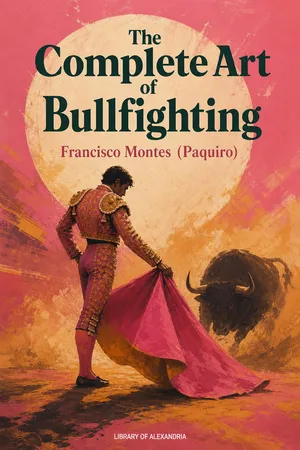
What turns a dangerous spectacle into a discipline-and what does its defense reveal about a nation?
In The Complete Art of Bullfighting, Francisco Montes, known as Paquiro, brings a matador's practical knowledge to the history and methods of the Spanish corrida. Beginning with its historical roots, the work follows the spectacle through medieval Spain, aristocratic tournaments, Moorish festivals, and royal patronage before turning to the conduct of the arena.
Montes treats courage as only one part of mastery. He classifies bulls by their behavior and explains how their changing responses shape the choices of fighters on foot and horseback. Cape passes, banderillas, mounted technique, and the killing thrust become subjects of close analysis. Alongside these technical discussions stands a defense of the corrida against moral, economic, and cultural objections. Read today, the treatise is both a record of arena practice and evidence of how a contested institution was justified by its advocates.
What readers find inside:
- Historical roots - A survey traces the development of the corrida through Spanish courts, festivals, and traditions.
- Bull behavior - Classifications distinguish temperaments and explain why different animals demand different responses.
- Arena technique - Discussions examine cape work, banderilla placement, and methods of delivering the estocada.
- Mounted practice - The role and techniques of the picador reveal the importance of horsemen within the spectacle.
- Cultural controversy - Arguments about morality, agriculture, labor, and national character show how supporters defended the corrida.
This work will interest readers of Spanish history, students of cultural traditions, and anyone seeking historical context for the continuing debate over bullfighting. Its account invites understanding of the tradition's internal logic without requiring agreement with its defense.
Begin with Paquiro's account and explore the knowledge and convictions behind the Spanish arena.