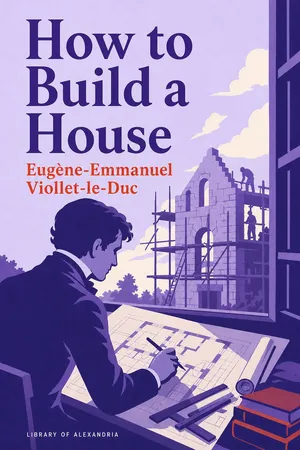
A boy dreams of a palace-and discovers that a good house begins with understanding how people live.
In How to Build a House, Eugène-Emmanuel Viollet-le-Duc turns a family building project into an education in architecture. Sixteen-year-old Paul, home for the holidays in the French province of Berry, eagerly sketches a house for his newly married sister. With guidance from his architect cousin Eugène, his grand ideas encounter the practical demands of planning rooms, choosing materials, managing costs, and making a building stand.
Combining family scenes, patient conversation, and close attention to the building trades, Viollet-le-Duc follows the work from early drawings and foundations to timberwork, roofing, and finishing details. Along the way, Paul learns to question decoration without purpose and to connect a building's appearance with its structure and use. The result is both a young beginner's education and an accessible account of the judgment, cooperation, and skilled labor behind a well-designed home.
What readers find inside:
- Planning with purpose - Paul's first drawings reveal why a handsome exterior cannot make up for inconvenient rooms and awkward circulation.
- From foundations to finishes - The building project introduces masonry, timberwork, staircases, chimneys, slating, plumbing, and joinery.
- A practical mentor - Cousin Eugène uses questions and criticism to help Paul replace guesswork with informed decisions.
- Respect for craftsmanship - Encounters with builders and tradespeople show the knowledge and responsibilities involved in construction.
- Architectural principles - Discussions of beauty, convenience, and honest construction invite readers to consider what makes a house successful.
A rewarding choice for architecture enthusiasts, readers curious about traditional building crafts, and anyone who enjoys stories of learning through practical work.
Join Paul at the drawing board and building site to discover how an imagined house becomes a working home.