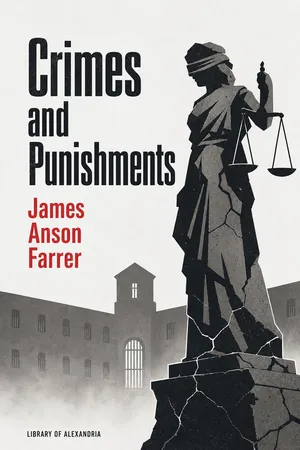
What makes a punishment just: its severity, its usefulness, or its respect for human life? This study returns to the Enlightenment debate that challenged the authority of cruelty.
In Crimes and Punishments, James Anson Farrer brings together Cesare Beccaria's landmark treatise Dei Delitti e delle Pene and chapters examining Beccaria's life, influence, and place in European criminal law reform. At its heart lies a searching question: how can society protect itself without allowing punishment to become another form of violence?
Beccaria's arguments against torture and capital punishment helped reshape discussion of the state's right to punish. Farrer places those arguments within the history of reform, connecting legal principles with the moral assumptions that sustain them. The result offers a way into debates about proportionate penalties, deterrence, and the relationship between public safety and individual rights-questions that remain unsettled wherever laws are made and enforced.
What readers find inside:
- Beccaria's challenge - An influential argument subjects criminal penalties to the tests of reason, necessity, and public benefit.
- The limits of power - The work asks what authority society may legitimately exercise over the individual.
- Torture and execution - Cruel methods of punishment become subjects of moral and legal scrutiny rather than unquestioned custom.
- European reform - Farrer traces Beccaria's influence within the movement to change criminal law.
- Justice and deterrence - The discussion weighs the purposes of punishment against the suffering it imposes.
For readers of legal history, Enlightenment philosophy, and the ethics of criminal justice, this work offers historical perspective on arguments still shaping courts and public debate.
Begin with the question behind every sentence a court imposes: what is punishment for?