This book is a fast-paced and thorough re-evaluation of what heritage tourism means to the people who experience it. It draws on contemporary thinking in human geography and heritage studies, and applies it to a sector of tourism that is both pervasive yet poorly researched in terms of the perspective of tourists themselves. In a series of lucid and tightly argued chapters, it traces the use of semiotics as an analytical tool from its theoretical origins in text, through the all-important dynamics of visuality into an expanded realm of feeling and sensuality. Challenging assumptions about the way that heritage is experienced, this book uses examples from around the world to explore the semiotic landscape that surrounds heritage sites, linking what is represented about the past and how it feels to be there.
- 168 pages
- English
- ePUB (mobile friendly)
- Available on iOS & Android
eBook - ePub
The Semiotics of Heritage Tourism
About this book
Information
Topic
Ciencias socialesSubtopic
Hostelería, viajes y turismo1 An Introduction
As researchers interested in heritage we are no strangers to travel. Indeed, we have had the good fortune of visiting quite a number of heritage tourism sites, both the iconic and those less so. To some we arrived already prepared and informed, well-thumbed guidebooks clutched in our hands and firm plans drafted to capture the multiple experiences we have heard about elsewhere. At others, we shuffled onto the scene far less certain, with only the slightest inkling of what we might encounter and feeling in those moments a nervousness – fear almost – of the unknown. There have been, too, occasions that have erupted as curious mixtures of the two, in which our informed expectations were exceeded or disrupted by atmospheres that modulate our behaviour in ways we could never have anticipated. Visiting the city of Derry in Northern Ireland is a good case in point, for this is a city with a serious reputation. Even if one were to turn up there without the tourist’s requisite and dog-eared copy of the Lonely Planet Guide, there is a chance its reputation would precede it, if only through the U2 song, ‘Sunday Bloody Sunday’, released in 1983. We might know, for example, something about ‘The Troubles’; perhaps, too, we may recollect something about the Apprentice Boys or the ‘Battle of Bogside’. Certainly, we might expect to see depictions of the city’s history etched onto its everyday landscape, with urban murals spatially articulating a reminder of the politics, violence and bloodshed. We could easily anticipate such physical traces and historical disclosures, and in so doing encounter a city that looks very much how we always imagined it to be.
But our bodies are never really detached from what we are visiting: our skin, ears, nose, fingertips, feet, stomach and heart register things, too. Yet sometimes this capacity for a place like Derry to affect, to get inside us bodily, can come as a surprise. While we anticipate the history, we may be less expecting of the sense of haunting that accompanies difficult pasts. We may never, until that moment, have paused to really consider the way traumatic memories can hang in the air or colour a space, shadowing landscapes in ways that toy with our own moods. We might not previously have thought about how such moods, and the moods of others, are contagious, stirring up feelings of anxiety and discomfort, relentlessly. Perhaps the sky is overcast on the day of a visit, provoking only muted conversation and a solemnity that works to further intensify the moment. Nonetheless, standing among the city’s buildings, in the midst of its streetscapes, surfaces and a medley of murals, we often find ourselves opening up to an atmosphere that is charged with emotion that links us directly with the history and politics of the place: dissonance, conflict, violence and the potentialities of a new found peace. Here, again, it begs an understanding of the ways in which these meanings and impressions are vectored towards us, around us and between us.
This concern with atmosphere and emotion dislodges something that has become established in the semiotic canon – and that is the dominance of ‘the visual’ and its concern with ways of seeing the world. That said, it is hardly surprising that the visual, to date, has remained the dominant sense in this and many other contexts. It is implicated in the long development of western culture with its obsessive interest in text, image and the iconic. The milestone moment of the introduction of perspective and the re-introduction of classical realism into the visual arts in the 15th century still reverberates. Likewise, the introduction of printing and the mechanical reproduction of text and images continues today on a scale unimaginable just a few decades ago, thanks to the inherent visualities of cyberspace. Our understanding of heritage tourism is naturally influenced by these visualities, as indeed is the practice of tourism itself, as discussed in its discursive contexts by Jaworski and Pritchard (2005), with its central practice of ‘sight-seeing’, its strange rituals of photography and the anticipations that energize the tourist gaze. But it has long been understood that other senses are implicated in tourist practice, and that the presence of the body itself is an essential prerequisite, even though this has been largely overlooked when what is seen is so often all that is seen (Crouch, 2000, 2011; also Robinson, 2012; Waade & Jørgensen, 2010).
This provides our point of departure, the potential to contribute to a changing perspective. While this is a book that explores the semiotics of heritage tourism, it will be obvious from our opening paragraphs that it does so in a way that seeks to dislodge the dominance of ‘the visual’ from this type of theorizing and more fully explore the complexity involved in meaning-and sense-making processes within heritage tourism, especially where this is now such a globalized phenomenon replete with a variety of experiences and cultural productions, all of which demand more complex and sophisticated forms of analysis (Jaworski & Pritchard, 2005: 5–7). Of course, we remain interested in the iconic, the intense and all those sites and experiences that seem so neatly and easily to gather together the visual and the emotional. But we are interested, too, in those quieter, often more banal, places. Because in them there can gather an intensity that flickers, just for us: a memory triggered from childhood; the chance to finally unwind and relax; to be with friends, family or alone. But if this is to be our point of departure, we need to be clear about what we are taking with us and what we are leaving behind. Critiques of the visual have emerged in the broader social sciences as well as those disciplines and fields more closely related to heritage, such as archaeology, anthropology, cultural studies and tourism. While it no longer seems supportable to ‘privilege’ the visual in quite the way it always has been, it is still hugely significant. Indeed, informed by a range of broader philosophical developments, such as post-structuralism and postmodernism, it is a concept that has been revivified time and again, in concepts such as ‘representation’, ‘signification’, ‘visuality’ and so forth. As Castree and MacMillan (2004: 471) have so powerfully argued, ‘[t]here is more to the world than representation…but representation is nonetheless a powerful world-disclosing and world-changing technology. That is, it is practical and performative; it is a tool and it assuredly has effects’.
And so, with all this in mind, the explorations of heritage found in this book take the visual and its representational corollaries forward, but combine them with other elements associated with non- or more-than-representational theory. Broader notions of performativity and experience that are well established in the literature, and especially in this series (see for example Lee Jolliffe’s explorations of the intersections of global products, such as tea (2007), coffee (2010) and sugar (2012), with cultural production and heritage; see also Jack & Phipps, 2005), provide the backdrop. In acknowledging the broader frameworks of analysis that such studies imply, we are interested in the particular aspects of emotion and affect that can be sensed in the landscapes of heritage tourism and the way that these, as embodied experiences, can interact with the representational aspects of those same landscapes. That sets out our stall, but there is a trajectory of thinking and theoretical development that is in itself relevant to the way this book unfolds, and which forms the core of the following chapter. First, however, we lay out our broader theoretical intentions.
Expanding the Semiotic
Both tourism and heritage are fields that are well established as being inherently visual, with the ubiquity of maps, brochures, paintings, websites, landscapes, advertisements and movies all ‘speaking’ to the centrality of the image. This multimodal textuality as a characteristic of tourism discourse has been noted previously and applied in case studies and research (see especially Jaworski & Pritchard, 2005, for an important contribution in this series). Indeed, there is considerable scholarship around these topics, with almost every scholar in the field finding some level of familiarity with early studies on postcards, brochures and photographs, whether it be that penned by Chalfen (1979), Albers and James (1988) or Mellinger (1994), perhaps. More profoundly still, we expect that it would be the work of Dean MacCannell (1976) on The Tourist and John Urry’s work on The Tourist Gaze (1990) that springs to mind for most as paving the way for a ‘visual turn’ within both fields (see Palmer, 2009: 75; Waterton & Watson, 2010). While this literature is undoubtedly an established and critical part of the academic canon, it is now being asked to respond to and accommodate more recent developments in theory that are focused on immediacy and engagement rather than the more familiar post-structuralist accounts of symbolic and ideological representation (see Jack & Phipps, 2005; Picard & Robinson, 2012). This sort of emergent theory, which focuses upon emotion, performance, embodiment and experience, poses a challenge to the ways in which ‘the semiotic’ is seen to work in the formation of heritage tourism meanings, from both an empirical and theoretical standpoint (see work by Little, 2010; Waade & Jørgensen, 2010, as examples).
Moving in this direction, it is important to be clear about the way that performativity and experience articulate with the symbolic realm and what the implications are for expanding the semiotic. To start with, we want to be explicit about how much of the canon of non-representational theory (often referred to with the shorthand NRT, though we prefer the phrase suggested by Hayden Lorimer (2005) ‘more-than-representational’) will be touched upon in this volume. While clearly informed and influenced by this broader theoretical agenda, we offer more of a flirtation, to borrow from Crouch (2010b), as we are content to leave its harder theorizations aside for this volume (but see Waterton & Watson, 2013). Instead, the key issue that we will press forward with is affect, including its politics, affordances, registers and emotional formulations. The reason for this, as intimated above, draws from an acknowledgement of the significance of ‘the body’ in tourism and its role in registering, experiencing and responding to touristic places. Like others before us (see Veijola & Jokinen, 1994), we are drawn to the argument that it is the body that is responsible for framing touristic experiences and that it does this in a variety of ways: from the desire and anticipation that influences behaviour (Pritchard & Morgan, 2010), motivation and choice, to movement, through travel itineraries, touring, wandering, gazing, exploring, visiting attractions, eating, feeling tired, feeling sick, waiting in airports and railway stations, walking down a street, feeling light and shade, happiness, gloom, boredom, excitement and disappointment. Indeed, there is a whole repertoire of embodied performances and sense registers rooted in the framing of tourist experiences that hinge upon the body. Seen from this angle, representations are not only contextualized, they seem like the icing on the cake. But they are not, as Robinson (2012: 41) has stated:
While it is no doubt the case that the sights, sounds, tastes, smells and touch of the world can stimulate our emotions what we feel, how we feel it and importantly, how we comprehend and express what we feel, is far more complex. As tourists we have moments of joy, moments of sadness, anger and fear (and much angst), often fleeting, often within close proximity of each other; emotions that we would not have experienced had we not travelled. But we also bring our emotions to bear upon the world; our histories and understandings of encounter.
So emotions, affects and representations of these are closely interwoven, and never more so than in that culminating act of framing in tourism – the taking of a photograph. Here, the body is posed and poised, both as photographer and photographed, and represented in situ in relation to other bodies, spaces, places and predispositions that emerge from representations and existing narratives.
For heritage tourists, the photograph is the culmination of the sight/site as seen (and for this reason often replicates established viewpoints depicted in guidebooks, brochures and postcards), but it also affords opportunities to capture moments of engagement with heritage objects by framing them in certain ways or by putting ourselves in the picture, juxtaposed, expressively, in relation to the objects and places concerned. For us, then, the photograph is emblematic of the embodied nature of the tourist experience and is affective to the extent that it is produced in moments of engagement that are less than expressive and at the same time more than representational, which is an idea we develop from the work of Bærenholdt et al. (2004). Our engagement with photography itself is, of course, nothing new. Indeed, the coalescence of heritage, tourism and photography is reflective of a far longer history, tracing back at least to the Renaissance and, particularly, its concerns with the scopic qualities of modern travel. These, Osborne (2000: 4) argues, prompted a need to ‘explore in every direction’, in order to:
… fill a great emptiness that had opened up in the cosmology and the sense of self of many Europeans … this emptiness induced the urge to travel, to fill the spatial void with human presence, or to find whatever was imagined to have been lost. It impelled the creation of images to fill the vacant spaces with human features and meanings or to draw the dreamer or traveller towards a world that might be repossessed.
Unsurprisingly, the urging underpinning of early photography combined easily with European imperial expansion in the 19th century, with the two working in tandem to extend the reach of western scopicity. As Osborne (2000: 7–8) goes on to argue, this bringing together of visual representation, travel and the colonial enterprise introduced an interest in visual–observational approaches as a mechanism that allowed an escape from the limitations of traditional modes of description. The role of heritage objects in this visual nexus is also historically formulated, not least because historical objects, such as those of the Grand Tour, the Arcadian, the picturesque and the romantic, have become so deeply embedded in the experience of heritage tourism. As Osborne (2000: 82) implies, though he is focusing specifically on what he sees as the allure of ruins as ‘[e]mblems of lost times’, such historical objects, heritage places and associated experiences:
…have long featured in tourism’s itineraries expressing, as Dean MacCannell has demonstrated, modern society’s desire to recover, in the cultures of other places and other epochs, the authenticity it imagines it has lost in its own.
The relationship between heritage and tourism, and the link they collectively share with photography, thus creates a dual concern with the visual and what it might mean in a culturally modulated sign system, such that:
[t]he effects of photography’s presence in the tourist system merely complete[s] a process under way before photography’s birth. (Osborne, 2000: 82)
While we do not want to go into historical territory already explored, suffice it to say that it is hardly surprising that semiotics, as it has been conventionally construed, has nestled in the visual whenever it has ventured from the textual and, indeed, that the visual has been its first port of call when text has been exhausted. But the body in tourism opens up further avenues of semiotic analysis. The way the body is, feels and moves in space generates meanings of its own that stand in relation to the visual and the representational. An example of this occurred to us when we were completing this book in Los Angeles. Our visit there inevitably included time out for a trip to Hollywood, where a conventional symbol, the famous and iconic ‘Hollywood’ sign on the hillside overlooking Hollywood Boulevard and the Sunset Strip (see Figure 1.1), might be expected to energize our engagement with the place. It did not.
Instead, our tiredness after a busy day, our need to rush to make it to a theatre performance and our protracted wait in the queue outside the theatre constituted an embodied, experiential intervention that disrupted the power of the sign. Our tiredness and irritation left us deflated and underwhelmed. The Hollywood sign seemed small and insignificant, and Hollywood itself felt scruffy, tired and dismissive. The active semiotic, in both the name ‘Hollywood’ and the sign itself, seemed to refer to something in the imagination rather than anything we were experiencing directly by being there.
This relationship between bodies, experience and representation is central to the lines of enquiry posited in this book and the way that we employ affect to open the debate. By focusing on broader notions of engagement, the volume holds at its core the intention of developing a richer understanding of heritage tourism, one that takes account of more recent thinking, in both visuality and performativity, in an attempt to grasp the sensual, emotive and embodied aspects of heritage tourist experiences. The book therefore adopts an approach that both briefly reviews the traditional role of semiotics in heritage tourism as well as proposing an agenda for future research, an agenda that has been made more pressing by the emergence of, and challenges posed by, more-than-representational theory and its associated concepts of emergent meaning and performativity. This theoretical advance re-evaluates the significance of semiotic analysis in heritage tourism at a time when there are major developments taking place in the theoretical landscape that surrounds it. Key to this will be a thorough exploration of the role of semiotic analysis within this emerging theoretical landscape, identifying not only valid and viable methods of analysis, but the forms emerging research might take.
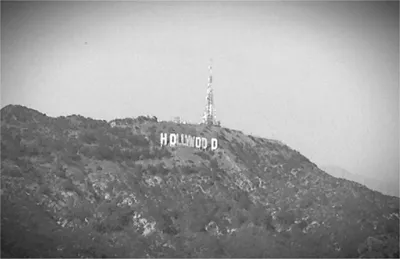
Figure 1.1 The Hollywood sign (Source: Emma Waterton)
The Structure
The volume opens with a historicizing of semiotic theory and reflections on its relevance to heritage tourism in a chapter we have called Advancing Theory. To commence the piecing together of our own particular theoretical framing, the chapter begins with a review of broader semiotic interventions, focusing particularly (and unsurprisingly) on the pioneering work of Ferdinand de Saussure and Charles Peirce, before turning to examine the semiotic inquiries that have been undertaken in the fields of tourism and heritage studies more specifically. There, the work of key authors, including Dean MacCannell, John Urry, Annette Pritchard, Nigel Morgan and Catherine Palmer, among others, is foregrounded, particularly their post-structuralist inspired explorations of the symbolic workings of power and ideology within tourism representations. Advancing Theory, as the title suggests, also contains an articulation of what we have termed ‘the semiotic landscape’ of heritage tourism, which we see as broadening significantly the parameters of semiotic analysis in response to recent non- and more-than-representational theorizations. With this ad...
Table of contents
- Cover
- Title Page
- Copyright
- Contents
- Acknowledgements
- 1 An Introduction
- 2 Advancing Theory
- 3 Signing the Past
- 4 Marketing the Past
- 5 Remembering
- 6 Living with the Past
- 7 Conclusions
- References
- Index
Trusted by 375,005 students
Access to over 1.5 million titles for a fair monthly price.
Study more efficiently using our study tools.
Frequently asked questions
Yes, you can cancel anytime from the Subscription tab in your account settings on the Perlego website. Your subscription will stay active until the end of your current billing period. Learn how to cancel your subscription
No, books cannot be downloaded as external files, such as PDFs, for use outside of Perlego. However, you can download books within the Perlego app for offline reading on mobile or tablet. Learn how to download books offline
Perlego offers two plans: Essential and Complete
- Essential is ideal for learners and professionals who enjoy exploring a wide range of subjects. Access the Essential Library with 800,000+ trusted titles and best-sellers across business, personal growth, and the humanities. Includes unlimited reading time and Standard Read Aloud voice.
- Complete: Perfect for advanced learners and researchers needing full, unrestricted access. Unlock 1.5M+ books across hundreds of subjects, including academic and specialized titles. The Complete Plan also includes advanced features like Premium Read Aloud and Research Assistant.
We are an online textbook subscription service, where you can get access to an entire online library for less than the price of a single book per month. With over 1.5 million books across 990+ topics, we’ve got you covered! Learn about our mission
Look out for the read-aloud symbol on your next book to see if you can listen to it. The read-aloud tool reads text aloud for you, highlighting the text as it is being read. You can pause it, speed it up and slow it down. Learn more about Read Aloud
Yes! You can use the Perlego app on both iOS and Android devices to read anytime, anywhere — even offline. Perfect for commutes or when you’re on the go.
Please note we cannot support devices running on iOS 13 and Android 7 or earlier. Learn more about using the app
Please note we cannot support devices running on iOS 13 and Android 7 or earlier. Learn more about using the app
Yes, you can access The Semiotics of Heritage Tourism by Emma Waterton,Steve Watson in PDF and/or ePUB format, as well as other popular books in Ciencias sociales & Hostelería, viajes y turismo. We have over 1.5 million books available in our catalogue for you to explore.