![]()
Chapter 1
Psychosocial Context: A Formative Period. Stanley Kubrick at Look Magazine in the Lifespan
A fundamental premise for this study is the banal yet crucial notion that a young person’s formative years usually have a lasting impact on his or her professional development, yet most auteurist accounts of Kubrick’s career either downplay or ignore this early period in his life. I therefore turn to basic concepts in developmental psychology that offer the advantage of focusing on commonalities between people rather than unique individual qualities (Bocknek, 16). In the case of an artist such as Stanley Kubrick, there can indeed be a temptation to eschew social-psychological concerns and assume, based on the perceived quality of his later films, that he was an exceptional individual who was mostly self-directed, primarily influenced by internal goals. The popular expression “no man is an island” suggests a different emphasis, and one may reasonably argue that it is more informative to consider the extent to which Kubrick conformed to a profile of the typical middle-class teenager. This approach will make it easier to properly assess the impact of Kubrick’s years at Look magazine, and highlight the formative dimension of that life period. His tenure at Look coincides with the college years, specifically the period 17 to 22 years of age, identified by Daniel Levinson as the early transition to adulthood in terms of psychosocial development (Berk, 447). This period is also described as “more influential than any other period of adulthood,” largely due to its transitional function in the lifespan (Berk, 435).
The young adult’s development is the result of a complex interaction between personal talents and several factors included in the social-historical environment, such as cultural mores and family experiences (Bocknek, 23). Glen Evans and Millicent Poole describe two major kinds of “developmental frames,” namely demographic variables (age, gender, parents’ socio-economic status) and biographical factors such as type of school attended, work experiences and leisure activities (8). All of these frames vary in terms of their degree of generality: some apply to many young people, others are more specific. Among the most significant biographical factors, Gene Bocknek distinguishes between interpersonal relationships and intracultural expectations (Bocknek, 35). Important interpersonal relationships will naturally include family members, but also peers and mentors, both of which contribute in shaping and orienting career plans.
It is no secret that adolescents are directly affected by their peer group, and Bocknek argues that “fellow adolescents also provide reinforcement for experimentation with ideas, mores, and manners” (69). Although described as a loner in high school by biographer Vincent LoBrutto, Kubrick did nurture key friendships during his late adolescence and early adulthood, which helped him in identifying what he was most interested in (26). Between 1942 and 1944, the Kubrick family lived at 2715 Grand Concourse in the Bronx, where 14-year-old Stanley met neighbour Marvin Traub, who shared a passion for photography and had his own darkroom: “When they weren’t in the darkroom, they were out taking pictures and creating assignments for themselves as photojournalists” (LoBrutto, 12). LoBrutto adds that the showy tabloid photography of Weegee “was an early and significant influence on the fledgling adolescent photographers” (12). They likely saw Weegee’s work in PM Daily and perhaps also at the Museum of Modern Art exhibition entitled “Action Photography” in 1943 (Naremore, 6). Evans and Poole point out that the media, as socializing influences, can also be considered important developmental frames (8). Kubrick photographed Frank Sinatra for Look magazine in October 1949, an assignment that may have brought back memories of Traub and himself getting “backstage passes to Sinatra concerts, where they would take pictures of the skinny Italian kid with the magnificent voice and snap photos of the screaming girls and adoring boys who dreamed of being Frankie” (LoBrutto, 15).
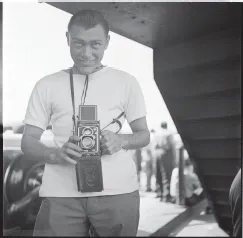
Figure 5: Alexander Singer caught by Kubrick with a Rolleiflex, June 1946.
Kubrick remained friends with Traub and later photographed him for one of his early Look magazine assignments. Soon after entering Taft High School, he met another like-minded shutterbug with whom he spent many hours in the darkroom. Bernard Cooperman was a fellow member of the school’s photography club, and they both worked on the Taft newspaper and magazine, documenting sports events and school plays (LoBrutto, 18). As with Traub, Kubrick and Cooperman went about town on spontaneous photography assignments, including a baseball game described by Cooperman in a way that may very well refer to Kubrick’s photo-essay “Kids At A Ball Game,” which appeared in the October 16, 1945, issue of Look (LoBrutto, 18).
Among Kubrick’s peers in high school, it was Alexander Singer whose influence stood out (cf. Figure 5). As LoBrutto puts it, Singer “was a critical force in focusing Kubrick’s destiny as a film director” (27). Singer later became a filmmaker himself, but unlike Kubrick, his background was in painting, not photography. Already familiar with Hollywood fare, Kubrick was introduced to European art cinema on trips to the Museum of Modern Art’s film theatre with Singer (LoBrutto, 55). Kubrick was likely impressed by the fact that Singer “wrote stories and illustrated them for the Taft Literary Art magazine” (LoBrutto, 27). Kubrick was always in the process of learning how to express himself with still photographs, but it is through the combined influence of peers and exposure to narrative visual media (comic books, photomagazines and movies) that his ultimate vocation as a storyteller gradually emerged.
Singer graduated from Taft in June 1945, six months before Kubrick, and he was the first to consciously choose film over painting as a profession: “Singer’s decision had a significant influence on Stanley Kubrick, who was quietly watching his friend’s metamorphosis” (LoBrutto, 55). Singer began by writing an ambitious 125-page adaptation of Homer’s The Iliad and illustrating it with 900 continuity sketches, and managed to get it to Metro-Goldwyn-Mayer (MGM) executive Dore Schary thanks to Kubrick’s connections at Look magazine (LoBrutto, 55). When informed that MGM would not produce The Iliad, Singer wrote and storyboarded a simple, 20-minute story that he planned to direct, with Kubrick as cinematographer (Baxter, 34). According to Singer, Kubrick was so impressed by the thoroughness of his friend’s work that he was bitten by the directorial bug, and now decided that he would not simply collaborate on a film project, he wanted to be the author (Baxter, 35). In what may have been a key moment in his life, “Stanley Kubrick used Alexander Singer’s presentation of a director’s cinematic ideas as a catalyst to inspire him to create, direct, and produce his first film” (LoBrutto, 57).
Singer received an assistant director credit for Kubrick’s first film, Day of the Fight, and introduced the director to his composer friend Gerald Fried, who wrote music for Kubrick’s first four feature films as well as Day of the Fight (Baxter, 38). Singer then made training films in the Signal Corps’ photo unit, as part of his military service between 1950 and 1952, when he met James B. Harris, a young film distributor (LoBrutto, 109). He introduced Kubrick to Harris, who eventually produced three Kubrick films, The Killing (1956), Paths of Glory (1957) and Lolita (1962). This quick survey of three influential peers in Kubrick’s late teens and early twenties should not be surprising, as it illustrates the contributions made by interpersonal relationships in a young person’s development. It also highlights the extent to which Kubrick’s emerging identity and worldview as an expressive person can usefully be described as a patchwork of influences resulting from the intersection between his personal aptitudes and social milieu.
The other significant type of interpersonal relationship in a young adult’s life concerns mentors. There is a lingering tendency among older adolescents to continue the childhood process of modelling adults, that is, identifying with and imitating adults in their social roles (Bocknek, 192). Young adults gradually shift away from this dependency, becoming more autonomous and relating to peers as partners or competitors (Bocknek, 137). Daniel Levinson’s theory of adult development identifies the mentor as a key influence in facilitating the young adult’s conception of himself in the adult world (Berk, 448). This conception is called the dream, which guides the young person in his life decisions and can be most effective when it is precisely conceived or constructed (Berk, 448). Mentors may assist the young adult in identifying and realizing his dream by functioning in three capacities: “as teachers who enhance the person’s occupational skills; guides who acquaint the person with values, customs, and characters in the occupational setting; and sponsors who foster the person’s career development” (Berk, 448).
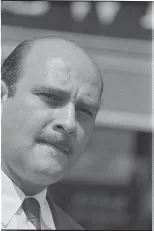
Figure 6: A Stanley Kubrick portrait of his father Jack, Summer 1946.
Peers may act as mentors, although mentors are generally older colleagues at work, relatives, neighbours or friends (Berk, 448). There can be little doubt of Jack Kubrick’s influence on his son, specifically in sharing his love of photography and chess (cf. Figure 6). Jack was an amateur photographer who, according to Kubrick’s widow Christiane, “was passionate about photography and this passion was communicated to Stanley at an early age” (23). Biographer John Baxter adds that “for his thirteenth birthday Kubrick received from his father a gift that was also to have a far-reaching influence, a Graflex camera” (20). In a 1966 interview, Kubrick himself describes this influence in terms of developing problem-solving skills: “I became interested in photography [at the age of] 12 or 13. And I think that if you get involved in any kind of problem solving in depth on almost anything, it is surprisingly similar to problem solving of anything else. I started out by just getting a camera and learning how to take pictures, print, build a darkroom, all the technical things, then finally trying to find out how you could sell pictures and become a professional photographer” (Bernstein 2006, 314). It could be argued that acquiring problem-solving skills can more easily be attributed to the discipline of playing chess, and in any case the young Kubrick’s hobbies neatly dovetailed into each other. As Kubrick explained it, “chess is an analogy. It is a series of steps that you take one at a time and it’s balancing resources against the problem, which in chess is time and in movies is time and money” (LoBrutto, 19).
Jack Kubrick not only introduced his son to fascinating hobbies, but he and his wife Gert appear to have imbued Stanley with a great sense of self-confidence, a personal characteristic that certainly affects one’s professional development (Berk, 472). As mentioned above, the Kubricks’ socio-economic status played an important role. According to psychologist Stephen Hamilton, “several studies have found that more democratic and affectionate practices favoured by middle-class parents are more effective … in inculcating the attitudes and personal styles associated with middle-class status than the more authoritarian styles common among working-class parents” (124). Hamilton adds that parents who have complex jobs requiring judgement pass on the corresponding values to their children, specifically the importance of “becoming independent and creative” (125). The feeling of self-efficacy that follows from this style of upbringing can also be supported by an appropriate mentoring relationship, and Kubrick himself has acknowledged the impact of one of his teachers at Taft High School, Herman Getter, in contrast with the otherwise uninspiring context, which the school provided (LoBrutto, 30–31). Getter was the art teacher at Taft High, and is described by LoBrutto as an “encouraging influence on Stanley Kubrick’s artistic nature …, a man whose primary goal as an educator was to motivate and inspire …, who concentrated on developing talents within his students rather than imposing a prescribed course on them. He created a stimulating environment for a young artist’s mind” (28–29). In addition to being a teacher and a mural painter, Getter was a “lover and student of cinematography” who produced several films demonstrating art technique and held a patent for his invention the Project-O-Slide, used by physicians to review various aspects of medical procedures (LoBrutto, 29).
In his 1992 interview with LoBrutto, Getter related an early conversation he had with the young Kubrick, who expressed concern that he may not be able to graduate from Taft unless he took art as a major (LoBrutto, 29). Getter offered to look at Kubrick’s artwork (drawings, watercolours, etc.) in order to confirm his eligibility for the major in art: “[Kubrick] said: ‘Oh, I don’t do that, I’m a photographer.’ I said, ‘Well, that’s art.’ When I said that, his eyes lit up! He suddenly found someone with whom he could talk” (LoBrutto, 29). If true, this brief episode would have been a significant revelation for the teenage Kubrick, who could now consider one of his hobbies in a different light, namely as an expressive medium that was valued not only by the commercial publishing industry, but also by society’s loftier pursuits of art and learning. This revelation would presumably have preceded any trip to the Museum of Modern Art’s photography exhibitions, and also affected Kubrick’s conception of related media such as film. In fact, Getter showed Kubrick and classmate Alexander Singer his 16mm films as a means of discussing the technique and aesthetics of motion-picture photography (LoBrutto, 30). Both Kubrick and Singer were thus allowed to graduate thanks to Getter’s supervision (LoBrutto, 29). During the production of Spartacus (1960) and after the release of Barry Lyndon (1976), Kubrick would reply to letters from his former teacher, expressing gratitude for the “stimulating film discussions” that Singer and himself had enjoyed in his class, as well as for being “an inspiration to him at a time when it was most critical” (LoBrutto, 30–31).
Psychologist J. J. Arnett points out that “emerging adults may be inspired to pursue a particular work path by the example of someone they admire. Teachers are mentioned quite often as providing such inspiration” (155). Mentorship implies a personal relationship; however, it is possible to admire and be influenced by someone by observing from a distance, particularly through the media. This person would not qualify as a mentor per se, but it does suggest a spectrum of constructive influences ranging from individuals to groups of people. Role models may thus be found in famous media personalities, as well as mentors in the strict sense, and collective forms of mentoring. Stanley Kubrick may have been inspired by the public work of Weegee to sell a picture to Look magazine in April 1945. He also received help from Herman Getter at Taft High School, and arguably from Photography Department Head Arthur Rothstein at Look magazine. Finally, the staff at Look constituted a kind of collective mentorship, also known as the “Bringing Up Stanley Club” (LoBrutto, 41).
The specific role of Look magazine in Stanley Kubrick’s apprenticeship is analysed in the next chapter, but it should be clear from the above examination of peers and mentors that “what goes on inside people is only for conceptual purposes separate from the others with whom they are in contact. And no one can be understood without reference to cultural milieu, ethos, and expectations” (Bocknek, 34). Broadening the notion of mentor to include collective efforts at providing a nurturing environment should point towards developmental frames, which characterize the sociocultural context in which a young individual grows. These frames include intracultural expectations described by Gene Bocknek as “not society’s highest aspirations for the individual but rather the way it defines psychosocial competence for any given stage” (37). For the life periods combining late adolescence and young adulthood, this competence includes the ability to make effective choices in school and at work, to achieve emotional independence, found a family and build a career (Bocknek, 35).
Choices in school were relatively limited, as the curriculum and pedagogy at Taft High were mostly traditional and uninspiring. However, Kubrick did manage to capitalize on some of its offerings: teachers such as Herman Getter and Aaron Traister did stimulate the budding artist, as did participation in the school’s photography club and swing band, not forgetting contact with a few like-minded classmates such as Howard Sackler, who would later write the screenplay to Kubrick’s first feature, Fear and Desire (Baxter, 25). Upon graduating from Taft in January 1946, young Kubrick was in a bind: the son of a doctor, he was expected to enter college, but was denied due to his low grades and to preference being given to returning servicemen on the G. I. Bill (LoBrutto, 33). He began taking night classes in the hope of qualifying eventually for college, but other factors conspired to lead Kubrick into an alternative form of schooling. It should be noted that until he was hired as an apprentice by Look magazine circa April 1946, he remained committed to pursuing a higher education, perhaps hoping that the freedom to choose his own major would prove more stimulating than Taft’s prescribed curriculum.
The expanding post-war economy in the United States created a social context in which young people were more likely to search for full-time work immediately after high school, particularly since they typically married young and felt pressure to provide for their families (Arnett, 145). Kubrick was 19 when he married high school girlfriend Toba Metz, and they moved to Greenwich Village (Baxter, 31). Furthermore, only 20 per cent of young adults aged 18–24 had obtained some college education in America in 1946 (Arnett, 121). This figure would rise steadily, but Kubrick’s road to university had been blocked long enough for him to consider learning on the job. Generally speaking, “the events of leaving school and getting a job are classical normative life span events,” which supports the argument that Kubrick’s years as a young adult were normative, not idiosyncratic (Evans & Poole, 74).
College was simply a way to get a formal education, and a young person could also receive a different kind of education that might be more appropriate to one’s chosen profession. For instance, Grade 12 students have indicated that work experience programs “taught them people skills, job preparation, and business skills … that better prepared them for the job market upon graduation than did school” (Lerner, 161). Kubrick echoes this sentiment and highlights the fact that his tenure at Look coincided with the formative college years: “I was [at Look] for four years until the age of 21. And, of course, that would have been the period I’d have spent in college, and I think that what I learned and the practical experience, in every respect, including photography, in that four-year period exceeded what I could have learned in school” (Bernstein 2006, 316). High school students have also reported that working had a feedback effect, teaching them the importance of getting an education (Lerner, 161). Again, Kubrick makes a similar observation: “Getting out of school, I can’t remember what was the particular turning point, I began to read and, within a relatively short period of time, caught up with where I probably should have been had I had a modicum of interest in things in high school. . . . I felt that I caught up pretty quickly when I became interested in things in general” (Bernstein 2006, 316).
Even though he refrains from identifying the “turning point” when he became “interested in things in general,” the change in Kubrick as a learner coincided with his working years at Look magazine, and it has been observed that “many young people who do not learn well in school are diligent and adept learners in the workplace” (Lerner, 349). It could be argued that Look magazine’s influence on Kubrick is enhanced not only by virtue of the fact that he was already passionate about photography, but also because he was doing his best to “catch up” and compensate for a sense of underachievement in school.
Gene Bocknek’s model of adult development discusses thr...