![]()
Chapter 1
In Defence of Films as Art
This chapter explores the work of New Zealand’s first film society at the end of the 1920s. This will serve as a touchstone to the emergence of various conceptions of film as art. Key issues include the relative value of types and sources of film (such as ‘Hollywood’ versus Europe), debates about morality, and attempts to identify those aspects of filmmaking in which artistry can most clearly be identified. These discussions also represent an attempt to establish an adequate lexicon and discourse for film aesthetics.
At the moment in history at which these debates reach some kind of critical mass, New Zealand was a country of less than one and a half million people. It was still in many respects a British colony, lacking any depth of high culture, and what there was tended to be mostly an importation. The creation of a film society was no exception, for – as we shall see – the idea was derived from the London Film Society, founded in 1925. (This society subsequently liked to describe itself as the first film society in the world.) Alongside the popular consumption of film, the 1920s also saw the development of specialised minority film cultures in the major European film-producing countries as well as in Britain.1 As Tom Ryall has noted, this was ‘a decade of self-conscious artistic experiment in the cinema in which the key artistic revolutions of the twentieth century – Expressionism, Cubism, Futurism, Dadaism and so on – found an outlet in the cinematic experiments of filmmakers in Germany, France, and the Soviet Union’ (1986: 7). The 1920s therefore saw the emergence of cinemas that bore the imprint of ‘art’ and ‘high culture’, attracting the attention of the educated classes who had previously scorned the medium. This was not yet the case in New Zealand, but the arrival of a film society was one of the first signs.
In the work of the Auckland Film Society (AFS) it is also possible to see the lineaments of broader cultural patterns: in opposition to a narrow, strict, and relatively sterile colonial vision more preoccupied with respectability than stimulation, the AFS participated in the formation of informal networks conducive to local expressions of cultural modernity during the interwar period – a time of major change and upheaval in which ‘the cumulative effects of the social, economic, technological and demographic developments of the late nineteenth and early twentieth century became increasingly obvious and began to have a significant impact on New Zealand society’ (Sprecher 1999: 142; see also Hilliard 2006: 120, for more on the ‘informal networks’ that structured cultural life in the 1920s and 1930s.
Film had become a hugely popular medium in New Zealand, with exhibition and distribution following the same pattern as other countries – starting with film as a novelty attraction associated with fairgrounds and vaudeville, then progressing to store-front cinemas (existing buildings hired for film screenings), then to purpose-built cinemas, and by the end of the 1920s to elaborate ‘picture palaces’. The growth of public interest was fuelled during the Great War (1914–18) by the demand for newsreels. Improved projection technology and more skilful cinematic storytelling techniques also fed the public’s appetite for narrative. ‘By 1917, 550,000 New Zealanders went to the pictures every week’ (Hayward and Hayward 1979: 11–12). The 1920s also saw a huge increase in Auckland suburban theatres with over 25 new theatres opening. In 1929, Auckland’s Civic Theatre was completed as a giant picture palace with exotic architecture and seating for 3500. Three other large cinemas had already been built in Auckland: the Majestic (1925) with seating for 2000 people; the Regent (1926) held 1700, and the St James (1929) a similar number. By the late 1920s, one-sixth of Auckland’s population (about 230,000) went to the movies every Saturday night (Hayward and Hayward 1979).
Sound technology arrived in 1928–29, which made it possible to produce and screen ‘sound films’ (that is, films with synchronised soundtracks physically combined on celluloid with the images). This development caused a huge upheaval in the film business, in both economic and technological terms. It also involved an upheaval in the art of film, and debate within the new film society would reflect this shake-up.
New Zealand, like other countries, drew its films from particular national sources. Its white settler culture was extensively and intensively connected to Britain, and most other forms of art were dominated by British products and ideas. Officially, New Zealand had been an independent dominion since 1907, but this was a nominal change; unofficially, it was still a colony. But from the beginning its citizens could not resist the temptation of Hollywood films. This tension would generate many fierce debates over the decades between the enthusiasts of American films and their critics (moralists disturbed by the risqué tendencies of 1920s American films, in an uneasy alliance with intellectuals who saw the influence of American popular culture as politically and educationally dangerous).
Inevitably, these historical factors influenced the particular form taken by emerging ideas of what constituted a ‘good film’, ‘a serious film’ or ‘an artistic film’. (It is important to recognise that these were separate ideas, although there was considerable overlap between them.) As we shall see, the AFS was initially distinguished by its strong strain of aestheticism – its emphasis on ‘artistic’ films and the pure (medium-specific) art of film. Yet the surrounding context of moralism was so strong that its aestheticism was sometimes diluted.
Among local moralists, not only American films but the popularity of the cinema in general was suspect, particularly in the influence of the medium on children. In Freudian terms, that influence was seen as weakening the social institutions designed to keep libidinal energy in harness and individuals hard at work. A letter written to the editor of the Otago Daily Times in April 1921 expressed the sense of outrage produced by Dr Jekyll and Mr Hyde (USA, 1920):
In contrast, the writer expressed pleasure in the British film Darby and Joan (1919). The title itself has come to mean a happily married couple leading a placid, uneventful life – a condition the irate letter writer clearly prefers.
Such a response linked several forms of disapproval: a puritanical dislike of any public display of sexuality (or ‘sensuousness’); a concern with declining standards of English (taking BBC-style Received Pronunciation as the ideal); a fear that entertainment was crowding out education; an hostility to films that vulgarised great literature or other forms of art (instead of doing what they should do, which was to attract people to high culture in a serious way); a suspicion of the United States as the principal source of commercial, mass-produced culture and vulgar populism; and an unwavering allegiance to Britain and its cultural products (‘our beloved Stevenson’). But protest as he might, the writer was on a sticky wicket since the game to capture audiences was not going England’s way. In 1927, 350 out of 400 films shown on New Zealand screens were American (Belich 2001: 251).
The cinema of the 1920s and 1930s was but one of a number of new technologies that provided a distinctive electric hum to life. Whilst many wealthy New Zealanders were ‘early adopters’ of these new technologies, there were conservative voices who espied in them the harbingers of modern times and modern morals, neither of which was viewed favourably. Fears concerning the growing cultural invasion of Hollywood were vividly expressed in the popular New Zealand women’s magazine The Mirror.3 An editorial declared that ‘Instead of ennobling and inspiring influence, the majority of present day pictures are calculated to arouse the primitive emotions which we are forever endeavouring to check, control and guide by a complex system of customs and conventions that are supported by the strongest sanctions of law and religion’ (Mirror 1929b: 8). An article by Dr Mildred Staley, ‘The Child and the Cinema’, demanded to know ‘what steps we have taken here in New Zealand to ensure – as the report advises – that our children shall see only good films and be “protected from all demoralising influences”’ (Mirror 1929a: 35).4 Another expression of alarm was heard in a September editorial, ‘Crime and Sex in Films’, which spelt out the dangers likely to develop if the country’s moral vigilance weakened and allowed ‘the lowest phase of American life’ to enter New Zealand. It added: ‘If we were to believe the [film] producers, the United States would be a sink of iniquity, with people living a jazz life, depraved in morals, with minds and souls warped by sex instinct, corrupted by crime and depraved by drink’ (Mirror 1929b).
Strong reactions of this sort need to be balanced with other moral crusades of the period, some of whose achievements are not to be sneered at – such as votes for women and better care for babies.5 Nevertheless, the perceived threats to moral harmony could create excessive responses – Balzac and Zola joined the Illustrated Marriage Guide as ‘offensive publications’, and cinemas, veritable dens of iniquity, were linked to the spread of venereal disease and female smoking (Belich 2001: 157–58).
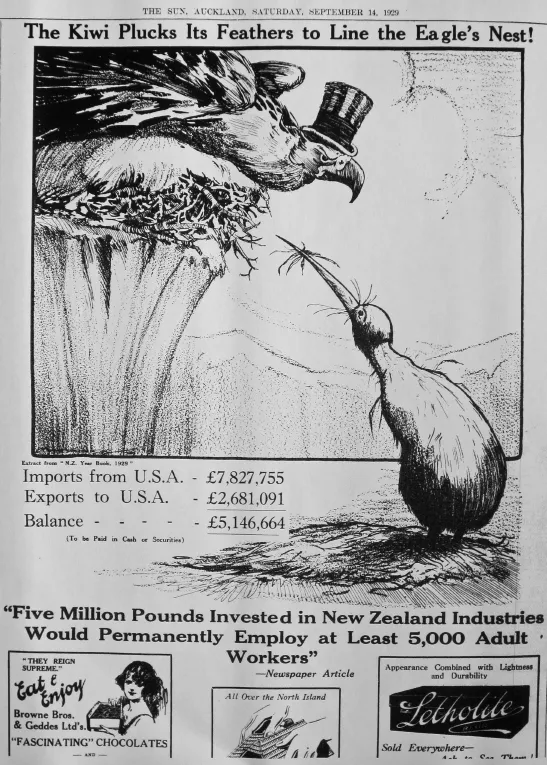
Figure 2: The American hegemon was economic and cultural.
For many of the Mirror’s writers, any sense of art in films was seriously compromised by their American links with the vulgar clichés of mass-produced popular culture. Isobel M. Cluett’s neo-Luddite article, ‘The Menace of Mechanical Art’, took issue with both gramophones and the cinema – diabolical markers of modernity. She associated the latter with ‘crude, nasal American voices, the hideous argot of the Bowery slums freely flashed on the screen, the travesty of passionate emotion in long drawn-out embraces and provocative behaviour’, and added: ‘For these and other reasons … if we must have the pictures, the intelligent and artistic section of the public should make every effort to encourage the production of British films in British countries’ (Mirror 1930: 33).6 The marked preference among educated New Zealanders for BBC English, and the sometimes vehement contempt of American dialects appear to reflect a fear of the new and the different. So long as films were silent, the ‘otherness’ of America was not so evident.
It is hard now for us to appreciate the value accorded ‘correct’ pronunciation by British audiences in the early 1930s. Vicky Lowe has drawn attention to its importance for film reception in marking out symbolic boundaries: ‘Voices acted out representations, setting out a constituency from which the audience could be excluded or incorporated.’ She goes on to argue that ‘the sound of actors’ voices on films was crucial in both reinforcing and challenging national, regional and gendered identities’ (2004: 182). The negative local reaction to the influence and sound of Hollywood mirrored similar concerns in Britain and in other European countries. From today’s perspective, however, the most striking aspect of the public debate in New Zealand was the absence of any reference to a distinctive local or national cultural identity. Educated New Zealanders were still happy to regard themselves as ‘Better Britons’ and to refer to Britain as ‘Home’. They saw Hollywood not as a threat to New Zealand’s national (or nationalist) culture – such as the potential growth of local filmmaking – but rather as a threat to British values, seen as synonymous with civilised values generally. The prevalent anti-Hollywood attitude would mean that the recognition of artistic achievement in the best American films (as promoted later by the French ‘politique des auteurs’) would be a slow and controversial development.
The Overseas Context
Although the attitudes and activities described so far in this chapter have been mainly of a middlebrow character, similar attitudes permeated the discourse of intellectuals. And this was not only a New Zealand phenomenon. In England, intellectual film culture had a strongly anti-Hollywood slant. As Duncan Petrie has observed, much of Paul Rotha’s influential 1930 book, The Film Till Now, ‘displays little more than contempt and scorn for what he regards as “the lowest form of public entertainment”, the product of a factory system governed by the profit motive’ (1999: 55). In 1927, Harry Potamkin, a left-wing American film critic and theorist, had sought to place such attitudes in context:
As an example, Potamkin cited a diatribe on ‘American Film Propaganda’ written by ‘a pathetic little journal’, The Patriot:
The process of strangulation was slowed by the introduction of tariffs and quotas for the screening of British films in the United Kingdom. The 1927 Cinematograph Films Act was designed to protect the British film industry from further decline. To offset American economic and cultural dominance, British cinemas were required to screen a certain number of locally-made films; the quota was set at 7.5 per cent for distributors, raising to 20 per cent in 1935 (Chibnall 2007: 2). An unintended consequence of this was the production of ‘quota quickie’ films, many of them financed by American distribution companies and made in the United Kingdom to satisfy British regulations.7 A few films from the colonies gained access to the British market thanks to the quota, but were often savagely re-cut or treated with condescension. The one New Zealand example would be Rudall Hayward’s 1939 version of Rewi’s Last Stand – a film that dramatised an episode in the New Zealand Wars of the 1860s (Martin and Edwards 1997: 50).
One of the most important sites for the development of ideas of film-as-art was the magazine Close Up (1927–33), which was based in Britain and Switzerland but had a strongly international perspective. Writers for this magazine (which included Potamkin) had their own intellectual reasons for resisting the appeal of Hollywood. Instead, they championed the aesthetics of German and Soviet feature films...