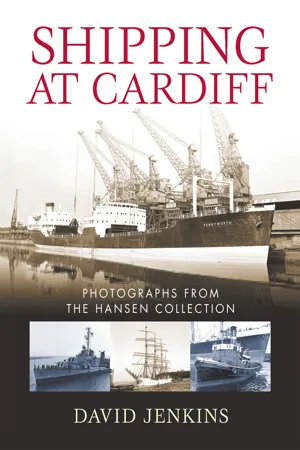
- English
- ePUB (mobile friendly)
- Available on iOS & Android
eBook - ePub
About this book
One of the greatest treasures in the archives of the Welsh Industrial and Maritime Museum is the Hansen Collection, consisting of over 4500 negatives of shipping taken at Cardiff Docks between 1920 and 1975. Lars Peter Hansen, a native of Copenhagen, settled in Cardiff in 1891 and he and his third son Leslie established a photographic business in the docks; taking pictures of ships for sale to seamen and shipowners was an important part of their business. Following the retirement of Leslie Hansen in 1975, the museum purchased the negative collection. Its historical value cannot be overstated and this album is intended as a tribute to the Hansens, who through their work have bequeathed to Wales a pictorial record of shipping activity at the nation's premier port.
Information
~1~
Cardiff's Own
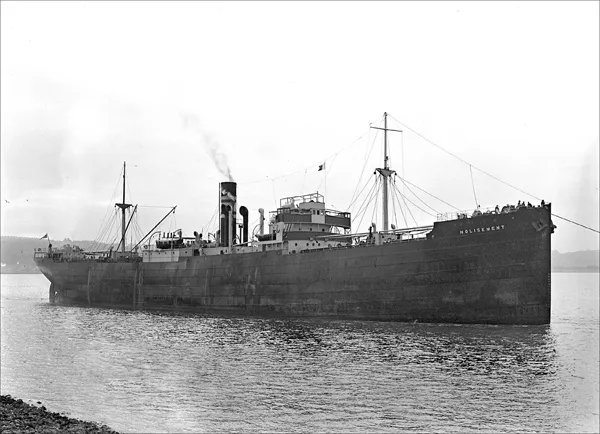
1. The brothers Philip and Thomas Morel had both moved to Cardiff from their native Jersey by 1862,; by 1888 they had built up a fleet of twenty-three steamers. The steamer Nolisement dated from a later period in the firm's history1having been built at Newcastle in 1928. This 51084 gross ton vessel survived the Second World War and was eventually cut up at Split in Yugoslavia early in 1966.
(2809/2832)
(2809/2832)
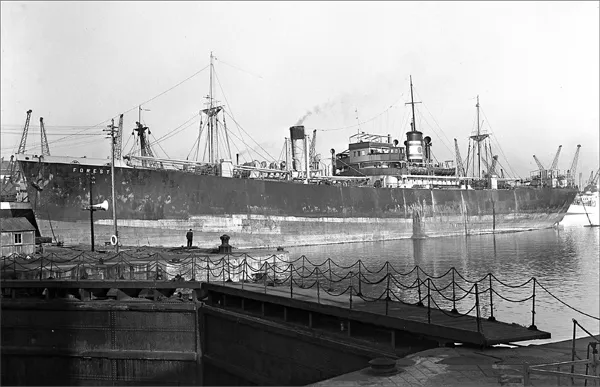
2. Morels were amongst the first Cardiff owners to acquire motor vessels, and in 1936–7 they took delivery of two Doxford ‘Economy’ motor tramps. The second of these was the 4,998 gross ton Forest, seen here in the Queen Alexandra Dock, c. 1948. Twice bombed during the Second World War, she was still trading under the Cypriot flag in the late 1960s.
(2425/2474)
(2425/2474)
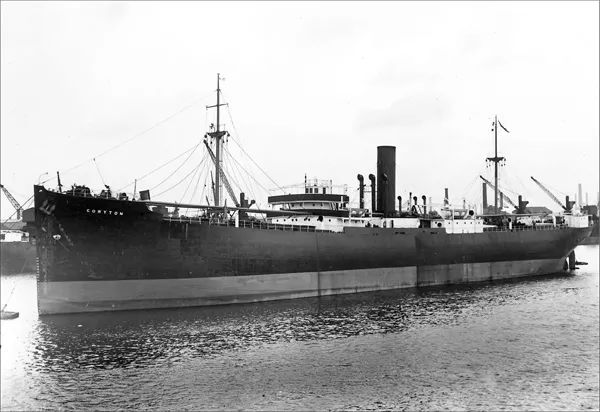
3. John Cory was born in Padstow where he was already the owner of a number of sailing vessels before deciding to move to Cardiff in 1872. By 1900 his sons were operating a fleet of twenty-three steamers. The steamer Coryton pictured here was a 4,553 gross ton vessel built at West Hartlepool in 1928; she is seen here in the Roath Dock, c. 1936. She was named after the Cory family home, which by today has given the name Coryton to a suburb in north Cardiff.
(221/423)
(221/423)
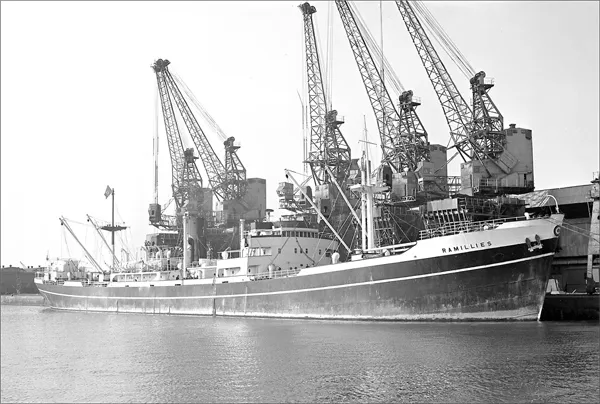
4. One of the last steamships owned at Cardiff was the handsome Ramillies, owned by John Cory & Sons from 1955 until 1966. Built at West Hartlepool in 1951 for London-Greek shipowners, she was an oil-fired steamer of 5,890 gross tons. She is seen here discharging iron ore at the East Moors terminal in the Roath Dock, c. 1964.
(4236/1R)
(4236/1R)
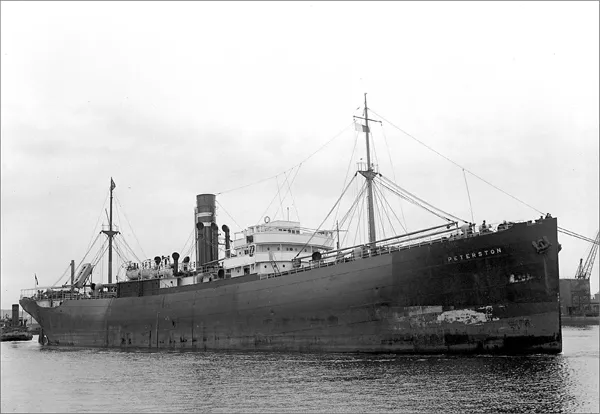
5. Evan Thomas, Radcliffe & Co. was founded in 1881 when Captain Evan Thomas of Aber-porth, Ceredigion, went into partnership with the young Merthyr-born clerk, Henry Radcliffe. Their venture prospered; on the eve of the First World War, the firm controlled twenty-eight vessels, Cardiff’s largest fleet. The 4,680 gross ton Peterston was built at Sunderland in 1925 and served Radcliffe’s until 1948, when she was sold; after a number of changes in ownership she was broken up at Antwerp in 1959. She is seen here in the Queen Alexandra Dock, c. 1947.
(1021/1122)
(1021/1122)
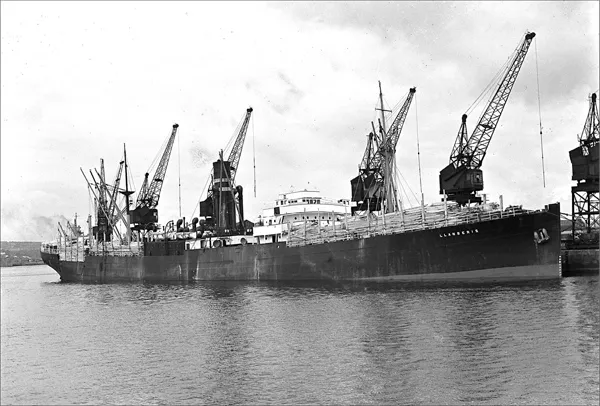
6. Many Radcliffe ships bore Welsh place-names which had the prefix ‘Llan-’, meaning church. The 5,055 gross ton Llanberis was named after the village at the foot of Snowdon, and was the third vessel in the Radcliffe fleet to bear this name. Built at Wallsend in 1928, she was sold to Greek owners in 1950. She is seen here discharging a cargo of sawn timber in the Queen Alexandra Dock, c. 1948.
(1596/1687)
(1596/1687)
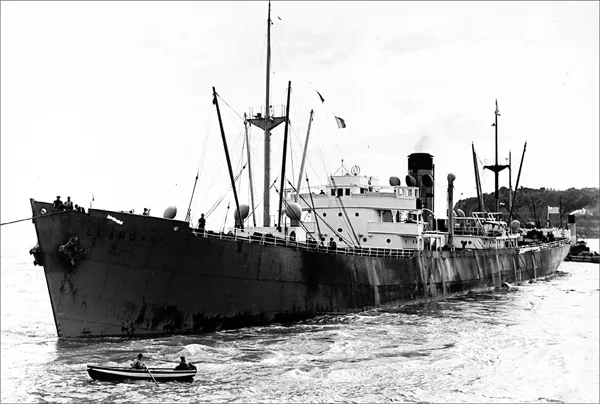
7. The Radcliffe company was taken over by the Cardiff fuel factors Evans & Reid in 1947, and the ships were given new liveries and fleur-de-lys funnel markings in place of the ‘Cardiff British India Line’ black funnel and two white bands visible in the two previous photographs. The Sunderland-built Llandaff of 1937, a 4,826 gross ton steamer, is seen here arriving at Cardiff in the new colours, c. 1950. Sold to German owners in 1951, she was eventually stranded at Esbjerg in 1959 and broken up at Ghent later that year. The author’s great-uncle, Captain John Rees Jenkins of Aber-porth, Ceredigion was the first master of this vessel when she joined the Radcliffe fleet in 1937.
(2933/2954)
(2933/2954)
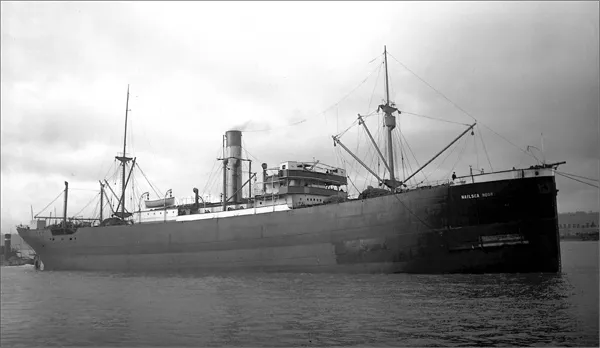
8. Evans & Reid had been in shipping prior to their takeover of Radcliffe’s in 1947. In 1931 Barclay’s Bank entrusted the firm with the management of a number of steamers owned by former Cardiff shipowners on whom the bank had foreclosed. One of these was the 4,107 gross ton Nailsea Moor, formerly owned by Williams & Mordey of Cardiff as their David Lloyd George. Built at Stockton-on-Tees in 1917, she is seen here at Cardiff, c. 1936.
(95/189)
(95/189)
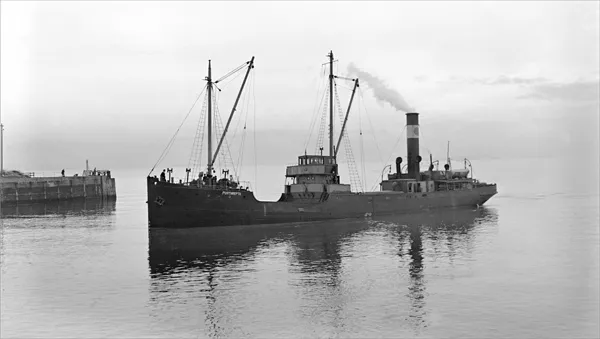
9. A tranquil scene is recorded in this view of the Porthrepta approaching the Queen Alexandra lock on 8 December 1947. She was owned by Care Lines, established at Cardiff in 1920 by Richard Penberthy Care. This 643 gross ton coaster was built at Glasgow in 1922. Care Lines were much involved in trade to the Channel Islands.
(1826/1906)
(1826/1906)
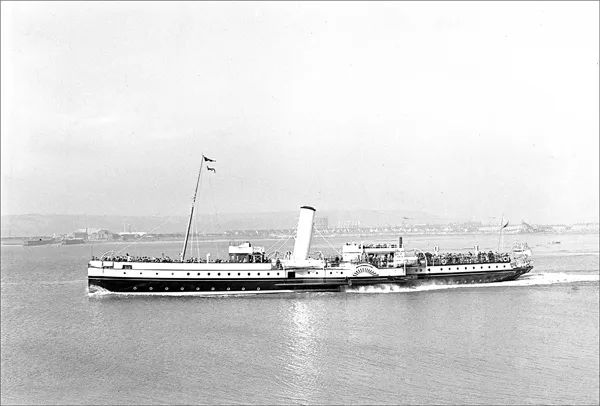
10. Although it was not until the late 1950s that P. & A. Campbell moved their head office from Bristol to Cardiff, most Cardiffians tended to regard the ‘White Funnel’ fleet as much their own as did the Bristolians! No summer was complete without a trip to Minehead or Ilfracombe on one of their paddle steamers. The Glen Usk was built at Troon in 1914 and her decks were crowded with trippers as she left Cardiff in this 1948 view. Laid up in the early 1960s, she was broken up at Passage West near Cork in 19...
Table of contents
- Half Title
- Title Page
- Copyright
- Contents
- Foreword
- Acknowledgements
- Introduction
- 1 Cardiff's Own
- 2 Coasters and Collier
- 3 Tramps, Tankers and Liners
- 4 Tugs, Trawlers and Dredgers
- 5 Under Sail
- 6 Navies of the World
- 7 From Oceans’ Farthest Coasts
- Bibliography
- Index of Ships’ Names
Trusted by 375,005 students
Access to over 1.5 million titles for a fair monthly price.
Study more efficiently using our study tools.
Frequently asked questions
Yes, you can cancel anytime from the Subscription tab in your account settings on the Perlego website. Your subscription will stay active until the end of your current billing period. Learn how to cancel your subscription
No, books cannot be downloaded as external files, such as PDFs, for use outside of Perlego. However, you can download books within the Perlego app for offline reading on mobile or tablet. Learn how to download books offline
Perlego offers two plans: Essential and Complete
- Essential is ideal for learners and professionals who enjoy exploring a wide range of subjects. Access the Essential Library with 800,000+ trusted titles and best-sellers across business, personal growth, and the humanities. Includes unlimited reading time and Standard Read Aloud voice.
- Complete: Perfect for advanced learners and researchers needing full, unrestricted access. Unlock 1.5M+ books across hundreds of subjects, including academic and specialized titles. The Complete Plan also includes advanced features like Premium Read Aloud and Research Assistant.
We are an online textbook subscription service, where you can get access to an entire online library for less than the price of a single book per month. With over 1.5 million books across 990+ topics, we’ve got you covered! Learn about our mission
Look out for the read-aloud symbol on your next book to see if you can listen to it. The read-aloud tool reads text aloud for you, highlighting the text as it is being read. You can pause it, speed it up and slow it down. Learn more about Read Aloud
Yes! You can use the Perlego app on both iOS and Android devices to read anytime, anywhere — even offline. Perfect for commutes or when you’re on the go.
Please note we cannot support devices running on iOS 13 and Android 7 or earlier. Learn more about using the app
Please note we cannot support devices running on iOS 13 and Android 7 or earlier. Learn more about using the app
Yes, you can access Shipping at Cardiff by David Jenkins in PDF and/or ePUB format, as well as other popular books in History & Transportation Industry. We have over 1.5 million books available in our catalogue for you to explore.