This book fills the Iberian linguistic and geographical gap in Arthurian studies, replacing the now-outdated work by William J. Entwistle (1925). It covers Arthurian material in all the major Peninsular Romance languages (Spanish, Portuguese, Catalan, Galician); it follows the spread of Arthurian material overseas with the seaborne expansion of Spain and Portugal from Iberia into America and Asia in the fifteenth and sixteenth centuries; and, as well as examining the specifically Arthurian texts themselves, it traces the continued influence of the medieval Arthurian material and its impact on the society, literature and culture of the Golden Age and beyond, including its presence in Don Quixote, the influential Spanish Arthurian-inspired romance Amadís de Gaula, and in Spanish ballads. Such was its influence that we find an indigenous American woman called 'Iseo' (Iseult); and an Arthurian story appeared in an indigenous language of the Philippines, Tagalog, as late as the nineteenth and early twentieth centuries.
eBook - ePub
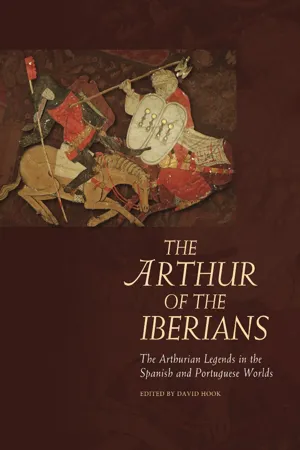
The Arthur of the Iberians
The Arthurian Legends in the Spanish and Portuguese Worlds
- 576 pages
- English
- ePUB (mobile friendly)
- Available on iOS & Android
eBook - ePub
About this book
Trusted by 375,005 students
Access to over 1.5 million titles for a fair monthly price.
Study more efficiently using our study tools.
Information
BIBLIOGRAPHY
This Bibliography does not include the modern literary works discussed in Chapter XII, which are listed separately in the Appendix to that chapter. For all manuscripts cited in this book, see the Index of Manuscripts.
Abaurre, Maria Luiza Marques, 1990. ‘Os cães do inferno a serviço de Deus’, Estudos Portugueses e Africanos, 15: 77–91.
Adams, James N., 1982. The Latin Sexual Vocabulary (London: Duckworth).
Adroher, Miquel, 2005–6. ‘La Stòria del Sant Grasal, version franciscaine de la Queste del Saint Graal’, BRABL, 50: 77–119.
Aguilar Perdomo, María del Rosario (ed.), 2009. Francisco Enciso de Zárate, Corónica del invencible cavallero Florambel de Lucea, Los Libros de Rocinante, 26 (Alcalá de Henares: CEC). [Valladolid 1532]
Ailenii, Simona, 2009. ‘O arquétipo da tradução portuguesa da Estoire del Saint Graal à luz de um testemunho recente’, RGF, 10: 11–38; also in Maria do Rosário Ferreira, Ana Sofia Laranjinha and José Carlos Ribeiro Miranda (eds), Seminário medieval (2007–2008) (Porto: Estratégias Criativas), pp. 129–56, and at Guarecer on-line, 2009, pp. 11–38: http://www.seminariomedieval.com/ineditos.html.
Ailenii, Simona, 2009–10. ‘A morte de Galaad e Perceval’, Destiempos. Caballerías, 4/23: 232–56.
Ailenii, Simona, 2013a. ‘Os primeiros testemunhos da tradução galego-portuguesa do romance arturiano’ (unpublished doctoral thesis, Universidade do Porto).
Ailenii, Simona, 2013b. ‘A tradução galego-portuguesa do romance arturiano nos séculos XIII e XIV’, e-Spania. Revue Interdisciplinaire d’Études Hispaniques Médiévales et Modernes, 16 [consulted 25 July 2014: http://espania.revues.org/22611; DOI : 10.4000/e-spania.2211].
Ailenii, Simona, Ana Sofia Laranjinha, Isabel Correia and José Carlos Ribeiro Miranda (eds), 2013. Estória do Santo Graal (Livro Português de José de Arimateia), edição do ms 643 do A. N. T. T. (Porto: Estratégias Criativas).
Albert, Carmen, and María del Mar Fernández Vega, 2003. Un inventario anónimo en Castilla la Nueva: 1494–1506 (Madrid: CSIC).
Alcoberro, Agustí (ed.), 1997. Carbonell, Pere Miquel, Cròniques d’Espanya, 2 vols, Els Nostres Clàssics, B-16 (Barcelona: Barcino).
Alemany Ferrer, Rafael, 1995. ‘En torno al desenlace del Tirant lo Blanc’, in Estudios sobre el ‘Tirant lo Blanc’, ed. Juan Paredes Núñez, Enrique J. Nogueras Valdivieso and Lourdes Sánchez Rodrigo, Crítica Literaria, 192 (Granada: Universidad de Granada), pp. 11–26.
Alemany Ferrer, Rafael, 2005a. ‘Artús i Espèrcius o el culte al meravellós en el Tirant lo Blanc’, in Actes del X Congrés Internacional de l’Associació Hispànica de Literatura Medieval, ed. Rafael Alemany, Josep Lluís Martos and Josep Miquel Manzanaro (Alacant: Institut Interuniversitari de Filologia Valenciana), I: 241–53.
Alemany Ferrer, Rafael, 2005b. ‘L’episodi tirantià d’Artús és necessàriament un entremés?’, in Actas del IX Congreso Internacional de la Asociación Hispánica de Literatura Medieval (A Coruña, 18–22 de septiembre de 2001), 3 vols, ed. Carmen Parrilla and Mercedes Pampín, Biblioteca Filológica, 13 (Noia: Editorial Toxosoutos; A Coruña: Universidade da Coruña), I, pp. 251–65.
Alfonso X el Sabio, 2009. General Estoria, ed. Pedro Sánchez-Prieto Borja. 10 vols (Madrid: Fundación Castro).
Allaire, Gloria, ed. and trans., 2002. Italian Literature, 2 vols, I: Il Tristano Panciatichiano; II: Tristano Riccardiano (Cambridge: D. S. Brewer, 2002–6), I.
Almeida, Ana Cristina, 1994. ‘O sentimento de honra n’A Demanda do Santo Graal’, Máthesis, 3: 199–212.
Almeida, Ana Cristina, 1995. ‘O prólogo ao Livro de José de Arimateia e o pergaminho de Riba d’Âncora’, Máthesis, 4: 149–58.
Almeida, Ana Cristina, 1996. ‘O romance no século XIII. A propósito do maravilhoso no Livro de José de Arimateia’, Máthesis, 5: 237–45.
Almeida, Ana Cristina, 2003, ‘O maravilhoso no Livro de José de Arimateia’ (unpublished doctoral thesis, Universidade de Coimbra).
Almeida, Isabel Adelaide, 1998. Livros portugueses de cavalarias, do Renascimento ao Maneirismo (Lisbon: Universidade de Lisboa).
Almeida, Miguel Eugênio, 2004. ‘O emprego dos clíticos em A Demanda do Santo Graal’, in Actas do VIII Congresso Nacional de Linguística e Filologia. Em homenagem a Mário Barreto (Rio de Janeiro: http://www.filologia.org.br/viiicnlf/anais/caderno10–12.html) [consulted 14 January 2013].
Alonso, Álvaro, 1999. ‘Rodríguez del Padrón, Inés de Castro y la materia de Bretaña’, in Ines de Castro. Studi. Estudos. Estudios, ed. Patrizia Botta (Ravenna: Longo Editore; Rome: Facoltà di Lettere dell’Università di Roma ‘La Sapienza’; Lisbon: Instituto Camões), pp. 35–44.
Alonso, Dámaso, 1947. ‘La leyenda de Tristán e Iseo y su influjo en España’, in André Mary (ed.), Tristán (Barcelona: Janés), pp. 189–204; rpt in Obras completas. Estudios y ensayos sobre literatura, 3 vols (Madrid: Gredos, 1973–5), II, pp. 189–204.
Alonso Cortés, Narciso, 1933. ‘Montalvo, el del Amadís’, RH, 81: 434–42.
Alpalhão, Margarida Santos, 2003. ‘Do mediador como instrumento de descifração’, in Da descifração em textos medievais. IV Colóquio da Secção Portuguesa da Associação Hispânica de Literatura Medieval, ed. Ana Paiva Morais, Teresa Araújo and Rosário Santana Paixão (Lisbon: Colibri), pp. 275–87.
Alturo i Perucho, Jesús, 1997–8. ‘Restes codicològiques en el més antic manuscrit del Jaufré amb algunes consideracions sobre aquesta novel·la provençal’, BRABL, 46: 9–22.
Alturo i Perucho, Jesús, 1999. ‘La aportación del estudio de los fragmentos y membra disiecta de códices a la historia del libro y de la cultura’, in Studia in codicum fragmenta (Bellaterra, Barcelona: Universitat Autònoma de Barcelona), pp. 11–40.
Alvar, Carlos, 1977. La poesía trovadoresca en España y Portugal, Planeta Universidad, 11 (Madrid: Cupsa).
Alvar, Carlos, 1983. ‘El Lanzarote en prosa: Reflexiones sobre el éxito y difusión de un tema literario’, in Serta Philológica F. Lázaro Carreter natalem diem sexagesimum celebranti dicata, ed. Emilio Alarcos Llorach et al., 2 vols (Madrid: Cátedra), II, pp. 1–12.
Alvar, Carlos, 1984. ‘Poesía y política en la corte alfonsí’, Cuadernos hispanoamericanos, 410: 5–20.
Alvar, Carlos, 1991. El rey Arturo y su mundo: Diccionario de mitología artúrica (Madrid: Alianza Editorial).
Alvar, Carlos, 1993. ‘Poesía gallegoportuguesa y Materia de Bretaña: algunas hipótesis’, in O Cantar dos trobadores: Actas do Congreso celebrado en Santiago de Compostela entre os días 26 e 29 de abril de 1993, ed. Mercedes Brea, Colección de difusión cultural, 2 (Santiago de Compostela: Xunta de Galicia), pp. 31–51.
Alvar, Carlos 1996. ‘Consideraciones a propósito de una cronología temprana del Libro de Alexandre’, in A. Menéndez and V. Roncero (eds), Nunca fue pena mayor. Estudios de literatura española en homenaje a Brian Dutton (Cuenca: Universidad de Castilla-La Mancha), pp. 35–44.
Alvar, Carlos, 2001. ‘Tristanes italianos y Tristanes castellanos’, SMV, 47: 57–75; rpt as Appendix in
Alvar 2002; and in Alvar 2010a: 245–55.
Alvar, Carlos, 2002. ‘Raíces medievales de los libros de caballerías’, Edad de Oro, 21 (2002): 61–84.
Alvar, Carlos 2004. Leyendas artúricas (Madrid: Espasa).
Alvar, Carlos, 2008. ‘La Materia de Bretaña’, in Amadís de Gaula 1508: Quinientos años de libros de caballerías, ed. J. M. Lucía Megías (Madrid: Biblioteca Nacional de España and Sociedad Estatal de Conmemoraciones Culturales), pp. 19–46.
Alvar, Carlos, 2009. El Quijote: letras, armas, vida (Madrid: Sial).
Alvar, Carlos, 2010a. De los caballeros del Temple al Santo Grial, Trivium: Biblioteca de Textos y Ensayo, 22 (Madrid: Sial).
Alvar, Carlos, 2010b. Historia de Lanzarote del Lago (Madrid: Alianza Editorial).
Alvar, Carlos, 2013a. ‘Antroponimia artúrica: Ayer y hoy’, Arba (Acta Romanica Basiliensia), 24: 21–51.
Alvar, Carlos, 2013b. ‘Don Denís, Tristán y otras cuestiones entre materia de Francia y materia de Bretaña’, e-Spania [consulted 20 December 2013: http://e-spania.revues.org/22628; DOI : 10.4000/e-spania.22628].
Alvar, Carlos, and Vicente Beltrán, 1985. Antología de la poesía gallego-portuguesa (Madrid: Alhambra).
Alvar, Carlos, and José Manuel Lucía Megías, 1999. ‘Hacia el códice del Tristán de Leonís (cincuenta y nueve nuevos fragmentos de la Biblioteca Nacional de Madrid)’, RLM, 11: 9–135.
Alvar, Carlos, and José Manuel Lucía Megías (eds), 2002. Diccionario filológico de literatura medieval española (Madrid: Castalia).
Alvar, Carlos, and José Manuel Lucía Megías, 2009. Repertorio de traductores del siglo XV (Madrid: Ollero y Ramos).
Álvarez Pellitero, Ana María (ed.), 1993. Cancionero de Palacio. Ms. 2653 Biblioteca Universitaria de Salamanca ([Valladolid]: Junta de Castilla y León, Consejería de Cultura y Turismo).
Amadís de Gaula: see Rodríguez de Montalvo, Garci.
Amadís de Grecia (Cuenca, Cristóbal Francés, 1530): see Silva, Feliciano de, Amadís de Grecia.
Amaral, Andreia, 2006. ‘Os lais de Bretanha. Uma proposta de edição crítica’, RFLLL, 23: 49–78.
Anales Toledanos I: Enrique Flórez (ed.), España sagrada, XXIII (Madrid: Antonio Marín, 1767), 381.
Annales Cambriae: Faral, Edmond, 1993 [1929]. La légende arthurienne. Études et documents, 3 vols (Paris: Honoré Champion), III, pp. 44–50.
Antonio, Nicolás, 1672. Bibliotheca hispana, 2 vols (Romae: ex Officina Nicolai Angeli Tinassii); 2nd edn, 2 vols, Bibliotheca hispana Nova (Matriti: apud Viduam et Heredes Joachimi de Ibarra typographi regii, 1683–8); facsimile edn, intro. by Mario Ruffini (Turin: Bottega d’Erasmo, 1963).
Aragão, Ludumula, 2002. A produção dos sentidos como reprodução n’‘A Demanda do Santo Graal’ (Coimbra: Pé de Página Editores).
Aramon y Serra, Ramon, 1969. ‘El Tristany català d’Andorra’, in Mélanges offerts à Rita Lejeune, 2 vols (Gembloux: J. Duculot), I, 323–37; rpt in Estudis de llengua i literatura (Barcelona: Institut d’Estudis Catalans, 1997), pp. 413–29.
Arbor Aldea, Mariña, 2006. ‘“E era natural de Cornualha, filho de rei Mars…”. Meraugis en A Demanda do Santo Graal’, in Los caminos del personaje en la narrativa medieval. Actas del Coloquio Internacional (Santiago de Compostela, 1–4 diciembre 2004), ed. Pilar ...
Table of contents
- Cover
- Contents
- Preface
- List of Contributors
- List of Abbreviations
- Introduction
- I Arthurian Material in Iberia
- II The Surviving Peninsular Arthurian Witnesses: A Description and an Analysis
- III Arthurian Literature in Portugal
- IV The Matière de Bretagne in Galicia from the XIIth to the XVth Century
- V The Matière de Bretagne in the Corona de Aragón
- VI The Matter of Britain in Spanish Society and Literature from Cluny to Cervantes
- VII The Post-Vulgate Cycle in the Iberian Peninsula
- VIII The Hispanic Versions of the Lancelot en prose: Lanzarote del Lago and Lançalot
- IX The Iberian Tristan Texts of the Middle Ages and Renaissance
- X Amadís de Gaula
- XI Arthur Goes Global: Arthurian Material in Hispanic and Portuguese America and Asia
- XII The Contemporary Return of the Matter of Britain to Iberian Letters (XIXth to XXIst Centuries)
- Bibliography
Frequently asked questions
Yes, you can cancel anytime from the Subscription tab in your account settings on the Perlego website. Your subscription will stay active until the end of your current billing period. Learn how to cancel your subscription
No, books cannot be downloaded as external files, such as PDFs, for use outside of Perlego. However, you can download books within the Perlego app for offline reading on mobile or tablet. Learn how to download books offline
Perlego offers two plans: Essential and Complete
- Essential is ideal for learners and professionals who enjoy exploring a wide range of subjects. Access the Essential Library with 800,000+ trusted titles and best-sellers across business, personal growth, and the humanities. Includes unlimited reading time and Standard Read Aloud voice.
- Complete: Perfect for advanced learners and researchers needing full, unrestricted access. Unlock 1.5M+ books across hundreds of subjects, including academic and specialized titles. The Complete Plan also includes advanced features like Premium Read Aloud and Research Assistant.
We are an online textbook subscription service, where you can get access to an entire online library for less than the price of a single book per month. With over 1.5 million books across 990+ topics, we’ve got you covered! Learn about our mission
Look out for the read-aloud symbol on your next book to see if you can listen to it. The read-aloud tool reads text aloud for you, highlighting the text as it is being read. You can pause it, speed it up and slow it down. Learn more about Read Aloud
Yes! You can use the Perlego app on both iOS and Android devices to read anytime, anywhere — even offline. Perfect for commutes or when you’re on the go.
Please note we cannot support devices running on iOS 13 and Android 7 or earlier. Learn more about using the app
Please note we cannot support devices running on iOS 13 and Android 7 or earlier. Learn more about using the app
Yes, you can access The Arthur of the Iberians by David Hook in PDF and/or ePUB format, as well as other popular books in Literature & European Literary Criticism. We have over 1.5 million books available in our catalogue for you to explore.