Inefficient and uncompetitive cities inhibit economic growth and inclusive development. Integrated urban planning will help stem the decline of Asian and Pacific cities, spelling the difference between a future of gloom or glory in the region. The technical assistance Establishing the Future Cities Program in the Asia and Pacific Region identifies new approaches, particularly the Future Cities approach, to address the challenges of urbanization. The program reviewed the entire ecosystem of how to develop livable cities and served as a testing ground for new or improved solutions. This publication captures insights from work in six pilot cases in Tbilisi, Mandalay, Greater Suva Area, Ulaanbaatar, Makassar, and Bandung.
- 100 pages
- English
- ePUB (mobile friendly)
- Available on iOS & Android
eBook - ePub
About this book
Information
Chapter 1
INTRODUCTION
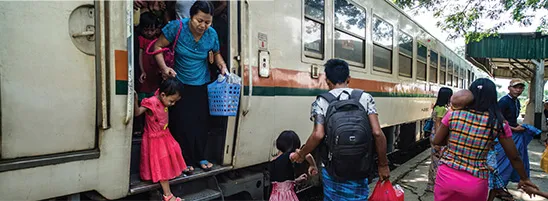
Cities are magnets for people seeking a better quality of life, and yet many in the region live in slums with poor urban services.
Urbanization in Asia and the Pacific
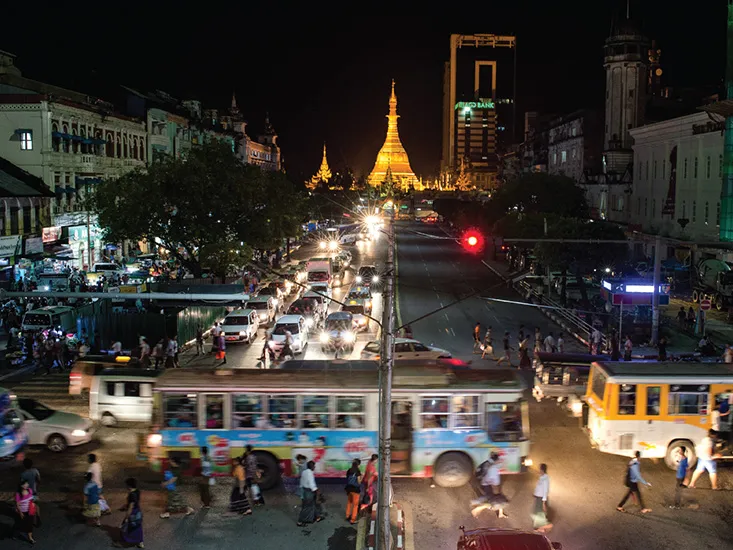
At the turn of the century (1990–2010), the region’s urban population grew by 29%, faster than any other region in the world. By midcentury (2010–2050), it is expected to rise from 40% to about 65% of the total population, or almost double from 1.9 billion to 3.3 billion people.1 While this foretells opportunities for higher productivity and better living standards, there are several risks. An estimated 523 million people across the region live in squalid urban slums with poor services,1 severe living condition disparities in many cities affect social cohesion, and urban buildings and transport account for significant energy consumption and carbon emissions. The region is increasingly exposed to the risks of climate-related hazards such as droughts, floods, and storm surges.
With about 75% of Asia’s gross domestic product (GDP) generated in urban areas, the quality and efficiency of its cities will determine the region’s long-term productivity and stability.2 Asian cities are centers of trade stimulating national economies, and these are integrated into trade corridors that link to global economic networks. They are magnets for people seeking a better quality of life and economic opportunities, and they are loci of regional cooperation.3 Conversely, inefficient and uncompetitive cities inhibit economic growth and impede inclusive development (footnote 2). Asian municipal infrastructure financing is only 40% of its $100 billion annual maintenance requirement.4
Stemming the decline or failure of Asian and Pacific cities, while facilitating their rapid growth, is essential for the region. Integrated urban planning—focusing on managing urban sprawl and providing sustainable, affordable, and climate-resilient infrastructure and basic services—will spell the difference between a future of gloom or glory. The United Nations Sustainable Development Goals (SDGs), which outline a comprehensive global agenda for 2030, clearly emphasize this with SDG 11: “Make cities and human settlements inclusive, safe, resilient and sustainable.” This is the universal backdrop for engaging with cities.
With fast-growing, changing, and complex cities, ADB needs to constantly adapt its way of working and engaging with cities so that it reflects a more comprehensive long-term partnership
Evolution of Urban Operations in ADB
The Asian Development Bank (ADB) has been assisting its developing member countries (DMCs) with about $22 billion in funding for over 200 urban development projects since the 1960s. These have improved urban transport, sanitation and waste management, and access to clean water.5
During the 1980s, so-called integrated urban development projects were implemented. These saw the need for the construction of a small basket of different infrastructure in order to satisfy a wider set of stakeholders in one or more cities in a focus country. In the 1990s, ADB began developing country urban sector strategies that inventoried key infrastructure requirements across all urban sectors in a country, and sought to package them in further bundles of projects to undergo project preparation and processing. In most cases these were restricted to purely physical infrastructure in traditional sectors, and did not include services or social infrastructure that would operationalize, leverage, or utilize the investments. Governments and cities were expected to fill in the gaps themselves or to seek funding from other international financing institutions (IFIs). There was and still is little coordination across sectors at the regional or country level despite significant structural reforms in ADB in the early 2000s.
Overview of the Future Cities Approach
The Future Cities approach emanated from a need identified in the review of ADB’s Strategy 2020, which is to develop better ways for ADB to engage with Asian and Pacific cities and ensure better sustainability and development effectiveness. With cities in the region already facing inherent development complexity and growing at such a rapid pace, traditional approaches to sector investment and planning have become inadequate, particularly with other IFIs entering the picture. It was necessary, therefore, to refine the process ADB used to select and engage with cities so that scarce knowledge and financial resources could be used most effectively.
Inspiration from the soft systems design literature6 for managing complexity and change in human activity systems influenced the Future Cities approach—Asian cities being some of the most complex in the world to date. It is an action-learning paradigm that entails understanding how multiple activities and interactions are joined together within and into a city, with the overt acknowledgment that this is continuously changing, and developing over time to some improved, more livable state.
The Future Cities approach was piloted in the research and development technical assistance (TA) project Establishing the Future Cities Program in the Asia and Pacific Region (Future Cities TA).
As tested under the TA, the Future Cities approach is anchored on building a relationship with a city, supported by the identification and assignment of financial and best practice knowledge resources, both from within and outside ADB, applied where they support ongoing activities and where they make the most sense to cultivate broader engagement and to codevelop a city that is livable and ready for the future (Box 1). Cross-sector and thematic support is also a main feature of the approach, which takes after the “One ADB” approach noted in the Midterm Review of Strategy 2020.
Box 1: Future Cities Approach Objectives
Outcome: Selected cities and the Asian Development Bank are engaged in an integrated approach to become more livable

Source: Author (NUP Presentation, September 2016).
Broader engagement in the Future Cities approach pertains to two salient points. First, it is about broadening engagement through increased ADB investments in the city. The aim is to have a mutually strong, diverse, and robust investment pipeline that will lead to a future livable city. Second, broader engagement is about the relationship and support toward the city. The substantive aspect of the approach includes acknowledging how the city is part of a wider network that consists of IFIs, city-to-city and business-to-city links, and most importantly a complex formulation of a diverse and growing citizenry.
The Future Cities approach is a process for establishing and broadening engagement first, then applying planning and investment
Selecting the Future Cities
The Future Cities approach starts with overt city selection as opposed to the traditional approach of project allocation by the national government. Cities selected under the Future Cities TA are those with existing ADB projects and networks, and which have leaders and ADB stakeholders willing to expand into a more comprehensive and long-term partnership.
The unique advantage of the Future Cities approach is the way it acts as a hotbed for alternative solutions, an incubator of ideas fusing the relevant knowledge and funding sources that can be eventually mainstreamed into operational thinking and lending.
These chosen existing projects are identified as the ADB core projects of the Future Cities approach.
It is this initial component from which the concept or analogy of “building the jigsaw” emanates (Figure 1). Too many projects are started in locales and with institutions with no track record of engagement. By utilizing existing network...
Table of contents
- Front Cover
- Title Page
- Copyright Page
- Contents
- Figures and Boxes
- Foreword
- Acknowledgments
- Abbreviations
- Chapter 1: Introduction
- Chapter 2: Components of the Future Cities Approach
- Chapter 3: Pilot Cases: Demonstration of the Future Cities Approach
- Chapter 4: Lessons Learned from the Pilot Cases
- Chapter 5: Conclusion and Considerations for Adopting the Future Cities Approach
- Footnotes
- Back Cover
Trusted by 375,005 students
Access to over 1.5 million titles for a fair monthly price.
Study more efficiently using our study tools.
Frequently asked questions
Yes, you can cancel anytime from the Subscription tab in your account settings on the Perlego website. Your subscription will stay active until the end of your current billing period. Learn how to cancel your subscription
No, books cannot be downloaded as external files, such as PDFs, for use outside of Perlego. However, you can download books within the Perlego app for offline reading on mobile or tablet. Learn how to download books offline
Perlego offers two plans: Essential and Complete
- Essential is ideal for learners and professionals who enjoy exploring a wide range of subjects. Access the Essential Library with 800,000+ trusted titles and best-sellers across business, personal growth, and the humanities. Includes unlimited reading time and Standard Read Aloud voice.
- Complete: Perfect for advanced learners and researchers needing full, unrestricted access. Unlock 1.5M+ books across hundreds of subjects, including academic and specialized titles. The Complete Plan also includes advanced features like Premium Read Aloud and Research Assistant.
We are an online textbook subscription service, where you can get access to an entire online library for less than the price of a single book per month. With over 1.5 million books across 990+ topics, we’ve got you covered! Learn about our mission
Look out for the read-aloud symbol on your next book to see if you can listen to it. The read-aloud tool reads text aloud for you, highlighting the text as it is being read. You can pause it, speed it up and slow it down. Learn more about Read Aloud
Yes! You can use the Perlego app on both iOS and Android devices to read anytime, anywhere — even offline. Perfect for commutes or when you’re on the go.
Please note we cannot support devices running on iOS 13 and Android 7 or earlier. Learn more about using the app
Please note we cannot support devices running on iOS 13 and Android 7 or earlier. Learn more about using the app
Yes, you can access Engaging with Cities of the Future by in PDF and/or ePUB format, as well as other popular books in Politics & International Relations & City Planning & Urban Development. We have over 1.5 million books available in our catalogue for you to explore.