- 118 pages
- English
- ePUB (mobile friendly)
- Available on iOS & Android
eBook - ePub
About this book
Many organizations have found themselves well advanced in their sustainability strategies and reaching the limits of progress made through eco-efficiency measures and regulatory compliance. Looking for novel approaches and solutions, many managers are turning to bioinspiration and related fields such as biomimicry, nature-inspired innovation, circular economy, and cradle to cradle, as tools for sustainability-oriented innovation. This innovation paradigm has been gaining popularity across disciplines in recent decades as the world grapples with the challenge of sustainable development. This book offers a succinct guide for managers and sustainability professionals who are interested in exploring various aspects of business inspired by nature. With applicability ranging from technological, organizational, and system-building innovations, there is a broad realm of possibilities that suit a manager's scope of influence regardless of their position within the organization. This book aims to exhibit the applications of business inspired by nature that extend beyond the boundaries of the organization and encourage open innovation with novel partners in unlikely scenarios, with all partners aligned by the principles of natural systems.
Information
CHAPTER 1
Introduction
Bio-What?
As a bioinspired innovation consultant and academic, I have had many conversations that go something like this:
New friend: “So what do you do for work?”
Me: “I work in a discipline called biomimicry—bios-, meaning ‘life’ and—mimesis, meaning ‘to imitate.’”
New friend: [Puzzled, yet intrigued expression.]
Me: “The premise is that all of the organisms living on the planet know how to be sustainable, and there’s a lot that humans can learn from these other organisms. I help architects, engineers, designers and business people learn from nature for more sustainable solutions to their challenges.”
New friend: “Wow, how interesting. Can you give me an example?”
This is where it gets trickier to explain. There are innumerable examples of bioinspiration, dating back to early human civilizations. Leonardo Da Vinci was a well-known practitioner of biomimetic innovation. Modern-day examples usually involve shiny gadgets, high-tech developments, and complex systems—alternatives to existing chemicals and materials, and complex supply chain infrastructures that hardly resemble living systems without carefully articulated metaphors. The diversity of possible examples makes the perspective of the audience an important detail when choosing which story of a biomimetic innovation will be most compelling for the listener. The applications of bioinspiration are as diverse as the users, ranging from product design to architecture to engineering to social applications.
For the purposes of this book, I will be addressing you, the reader, as a busy business professional who wants to know the basics of bioinspiration and all its various manifestations. We will focus on those applications that are most relevant to the management professional, though sector-specific examples will also be presented for the purposes of explanation. Given that this area of research and innovation has been growing at exponential rates in recent decades (Bonser 2006), it is imperative that managers become familiar with the various terms, perspectives, tools, and approaches to apply nature-inspired innovation to enterprise sustainability.
My goal both as an academic and a consultant is to enable practitioners to reconnect with natural systems in such a way that they feel empowered to bring sustainability lessons from nature to the lab, the design table, and the boardroom. Bioinspiration purists may scoff at my inclusive approach to nature-inspired innovation and decry that what I am referring to is actually several different fields of study. But as an academic myself, I find many of the differentiations between terms to be the splitting of hairs that is not necessarily helpful to advance the cause of learning from nature in practical settings.
In my research with multinationals using bioinspired innovation strategies, their internal narratives varied quite substantially. For some organizations, bioinspired terms such as biomimicry, cradle-to-cradle, industrial ecology, and circular economy represent discrete projects with their own lifespans, budgets, and outcomes. For other organizations, these innovation methods are used interchangeably and are viewed more broadly under a company narrative of learning from nature for sustainability.
For this reason, I will approach a broad range of topics under the more inclusive umbrella of bioinspiration or bioinspired innovation to include approaches such as biomimicry, cradle-to-cradle, industrial ecology, and circular economy. Given the amount of overlap in these areas of focus, it seems appropriate to provide conceptual distinctions as an FYI for the reader, but generally more helpful to present the practical applications that make these approaches appropriate for various levels of sustainability-oriented innovation.
If you are like the thousands of people interested in bioinspiration that I have encountered in my career, your interest is likely motivated by one of three curiosities: sustainability, nature-nerding, or innovation. For those of you driven primarily by sustainability, you likely have an interest in or workplace need for sustainability, and you are always looking for new tools for your sustainability toolkit. For those of you who self-identify as nature nerds or closet biologists, you likely have a deep connection with living systems already and you are seeking ways to deepen that connection. If you are primarily interested in innovation, you see biological strategies as a vast pool of innovative fodder for new products, services, and strategies. It is likely that all three of these aspects apply to you to some degree. Over the years, most of my students have demonstrated a combination with greater or lesser emphasis on one of the three. It may be helpful to take a moment to identify whether any of these entry points is more important for you.
Why are You Interested in Bioinspiration?
• Sustainability Gurus “Sustainability is a major aspect of my career and bioinspiration is a great addition to my toolkit.”
• Nature Nerds “I’ve always loved nature and am excited to learn more about incorporating these values into my work.”
• Innovation Seekers “Innovation and creative problem solving is my passion and nature offers millions of novel innovative solutions.”
While this book will address each of the three, there are many other resources available that emphasize bioinspiration at the interface of each aspect. For our purposes, these topics will be woven throughout the text in various ways, but perhaps keep a reflective eye on where you stand as well, as a means to guide your introduction to bioinspired innovation. Three different types of biomimetic innovations are found in corporate settings, broadly categorized as technological, organizational, and systems-building innovations.
Descriptions of Types of Bioinspired Innovations
• Technological innovations include product, process, material, and manufacturing changes that are inspired by biological models.
• Organizational innovations include changes to management strategies (e.g., applying swarm theory to team dynamics), trainings on bioinspiration, or other activities that encourage employees to learn from biological models to solve their workplace challenges.
• Systems-building innovations are those that intentionally extend beyond the boundaries of the organization to create changes to systems of production and consumption, socioecological systems, and socioeconomic systems.
Figure 1.1 demonstrates how these three categories can be viewed in a nested relationship with technologies embedded in organizations, and organizations embedded in larger systems.
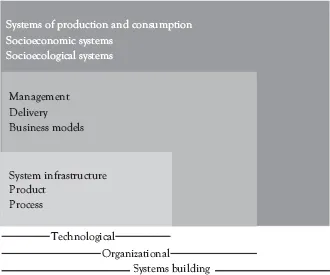
Figure 1.1 Types of bioinspired innovations
Source: Mead (2017).
These three categories will be mentioned in the later sections of the book, but the main objective of making these distinctions here is to shed any preconceived notions about what bioinspiration might mean to the reader before beginning this book. While much of the popular media on bioinspiration has focused on product and material design, there is a tremendous amount of work underway in which biological strategies are influencing various layers of corporate innovation. The following chapters will pull apart these layers into a practical conceptual framework that emphasizes the role of the manager in the application of bioinspiration.
Why Bioinspiration Now?
Does it seem like you are hearing a lot more about bioinspiration lately? It is likely that you actually are. From 1985 until 2005, the number of patents related to bioinspired innovation increased faster than the overall rate of all published patents (Bonser 2006), and there is even an economic index tracking the progress of biomimetic innovation in the economy (The Fermanian Business and Economic Institute 2010). At the time of writing, there is currently a process underway to develop ISO standards related to biomimetics. International NGOs have been turning to bioinspiration as a source of new inspiration, including the Worldwatch Institute and the International Union for Conservation of Nature.
To zoom out at a larger level of historical and social perspect...
Table of contents
- Cover
- Half-title Page
- Title Page
- Copyright
- Contents
- Chapter 1 Introduction
- Chapter 2 The Basics
- Chapter 3 Innovations in Management
- Chapter 4 Innovations in Operations
- Chapter 5 Innovations in Product Development
- Chapter 6 Bioinspiration in the Global Context
- Chapter 7 Processes and Conceptual Tools
- Chapter 8 Thinking Strategically
- Chapter 9 Conclusion
- Further Reading
- References
- About the Author
- Index
- Backcover
Trusted by 375,005 students
Access to over 1.5 million titles for a fair monthly price.
Study more efficiently using our study tools.
Frequently asked questions
Yes, you can cancel anytime from the Subscription tab in your account settings on the Perlego website. Your subscription will stay active until the end of your current billing period. Learn how to cancel your subscription
No, books cannot be downloaded as external files, such as PDFs, for use outside of Perlego. However, you can download books within the Perlego app for offline reading on mobile or tablet. Learn how to download books offline
Perlego offers two plans: Essential and Complete
- Essential is ideal for learners and professionals who enjoy exploring a wide range of subjects. Access the Essential Library with 800,000+ trusted titles and best-sellers across business, personal growth, and the humanities. Includes unlimited reading time and Standard Read Aloud voice.
- Complete: Perfect for advanced learners and researchers needing full, unrestricted access. Unlock 1.5M+ books across hundreds of subjects, including academic and specialized titles. The Complete Plan also includes advanced features like Premium Read Aloud and Research Assistant.
We are an online textbook subscription service, where you can get access to an entire online library for less than the price of a single book per month. With over 1.5 million books across 990+ topics, we’ve got you covered! Learn about our mission
Look out for the read-aloud symbol on your next book to see if you can listen to it. The read-aloud tool reads text aloud for you, highlighting the text as it is being read. You can pause it, speed it up and slow it down. Learn more about Read Aloud
Yes! You can use the Perlego app on both iOS and Android devices to read anytime, anywhere — even offline. Perfect for commutes or when you’re on the go.
Please note we cannot support devices running on iOS 13 and Android 7 or earlier. Learn more about using the app
Please note we cannot support devices running on iOS 13 and Android 7 or earlier. Learn more about using the app
Yes, you can access Bioinspiration in Business and Management by Taryn Mead in PDF and/or ePUB format, as well as other popular books in Economics & Sustainable Development. We have over 1.5 million books available in our catalogue for you to explore.