Only two years after its first run, the Inverted Classroom Conference has become a familiar event at Marburg University. Most conference participants not only knew about this digital teaching and learning scenario but were experienced users and developers. While during its predecessors most participants wanted to familiarize themselves with the central components of the Inverted Classroom Model, the focus of the 3rd German Inverted Classroom Conference in 2014, to which this conference volume is dedicated, was not only a discussion of variants of the model but also, for the first time, the inclusion of long-term evaluations and aspects of student behavior.
This shift of emphasis is reflected in the contributions to this volume. Even though all central aspects of the ICM - content production and delivery, testing, and the in-class phase - are still addressed, we can now find recommendations concerning digital material acquisition, in-class tuition, the role of student tutors as well as first long-term studies about ICM effects.
In general then, the focus was much wider than that of the first two ICM-conferences: from a new and originally non-familiar teaching and learning scenario to more general aspects of digitization of teaching and learning in the 21st century.
eBook - ePub
The Inverted Classroom Model
The 3rd German ICM-Conference – Proceedings
- 144 pages
- English
- ePUB (mobile friendly)
- Available on iOS & Android
eBook - ePub
The Inverted Classroom Model
The 3rd German ICM-Conference – Proceedings
About this book
Information
Subtopic
Computer Science GeneralIndex
Computer ScienceI Evaluation and Empirical Evidence of ICM Implementation
For the first time long-term evaluations and empirical research which have been conducted during the last semesters constitute contributions to these 3rd ICM conference proceedings.
Based on empirical research, Christian Decker and Stephan Beier answer the central question whether the implementation of the ICM, with its learner-centered self-navigation, its intensification of cooperation, and the learners’ active involvement in the learning process, lead to an increased learning success compared to traditional teaching methods. Their evaluation of the ICM implementation at the HAW Hamburg shows that a higher learning success and an enhancement of learner-centered self-guidance and active participation and collaboration are the results.
Similar beneficiary effects are shown by Jürgen Handke in his evaluation of two on-campus classes and the VLC-MOOC ‘Linguistics 201’. Supported by a wealth of data, he gives an overview on general student behavior, in-class attendance and learning outcomes in large classes with regard to special adjustments to the Inverted Classroom Mastery Model.
dp n="16" folio="" ? dp n="17" folio="" ? 1 The Instructor as Navigator: Empirical Evidence of the Implementation of the ICM at HAW Hamburg
1.1 Introduction
The Hamburg University of Applied Sciences (HAW Hamburg) is the third largest University of Applied Sciences in Germany. At HAW Hamburg, curricula of three different bachelor degree programmes include the identical lecture module ‘Investment and Finance’. The three programmes are:
- Foreign Trade/International Management
- Logistics/Technical Business Administration, and
- Marketing/Technical Business Administration
In the summer semester 2013, the Inverted Classroom Model (ICM) was introduced. The implementation of the ICM was accompanied by an empirical research project. The research question to be investigated was whether the implementation of the ICM, with its learner-centered self-navigation, its intensification of cooperation, and the learners’ active involvement in the learning process, lead to an increased learning success compared to traditional teaching methods. A master thesis, which was conducted in the context of the degree programme ‘Educational Media’ at the University Duisburg-Essen, documents the results of this research project.
1.2 Initial situation
The lecture module ‘Investment and Finance’, which combines the two sub-modules ‘Investment’ and ‘Finance’, is credited with 5 ECTS credit points (2.5 ECTS-CP each). The lectures of the sub-module ‘Finance’ comprise 15 weekly sessions (90 minutes each), taught separately for each of the three degree programmes. The average number of students enrolled in the three programmes totals to approximately 140 to 170 students per semester. Previously, the lecture contained both parts of traditional teacher-focused reading and parts of hands-on seminars. However, significant parts of the lecture were characterised by elements of traditional teaching approaches. Between 30 and 60 students participated regularly in each session. In general, the students did not have previous lecture-specific or practical knowledge. In the past, the average failure rate had continuously increased to reach a peak of 57%. Assumed drivers for this trend were the distinctive heterogeneity with respect to the individual cognitive capacity, the abilities of concentration and reflection, the motivation, and the social behaviour. However, the lecture module’s evaluations in the past indicated that an increased portion of practical-based case studies and hands-on exercises might have positive effects on the students’ motivation, which might also impact the students’ learning success and examination grades. Due to time constraints, such an increase in activities would have resulted in a reduced content of reading, which might have induced problems with the accreditation of the study programmes.
1.3 Development of a new concept
Based upon the observation of the initial situation, it was analysed whether the course concept could be modified in order to improve the lecture’s quality and accordingly better meet the students’ needs. These aims ought to be achieved by shifting the focus of learning from teacher-centered lectures towards student-centered learning activities. Furthermore, the modification of the concept was supposed to be realised without the reduction of the content of learning. Didactical and methodical changes in the course concept were based on the Inverted Classroom Model (Schäfer, 2012: 3). The modified concept should define the framework for an increase in the students’ intensified and self-directed learning engagement (Davis, 2013: 214) as well as an increase of their responsibility for learning processes (Spannagel, 2012: 73). Furthermore, the modified concept should increase the students’ involvement in constructivist learning environments such as active and collaborative learning activities (Bishop/Verleger, 2013). In this concept, the provision of e-learning videos during the online phase should mainly support self-directed learning processes and their positive impacts on cognition and information processing as well as motivation and flexible handling of resources regarding time and place (Friedrich/Mandl, 1997). Activities during the in-class phases should mainly be based on constructivist learning environments such as active, cooperative and problem-based learning approaches (Bishop/Verleger, 2013). The graphic below presents the theoretical framework of the new course concept.
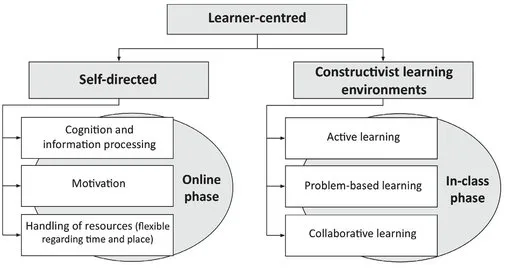
Figure 1.1: Framework for a learner-centered concept in the ‘Finance’-lecture
The development of a fundamental theoretical understanding and the acquisition of practical and methodical competencies were major objectives while developing the course concept. It was expected that students comprehend the teaching and learning content at a deeper level and that failure rates decrease. Finally, the new concept was supposed to lead to an improvement of the students’ learning success. Therefore, four hypotheses were derived from the research of learning theories with regard to the implementation of self-directed, active and collaborative learning activities, which ought to be realised by the application of the Inverted Classroom Model:
- (1) The transfer of self-guiding and self-responsibility leads to a more intensive engagement with the learning content compared to traditional teaching approaches.
- (2) The design of in-class phases leads to intensified active participation as well as to intensified collaboration and cooperative learning activities.
- (3) Students intensifying their active involvement or achieving a better understanding of contents prefer the concept compared to traditional teaching approaches.
- (4) The implementation of an ICM leads to increased learning success, which may range from a better understanding of the learning contents to better average examination results.
The analysis of the hypotheses was subject to empirical research based on the lecture module ‘Finance’ at HAW Hamburg in the summer semester 2013.
1.4 Content production and distribution and organisation of in-class activities
The content production for e-learning videos was based on an extensive Microsoft PowerPoint script containing various graphics, charts, d...
Table of contents
- Also of Interest
- Title Page
- Editors
- Copyright Page
- Table of Contents
- Preface
- The Authors
- I Evaluation and Empirical Evidence of ICM Implementation
- II Recent Developments
- III Implementations of the ICM at University Level
- IV Implementation of the ICM in High School
- References
- Index
Trusted by 375,005 students
Access to over 1.5 million titles for a fair monthly price.
Study more efficiently using our study tools.
Frequently asked questions
Yes, you can cancel anytime from the Subscription tab in your account settings on the Perlego website. Your subscription will stay active until the end of your current billing period. Learn how to cancel your subscription
No, books cannot be downloaded as external files, such as PDFs, for use outside of Perlego. However, you can download books within the Perlego app for offline reading on mobile or tablet. Learn how to download books offline
Perlego offers two plans: Essential and Complete
- Essential is ideal for learners and professionals who enjoy exploring a wide range of subjects. Access the Essential Library with 800,000+ trusted titles and best-sellers across business, personal growth, and the humanities. Includes unlimited reading time and Standard Read Aloud voice.
- Complete: Perfect for advanced learners and researchers needing full, unrestricted access. Unlock 1.5M+ books across hundreds of subjects, including academic and specialized titles. The Complete Plan also includes advanced features like Premium Read Aloud and Research Assistant.
We are an online textbook subscription service, where you can get access to an entire online library for less than the price of a single book per month. With over 1.5 million books across 990+ topics, we’ve got you covered! Learn about our mission
Look out for the read-aloud symbol on your next book to see if you can listen to it. The read-aloud tool reads text aloud for you, highlighting the text as it is being read. You can pause it, speed it up and slow it down. Learn more about Read Aloud
Yes! You can use the Perlego app on both iOS and Android devices to read anytime, anywhere — even offline. Perfect for commutes or when you’re on the go.
Please note we cannot support devices running on iOS 13 and Android 7 or earlier. Learn more about using the app
Please note we cannot support devices running on iOS 13 and Android 7 or earlier. Learn more about using the app
Yes, you can access The Inverted Classroom Model by Eva-Marie Großkurth, Jürgen Handke, Eva-Marie Großkurth,Jürgen Handke in PDF and/or ePUB format, as well as other popular books in Computer Science & Computer Science General. We have over 1.5 million books available in our catalogue for you to explore.