Whatever their industry of origin, all companies are facing the same challenge to a greater or lesser degree: globalization. It is becoming more and more evident that companies need to plan ahead and anticipate coming developments if they are to be successful in the future. Today, it is crucial to establish a solid competitive position in the global arena. There is no doubt that a corporate culture that is open to innovation and shaped by global thinking, plays a key role in this context. A culture in which representatives of different countries und cultures can come together, anticipating and understanding the cultural challenges, creates the foundation of any international business. A global view on intercultural management will be the key to successfully doing business in diverse cultural environments.

eBook - ePub
A Global View on Intercultural Management
Challenges in a Globalized World
- 360 pages
- English
- ePUB (mobile friendly)
- Available on iOS & Android
eBook - ePub
About this book
Information
Subtopic
Human Resource ManagementIndex
Business1 Globalization and InterculturalManagement
1.0 Statement of the problem
Globalization and Business issues
(Julia Serdyuk)
Globalization eliminates the boundaries between the countries and provides new opportunities for business: want to open a subsidiary in Egypt? Go ahead! Want to sell your shoes of high quality in Kazakhstan? You can try! However, as the reality shows, it is not that simple and in many cases cultural differences, including differences in management style, can prevent the success of a joint venture.
In spite of all the differences between business cultures, we cannot neglect certain common grounds that constitute business in general. For example, each business deals with profit-orientation, professional development of staff, etc. And, thanks to globalization, today various countries can share and learn from each other in order to adopt new elements in their own operation. For example, Japanese companies now seem to be picking up lessons from American management to become more flexible and less avoiding uncertainty; American companies are learning best practices from their counterparts in other parts of the world, especially from Japan.
Having been off the market for many years, and under the pressure of “command” authority, Russia had difficulties to enter the world market. While globalization was already involving all other countries, it did not “touch” Russian business and management style until the 90’s, when the country started reforming its own business style. Now, Russia constitutes a part of the business world and is interconnected with the world system. Russia adopted some well-known management models as well as developed its own business strategies. What model of business style has Russia chosen? It is hard to define the model itself, as it is still being developed, but we can characterize Russian management style as more autocratic than democratic. Although the tendency in management here is to get more people-oriented, less “power-oriented”, employees get more and more appreciation for their knowledge, experience, and creativity. They are also given more choices and responsibilities at the workplace. I think, this indicates the development of a new management style, which has more similarities with American and European ones.
To summarize, globalization provides many opportunities as well as challenges in business. In order to better utilize the opportunities for different countries to operate successfully, under the conditions of cultural diversity, we need to go beyond our cultural stereotypes. Curiosity, openness and striving to reach mutual understanding should become good features for intercultural management. We can learn a lot from each other, but we need to learn to be tolerant and respectful to all the differences we face, when we do business together.
In: Cross-Cultural Blog: management style and globalization, in web:
http://web.stanford.edu/group/ccr/blog/2009/02/globalization_and_business_iss.html, accessed 23/06/2014
1.1 “The Global Challenge”
Every day we hear it on the news, read it in the papers, overhear people talking about it, and in every single instance the word “globalization” seems to have a different meaning. So, what is globalization?
At the political and economic level, globalization is the process of denationalization of markets, politics and legal systems; it is the rise of global economy. At the business level, the process of globalization is when companies decide to take part in the emerging global economy and establish themselves in foreign markets. They adapt their products or services to the linguistic and cultural requirements of different nations. Then, they might take advantage of the Internet revolution and establish a virtual presence on the international marketplace. E-commerce has changed traditional business practices by providing direct international access to information and products.
Whatever their industry or country of origin, all companies are facing the same challenge to a greater or lesser degree: globalization. It is becoming more and more evident that companies need to plan ahead and anticipate coming developments if they are to be successful in the future. Ecological matters have gained in importance at the turn of the century. Climate change is perceived as the biggest challenge to mankind and affects all industries and societies alike (Stern, 2008, p. 1).
In the past, it was primarily reductions in tariff and trade barriers that stimulated global trade and encouraged the integration of international business. Today, however, the key factor is the global networking that has been made possible by new communication technologies. Increasingly intense international competition is accelerating structural change throughout the world. More and more, industries that only “yesterday” limited their production to the United States, Europe or Japan are feeling the influence of threshold countries. Moreover, jobs that seemed guaranteed for life some years ago are moving into these low-wage countries. No longer are they limited to the production of simple toys for children – today companies in threshold countries are producing luxury consumer goods, consumer electronics and highly sophisticated machines and vehicles, and with dizzying success (Lippisch/Köppel, 2007, p. 3).
In order to be economically successful in the global market, it is not only the hard facts that count – such as the general economic and commercial settings, product quality or innovative products and services. “Soft” competencies, especially social competence and excellent communication skills, become more and more important. Thus, a balanced consideration of hard facts and “soft” competencies is increasingly becoming a prerequisite for global success. Only companies and organizations with a multicultural structure will succeed beyond the regional level and will continue to be successful on a global scale. In the future, mono-structures and mono-cultures will be limited to regional importance. However, multicultural organizations will not prosper automatically, just because they are multicultural. On the contrary, if managed badly, they may function worse than mono-cultural organizations. Thus, the skills to lead a multicultural organization have to be in the focus and are paramount for the success in the global market.
These consequences of global competition are putting pressure on companies in the developed Western countries. Companies from Central and Western Europe are faced with the question of how to respond in order to remain competitive. Market isolation is a strategy that no longer works in today’s globalized world, and it is likely to do more harm than good.
Instead, today it is crucial to establish a solid competitive position in the global arena and to defend that position by continually adapting to meet the needs of the market. There is no doubt that a corporate culture that is open to innovation and shaped by global thinking plays a key role in this context, a culture in which representatives of different countries and cultures can come together, while giving due regard to the developments and conditions that influence a company’s actions (Lippisch/Köppel, 2007, p. 3). International business and professional activity demand movement beyond one particular cultural conditioning into a transcultural arena.
The technological environment surrounding businesses today is characterized by a soaring speed of change and innovation. Revolutionizing innovations in the fields such as microelectronic, robotic and generic engineering can be perceived as a threat or chance to the enterprise’s competition (Welge/Al-Laham, 2008, p. 295).
If globalization refers to the transmission of ideas, meanings and values across world space the intercultural aspect is obvious. In the contemporary period, and from the beginning of the twentieth century, this process is marked by the common consumption of cultures that have been diffused by the Internet, popular culture media, and international travel. This has added to processes of commodity exchange and colonization which have a longer history of carrying cultural meaning across the globe. The circulation of cultures enables individuals to partake in extended social relations that cross national and regional borders. The creation and expansion of such social relations is not merely observed on a material level. Cultural globalization involves the formation of shared norms and knowledge with which people associate their individual and collective cultural identities. It brings increasing interconnectedness among different populations and cultures (Steger/James, 2010, p. 12).
As far as global challenges are concerned, the current developments can be split into four main categories (Rothlauf, 2004, pp. 25ff), namely:
- new technologies
- new markets
- new environmental drivers
- new global players
Within this framework, an intercultural answer has to be given, which includes:
- new corporate culture
- new skills
- new management and working styles
- new company structures
Both, challenges and the intercultural answers will be presented in the following and are also illustrated in Fig. 1.1.
1.1.1 Global challenges
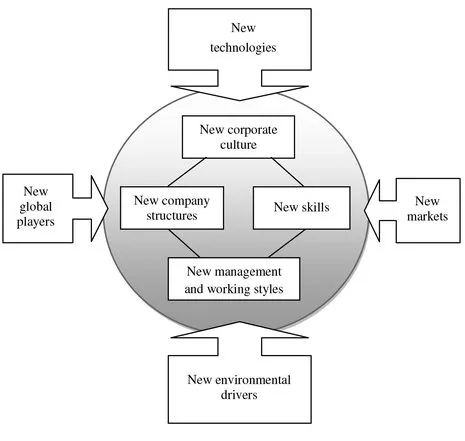
Fig. 1.1: Challenges and solutions in the global context
Source: Own illustration
New technologies
New information and communication technologies, such as the internet, are ubiquitous and cheap; they control the markets, permit worldwide access to information, foster global trends and reach the most distant corner of the world.
Moreover, an emerging technology as distinguished from a conventional technology is a field of technology that broaches new territory in some significant way with new technological developments. Examples of currently emerging technologies include educational technology, nanotechnology, biotechnology, cognitive science, robotics, and artificial intelligence.
New markets
Business is always changing and to maximize the relevant business options one have to explore new markets and to expand the current buiness activities. As resources become scarcer and scarcer and domestic markets are reaching the saturation point, it is becoming increasingly important to open up new sales, resource and labor markets. A successful search for geographic or technical alternatives is part of a company’s international strategy. Moving into new territories and categories is a radical strategy that can create major potential for incremental business growth. To succeed it requires a precise understanding of market dynamics, consumer behaviour and the competitive landscape of the specific markets.
New global players
Companies from threshold countries are developing at a breathtaking speed. They have the benefit of a plentiful supply of cheap, motivated and well-qualified workers. They are developing an increasingly accurate sense of where the demand is, and their ability to offer high-quality products at a reasonable price is growing as well.
A good example for those new global players is BRICS, an acronym for an association of five major emerging national economies: B...
Table of contents
- A Global View on Intercultural Management
- Title Page
- Copyright Page
- Preface
- Acknowledgments
- Table of Contents
- Table of Figures
- List of Tables
- 1 Globalization and InterculturalManagement
- 2Cultural Reflection as a Starting Point forIntercultural Management
- 3 Corporate Culture and Internationalization
- 4 Values under the Influence of Culture andTechnology
- 5 Intercultural Competence
- 6 Intercultural Communication
- 7 Leadership Across Cultures
- 8 Multicultural Teams
- 9 Intercultural Preparation and Reintegration
- 10 Three Global Intercultural Tests
- List of References
- Index
Trusted by 375,005 students
Access to over 1.5 million titles for a fair monthly price.
Study more efficiently using our study tools.
Frequently asked questions
Yes, you can cancel anytime from the Subscription tab in your account settings on the Perlego website. Your subscription will stay active until the end of your current billing period. Learn how to cancel your subscription
No, books cannot be downloaded as external files, such as PDFs, for use outside of Perlego. However, you can download books within the Perlego app for offline reading on mobile or tablet. Learn how to download books offline
Perlego offers two plans: Essential and Complete
- Essential is ideal for learners and professionals who enjoy exploring a wide range of subjects. Access the Essential Library with 800,000+ trusted titles and best-sellers across business, personal growth, and the humanities. Includes unlimited reading time and Standard Read Aloud voice.
- Complete: Perfect for advanced learners and researchers needing full, unrestricted access. Unlock 1.5M+ books across hundreds of subjects, including academic and specialized titles. The Complete Plan also includes advanced features like Premium Read Aloud and Research Assistant.
We are an online textbook subscription service, where you can get access to an entire online library for less than the price of a single book per month. With over 1.5 million books across 990+ topics, we’ve got you covered! Learn about our mission
Look out for the read-aloud symbol on your next book to see if you can listen to it. The read-aloud tool reads text aloud for you, highlighting the text as it is being read. You can pause it, speed it up and slow it down. Learn more about Read Aloud
Yes! You can use the Perlego app on both iOS and Android devices to read anytime, anywhere — even offline. Perfect for commutes or when you’re on the go.
Please note we cannot support devices running on iOS 13 and Android 7 or earlier. Learn more about using the app
Please note we cannot support devices running on iOS 13 and Android 7 or earlier. Learn more about using the app
Yes, you can access A Global View on Intercultural Management by Jürgen Rothlauf in PDF and/or ePUB format, as well as other popular books in Business & Human Resource Management. We have over 1.5 million books available in our catalogue for you to explore.