This volume focuses on how English, through false Anglicisms, influences several European languages, including Italian, Spanish, French, German, Danish and Norwegian. Studies on false Gallicisms are also included, thus showing how English may be affected by false borrowings.
eBook - ePub
Pseudo-English
Studies on False Anglicisms in Europe
- 298 pages
- English
- ePUB (mobile friendly)
- Available on iOS & Android
eBook - ePub
Pseudo-English
Studies on False Anglicisms in Europe
About this book
Information
II Germanic languages
dp n="72" folio="60" ? dp n="73" folio="61" ?3 Danish pseudo-Anglicisms:A corpus-based analysis
Abstract: The Danish speech community has developed from speaking English as a foreign language to using English as a second language, a default language that Danes switch into when communicating with foreigners. This article presents a longitudinal study of the use and frequencies of pseudo-Anglicisms in Danish. It shows that in parallel with the changing status of English in Denmark is a shift away from the prolific coinage of pseudo-Anglicisms in the past. However, over a twenty-year period (1993–2013) established pseudo-Anglicisms – most of which Danes believe to be genuine English borrowings – continue to increase their usage when compared with all-Danish synonyms. The article includes a comprehensive overview of the types and usage of pseudo-Anglicisms recorded in contemporary Danish media. Divided into four categories, a total of 114 Danish pseudo-Anglicisms are listed, with frequencies, definitions, etymons and/or English equivalents given for each item.
Keywords: Anglicisms, corpus-based methodology, Danish, diachronic approach, EFL, English impact, ESL, Infomedia, lexicography, lexicology, pseudo-Anglicisms, receptor language, relative frequencies, relay Anglicisms, semantic market share, typologies
1 Danish pseudo-Anglicisms – room forsystematic observations
Apart from a few remarks made by Torsten Dahl (Dahl 1941: 387), pseudo-Anglicisms (PAs) in Danish were not discussed until the 1970s. Since then, some Danish Anglicists and lexicographers have, in a more or less systematic fashion, included pseudo-Anglicisms in their work, most notably Knud Sørensen (1973, 1995, 1997), Pia Jarvad (1995, 1998) and Andrzej Szubert (1999a, 1999b, 2003, 2006). Still, no scholarly and systematic publication has been offered on this topic, no comprehensive listing has been made, and no statistics on the usage have been presented. This study seeks to remedy this – by looking at the use of pseudo-Anglicisms in Danish over two decades, using the more than 20 billion word strong text archive Infomedia as its point of departure.
In this article I will present the findings of my research focusing on the types, frequencies and functions of pseudo-Anglicisms in contemporary Danish usage. I will start by presenting examples of the three main types, i.e. morphological, lexical and semantic pseudo-Anglicisms.
2 The various types of Danish PAs
For practical reasons, I will use the following terminology, based on Carstensen’s German-based typology (1980), Furiassi’s (2010) work regarding Italian, and Fjeld’s article on Norwegian lexicology (2011):
- 1) clippings (these morphological items constitute the largest group of pseudo-Anglicisms in Italian34);
- 2) recombination of English morphemes (lexical PAs);
- 3) neo-semantization of English lexemes (including semantic fossils and semantic neologisms).
2.1 Clippings
Beginning with the morphological pseudo-Anglicisms, aka clippings, this category includes items like mail for e-mail and grape tonic for ‘a sparkling soft drink with grape fruit flavor’ – a taste far removed from that of the alleged grapes in the name, as foreigners soon realize. It must be noted that English-sounding clippings found in a receptor language (RL) are not necessarily pseudo-Anglicisms, but may originate in English proper. Thus, the term laptop, short for laptop computer, is highly frequent in both English and a host of other languages. In Danish, it is used alternatively with the all-Danish clipping bærbar, meaning ‘portable’, short for bærbar computer.
Finally, while recombinations and neo-semantizations typically stem from a linguistic need or a creative whim specific to one speech community, the same clippings are often found in several languages. Items like happy end and aircondition are thus common in Norwegian (Fjeld 2011: 36), German (Onysko 2007: 53), and – as we will see – Danish.
The oft-mentioned smoking, originally coined in French and known in Danish since 1902 (Meyer 1902), may be the world’s most ubiquitous pseudo-Anglicism. In A Dictionary of European Anglicisms (Görlach 2001), the use of smoking (in some cases with localized spelling) to refer to tuxedo (US English) or dinner jacket (UK English) is documented in no less than 15 out of the 16 European languages investigated – with Albanian as the only unaffected language.
2.2 Recombinations
This category is very productive in Germanic languages and constitutes a significant part of the established Danish inventory of pseudo-Anglicisms, including the four items below, all coined before 1960 and still the sole or dominant terms for the objects displayed in Figure 1:
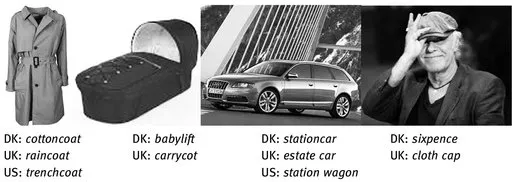
Figure 1: High-frequency Danish pseudo-Anglicisms
As these examples illustrate, the coining of recombinations to designate physical entities commonly known to Danes and native Anglophones alike was once a recurrent phenomenon in Denmark. But in parallel with the increased knowledge of English, rather few such recombinations have appeared in Danish since the mid-twentieth century (see Table 8 below). Today, new coinages that may, to some observers, look like recombinations (and thus pseudo-Anglicisms) are almost always hybrids, linking an existing Danish element with an English morpheme or lexeme. To cite one typical example of this trend, the neologism metrosteward was coined in 2003 as the Copenhagen metro opened. The term metro, an established Gallicism previously used in Danish of underground train services, e.g. in Paris, was combined with another established term, the Anglicism steward, used in Danish with reference to a male service person on airlines and intercity trains – a sense also found in English.
2.3 Neo-semantizations
In a few cases, Danish Anglicisms are presently used in senses now obsolete in English, thus rendering them pseudo-Anglicisms. An example of such semantic fossils is the earlier-cited term sixpence, used for a traditional cloth cap originally sold in the UK for six pence (see Figure 1). Another fossilized Anglicism, the upper ten (referring to members of the upper class), quite common in Danish even after its demise in English, is now so seldom used that it fails to qualify for inclusion in the listings in Tables 3 to 6: only 14 instances of this PA were found in Infomedia.
The antithesis of such fossilized usage is the appearance of semantic neologisms, i.e. Anglicisms that have developed new senses never found in native usage. Danish examples of this range from kiks (a neuter noun derived from kicks, having acquired the sense ‘slip’ or ‘miss’, with documented Danish usage since 1782) to modern developments like bake-off (meaning ‘half-baked bread’) first attested in 1990.
In my listing of neo-semantizations (see Table 5 below) I include instances of word class change, as when the grammatical repertoire of the (international) Anglicism SMS is expanded into covering the act of texting, thus coining the Danish verb at sms’e, ‘to text’ – an interesting parallel to the synonymous German coinage simsen (Görlach 2003: 71). The list also includes some occasional items that may not be, in the words of Cristiano Furiassi (2010: 34), “recognizably English in its form (spelling, pronunciation, morphology, or at least one of the three)”. This is partly due to the fact that Danish and English are quite closely related at the three levels mentioned here by Furiassi. Thus, Danes may not have a clue whether a given word is of Danish or English origin. This, of course, goes for bona fide Anglicisms as well as false Anglicisms. An example of this is the adjective smart – a full-blown Anglicism which happens to look and sound Danish, rhyming with the all-Danish adjective sart, meaning ‘delicate’. Thus, only Danes with a fair command of English would identify smart as an English loanword.
Folk etymology may work the other way round with the common-gender noun kiks, meaning ‘biscuits’ or ‘crackers’, attested in Danish since 1878. While linguists may know that the etymon of the word is cakes, average Danes might –if ever asked – think that kiks is derived from English kicks. Ironically, this is exactly the etymology of the above-mentioned neuter pseudo-Anglicism kiks.
As part of the general argument of this study, neo-semantizations of English lexemes are in principle unavoidable if the semantic and pragmatic circumstances of the usage of Anglicisms are investigated in detail: “[o]n closer scrutiny, the definition of pseudo-Anglicisms borders on morphological and semantic changes of borrowings in the RL” (Onysko 2007: 52).
Consequently, as long as semantic change in an Anglicism justifies its inclusion, via the label “neo-semantization”, in the pseudo-Anglicism category, one might be tempted to label all Anglicisms pseudo-Anglicisms. However, in order to keep the neo-semantization category operational, we must determine the degree of semantic change needed for an item to be classified as a case of neo-semantization, and thus be considered a pseudo-Anglicism.
In Table 1, each of the three numbered factors will constitute a neo-semantization, whereas the...
Table of contents
- Language Contact and Bilingualism
- Title Page
- Copyright Page
- Table of Contents
- List of contributors
- Acknowledgements
- I Theory
- II Germanic languages
- III Romance languages
- IV English
- Appendix
- Subject index
- Language index
- Author index
Trusted by 375,005 students
Access to over 1.5 million titles for a fair monthly price.
Study more efficiently using our study tools.
Frequently asked questions
Yes, you can cancel anytime from the Subscription tab in your account settings on the Perlego website. Your subscription will stay active until the end of your current billing period. Learn how to cancel your subscription
No, books cannot be downloaded as external files, such as PDFs, for use outside of Perlego. However, you can download books within the Perlego app for offline reading on mobile or tablet. Learn how to download books offline
Perlego offers two plans: Essential and Complete
- Essential is ideal for learners and professionals who enjoy exploring a wide range of subjects. Access the Essential Library with 800,000+ trusted titles and best-sellers across business, personal growth, and the humanities. Includes unlimited reading time and Standard Read Aloud voice.
- Complete: Perfect for advanced learners and researchers needing full, unrestricted access. Unlock 1.5M+ books across hundreds of subjects, including academic and specialized titles. The Complete Plan also includes advanced features like Premium Read Aloud and Research Assistant.
We are an online textbook subscription service, where you can get access to an entire online library for less than the price of a single book per month. With over 1.5 million books across 990+ topics, we’ve got you covered! Learn about our mission
Look out for the read-aloud symbol on your next book to see if you can listen to it. The read-aloud tool reads text aloud for you, highlighting the text as it is being read. You can pause it, speed it up and slow it down. Learn more about Read Aloud
Yes! You can use the Perlego app on both iOS and Android devices to read anytime, anywhere — even offline. Perfect for commutes or when you’re on the go.
Please note we cannot support devices running on iOS 13 and Android 7 or earlier. Learn more about using the app
Please note we cannot support devices running on iOS 13 and Android 7 or earlier. Learn more about using the app
Yes, you can access Pseudo-English by Cristiano Furiassi, Henrik Gottlieb, Cristiano Furiassi,Henrik Gottlieb in PDF and/or ePUB format, as well as other popular books in Languages & Linguistics & Languages. We have over 1.5 million books available in our catalogue for you to explore.