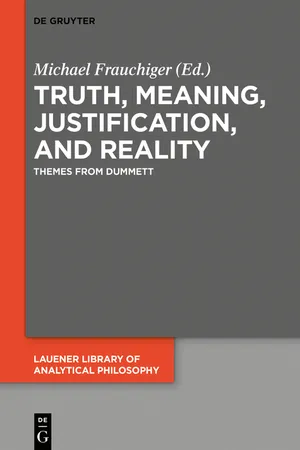
This collection concentrates on vital themes from Michael Dummett, one of the most influential and creative analytic philosophers of our time. The contributors, who include some of Dummett's distinguished former students, critically reflect on various concerns of Dummett's ground-breaking work in philosophy of language, metaphysics, and philosophy of mathematics and logic. The essays direct towards aspects of Dummett's pioneering work in the history of analytical philosophy, particularly his interpretations of the works of Frege and of Wittgenstein, which in conjunction with Dummett's own highly original ideas on truth and meaning have shaped decisive contemporary debates concerning notably the distinction between realism and anti-realism. Further, the volume includes a cheerfully serious excursion into popular philosophy by Dummett himself and reveals less known facets of Dummett's many-sided work and activities such as his political philosophy of immigration and asylum, and beyond that, his untiring and warm-hearted campaign for racial justice and humanity. Contributors: Michael Dummett, Eva Picardi, Crispin Wright, Timothy Williamson, Ian Rumfitt, Daniel Isaacson, Dag Prawitz, Dale Jacquette, Alex Burri, Michael Frauchiger.
- 260 pages
- English
- ePUB (mobile friendly)
- Available on iOS & Android
eBook - ePub
About this book
Information
Topic
PhilosophieSubtopic
Langue en philosophieIndex
- Aeschylus 1
- Allison, H. 1
- Anscombe, G. E. M. 1, 2, 3, 4, 5
- Anselm (of Canterbury) 1
- Artemov, S. N. 1, 2
- Augustine (of Hippo) 1, 2, 3
- Austin, J. L. 1, 2, 3
- Ball, E. 1
- Barcan Marcus, R. 1, 2, 3
- Bergoglio, J. M. (Pope Francis) 1, 2
- Berkeley, G. 1, 2
- Berker, S. 1, 2
- Beth, E. W. 1, 2, 3
- Blackburn, S. W. 1, 2
- Boolos, G. 1, 2, 3, 4, 5
- Boyd, R. 1
- Bradley, F. H. 1
- Brandom, R. 1, 2, 3, 4, 5, 6
- Braun, A. 1
- Brouwer, L. E. J. 1, 2, 3
- Burali-Forti, C. 1, 2
- Burge, T. 1
- Burgess, J. 1
- Cantor, G. 1, 2, 3, 4, 5
- Carnap, R. 1, 2, 3, 4, 5, 6, 7, 8
- Church, A. 1
- Copernicus, N. 1
- Cozzo, C. 1, 2, 3
- Cresswell, M. 1, 2
- Crossley, J. 1
- Darwin, C. R. 1
- Davidson, D. 1, 2, 3, 4, 5, 6, 7, 8
- Davies, M. 1, 2, 3, 4
- Dodgson, C. L. (Lewis Carroll) 1
- Dokic, J. 1, 2
- Drai, D. 1, 2
- Du Bois-Reymond, E. 1
- Dummett, A. 1, 2, 3, 4, 5, 6, 7, 8, 9
- Dummett, M. A. E. 1, 2, 3, 4, 5, 6, 7, 8, 9, 10, 11, 12, 13, 14, 15, 16, 17, 18, 19, 20, 21, 22, 23, 24, 25, 26, 27, 28, 29, 30, 31
- Eardley-Wilmot, J. E. 1
- Einstein, A. 1, 2
- Engel, P. 1, 2
- Euclid 1
- Evans, G. 1
- Farquharson, R. 1, 2
- Field, H. 1, 2
- Fine, K. 1, 2, 3, 4, 5, 6
- Fitch, F. B. 1, 2
- Føllesdal, D. 1
- Frege, G. 1, 2, 3, 4, 5, 6, 7, 8, 9, 10, 11, 12, 13, 14, 15, 16, 17
- Friedman, H. 1, 2
- Geach, P. 1
- Gentzen, G. 1, 2, 3, 4
- Gödel, K. 1, 2, 3, 4, 5, 6, 7, 8, 9, 10
- Goldbach, C. 1, 2, 3, 4
- Goldfarb, W. 1
- Gregory, D. 1
- Grice, P. 1
- Gupta, A. 1, 2
- Hale, B. 1, 2, 3, 4
- Halmos, P. 1
- Hamilton, E. 1
- Hammersley, J. 1
- Hare, R. 1
- Harman, G. H. 1, 2
- Heck, R. 1, 2, 3, 4, 5, 6
- Hegel, G. W. F. 1
- Henkin, L. 1
- Heyting, A. 1, 2, 3, 4, 5, 6, 7
- Horace 1
- Horwich, P. 1, 2, 3
- Hughes, G. E. 1, 2
- Humberstone, L. 1, 2, 3, 4, 5
- Husserl, E. 1
- Junia 1
- Kant, I. 1, 2, 3, 4, 5
- Kennedy. R. F. 1
- Kierkegaard, S. 1
- King, M. Luther 1, 2, 3
- Kolmogorov, A. 1, 2
- Kreisel, G. 1, 2
- Kripke, S. 1, 2, 3, 4, 5, 6, 7
- Künne, W. 1, 2
- Lakatos, I. 1
- Langton, R. 1
- Las Casas, B. de 1
- Lauener, H. 1, 2, 3, 4, 5, 6
- Leibniz, G. W. 1
- Lemmon, J. 1, 2
- Levine, J. 1, 2
- Lewis, D. 1, 2
- Linnebo, Ø. 1, 2
- Linsky, B. 1, 2
- Loar, B. F. 1, 2
- Locke, J. 1
- Loewer, B. 1, 2
- Luke (the Evangelist) 1, 2
- Mann, S. 1, 2
- Mares, E. D. 1, 2
- Martin-Löf, P. 1, 2, 3
- McDowell, J. 1
- McFetridge, I. G. 1, 2
- McLeod, J. 1, 2
- Meinong, A. 1
- Milton, J. 1
- Montini, G. B. (Pope Paul VI) 1
- Myhill, J. 1
- Nagel, T. 1
- Newton, I. 1
- Pagin, P. 1, 2
- Parmenides 1
- Parsons, T. 1, 2
- Pascal, B. 1
- Paul (the Apostle) 1, 2, 3, 4
- Peacocke, C. 1, 2, 3, 4, 5, 6, 7
- Peano, G. 1, 2, 3, 4, 5
- Plato 1, 2
- Plutarch 1
- Prawitz, D. 1
- Price, H. 1, 2
- Prior, A. N. 1, 2, 3
- Putnam, H. 1, 2, 3, 4
- Quine, W. V. O. 1, 2, 3, 4, 5, 6, 7, 8, 9, 10, 11, 12, 13
- Rahman, H. 1
- Ramsey, F. P. 1, 2, 3, 4
- Rawls, J. 1
- Reimer, M. 1
- Resnik, M. 1, 2
- Ricketts, T. 1, 2, 3
- Robinson, R. 1
- Roncalli, A. G. (Pope John XXIII) 1
- Ruffino, M. 1, 2
- Rumfitt, I. 1, 2, 3
- Russell, B. 1, 2, 3, 4, 5, 6, 7, 8, 9, 10, 11, 12, 13, 14
- Salerno, J. 1, 2
- Salmon, N. 1, 2
- Sambin, G. 1, 2
- Schroeder-Heister, P. 1, 2
- Scott, D. 1, 2
- Screech, M. 1
- Shapiro, S. 1, 2
- Smiley, T. J. 1, 2
- Socrates 1
- St. Anthony of Padua 1
- St. Felicitas 1
- St. Francis of Assisi 1
- St. Perpetua 1
- Stalnaker, R. 1, 2
- Stephanou, Y. 1
- Strawson, P. 1
- Sullivan, P. 1
- Sundholm, G. 1
- Tarski, A. 1, 2, 3, 4
- Taylor, C. 1
- Tennant, N. 1, 2
- Thatcher, M. 1, 2
- Thiel, C. 1, 2, 3
- Troelstra, A. S. 1, 2
- Van Fraassen, B. 1, 2, 3
- Waismann, F. 1, 2
- Wang, H. 1, 2
- Weiner, J. 1
- Weyl, H. 1
- Williamson, T. 1, 2, 3, 4, 5, 6
- Wittgenstein, L. 1, 2, 3, 4, 5, 6, 7, 8, 9, 10, 11, 12, 13
- Wright, C. 1, 2, 3, 4, 5, 6, 7, 8, 9, 10, 11
- Zalta, E. 1, 2
1 I would like to thank Joachim Schulte and Andrea Sereni for helpful suggestions and advice on an earlier draft of this paper.
2 Dummett 1991, p. 317.
3 Dummett 1993, p. 441.
4 Dummett 1994, p. 243.
5 Boolos 1998, at p. 224. I should observe, though, that, in context, Boolos is assuming that an indefinitely extensible concept comes with a prohibition on unrestricted quantification over its instances – something that Dummett repu...
Table of contents
- Cover
- Title Page
- Copyright
- Contents
- Michael Anthony Eardley Dummett: A Biographical Sketch
- Dummett Laudatio
- Closing Speech to Lauener Symposium
- Michael Dummett’s Interpretation of Frege’s Context Principle: Some Reflections
- What Was Frege’s Mistake?
- Dummett on Truth-Conditions, Frege’s Analysis of Sentence Meaning, and the Slingshot Argument
- To Explain Deduction
- Prospects for Justificationism
- Dummett on the Relation between Logics and Metalogics
- Residues of Realism
- Putting Reality into Perspective by Understanding Theoretic Propositions, Theistic Thoughts and Political Dealings
- Contributors
- Index
Trusted by 375,005 students
Access to over 1.5 million titles for a fair monthly price.
Study more efficiently using our study tools.
Frequently asked questions
Yes, you can cancel anytime from the Subscription tab in your account settings on the Perlego website. Your subscription will stay active until the end of your current billing period. Learn how to cancel your subscription
No, books cannot be downloaded as external files, such as PDFs, for use outside of Perlego. However, you can download books within the Perlego app for offline reading on mobile or tablet. Learn how to download books offline
Perlego offers two plans: Essential and Complete
- Essential is ideal for learners and professionals who enjoy exploring a wide range of subjects. Access the Essential Library with 800,000+ trusted titles and best-sellers across business, personal growth, and the humanities. Includes unlimited reading time and Standard Read Aloud voice.
- Complete: Perfect for advanced learners and researchers needing full, unrestricted access. Unlock 1.5M+ books across hundreds of subjects, including academic and specialized titles. The Complete Plan also includes advanced features like Premium Read Aloud and Research Assistant.
We are an online textbook subscription service, where you can get access to an entire online library for less than the price of a single book per month. With over 1.5 million books across 990+ topics, we’ve got you covered! Learn about our mission
Look out for the read-aloud symbol on your next book to see if you can listen to it. The read-aloud tool reads text aloud for you, highlighting the text as it is being read. You can pause it, speed it up and slow it down. Learn more about Read Aloud
Yes! You can use the Perlego app on both iOS and Android devices to read anytime, anywhere — even offline. Perfect for commutes or when you’re on the go.
Please note we cannot support devices running on iOS 13 and Android 7 or earlier. Learn more about using the app
Please note we cannot support devices running on iOS 13 and Android 7 or earlier. Learn more about using the app
Yes, you can access Truth, Meaning, Justification, and Reality by Michael Frauchiger in PDF and/or ePUB format, as well as other popular books in Philosophie & Langue en philosophie. We have over 1.5 million books available in our catalogue for you to explore.