Beyond Given Knowledge
  1. 424 pages
  2. English
  3. ePUB (mobile friendly)
  4. Available on iOS & Android
eBook - ePub

About this book

Forschungsinitiativen zum Thema Avantgarde und Moderne nehmen in der europĂ€ischen Forschungslandschaft weiterhin zu. Die experimentellen Literaturen und die KĂŒnste in Europa zwischen ca. 1850 und 1950 und ihre Nachwirkungen sind als Lehr- und Forschungsbereiche an den europĂ€ischen Forschungsinstitutionen und in den LehrplĂ€nen heutzutage nicht mehr wegzudenken. Avantgarde und Moderne haben sich in den letzten Jahrzehnten zu unterschiedlichen, aber mehrfach miteinander verzahnten Forschungsgebieten entwickelt. Innerhalb der französischen und deutschen akademischen Welt bleibt der Sammelbegriff "modernism" weniger gelĂ€ufig – "die (klassische) Moderne" und "modernitĂ©" fungieren hier als nahe liegende Äquivalente zu demjenigen, was im internationalen Kontext als eine zeitliche und rĂ€umliche Ko-Okkurenz kĂŒnstlerischer Ausdrucksformen und Ă€sthetischer Theorien namhaft gemacht werden kann, die ungefĂ€hr zwischen 1850 und 1950 angesiedelt werden kann. Auf Ă€hnliche Weise entfaltet die Bezeichnung "Avantgarde" eine Reihe hĂ€ufig widersprĂŒchlicher Konnotationen. FĂŒr manche bedeutet die Avantgarde den radikalsten experimentellen Bruch der KĂŒnste und Literaturen mit den Darstellungs- und ErzĂ€hlkonventionen des 19. Jahrhundert: Im frĂŒhen zwanzigsten Jahrhundert zeugen davon Avantgardebewegungen wie Futurismus, Expressionismus, Dada und Surrealismus, d.h. Strömungen, die als die "heroische" Phase der Avantgarde bezeichnet werden können. FĂŒr andere gehört die Avantgarde zu einer kulturellen und konzeptuellen Ordnung, die sich weitgehend von der 'modernistischen' unterscheidet oder sogar abhebt: Die avantgardistischen Experimente ab den fĂŒnfziger Jahren des zwanzigsten Jahrhunderts kommen in dieser Hinsicht weitgehend ohne modernistische Begleiterscheinung aus.

Die Buchreihe Studien zur EuropĂ€ischen Avantgarde und Moderne möchte der Kompliziertheit der unterschiedlichen europĂ€ischen Forschungstraditionen gerecht werden und strebt danach, die breite linguistische, terminologische und methodologische Vielfalt abzudecken. Anhand einer zweijĂ€hrlichen Sammlung von BeitrĂ€gen in englischer, französischer und deutscher Sprache möchte die Reihe nicht nur die französisch-, deutsch- und englischsprachigen, sondern auch die nord-, sĂŒd-, zentral- und osteuropĂ€ischen Ergebnisse der Avantgarde- und Moderne-Forschung einbeziehen. Die Reihe sammelt die neuesten und ertragreichsten BeitrĂ€ge zur Forschung und widmet sich der Erforschung der gesamten europĂ€ischen Avantgarde und Moderne, ihrer VorlĂ€ufer und ihrem Nachklang im Laufe des 19. und 20. Jahrhunderts. Die Studien zur EuropĂ€ischen Avantgarde und Moderne fördern die interdisziplinĂ€re und intermediale Erforschung experimenteller Ästhetiken und Poetiken und setzen es sich zum Ziel, das Interesse an den kulturellen ZusammenhĂ€ngen und Kontexten der Avantgarde und der Moderne in Europa anzuregen. BeitrĂ€ge werden internationalen Experten zur anonymen Begutachtung vorgelegt.

Chefredakteure: Sascha Bru (Leuven University), David Ayers (University of Kent), Kate Kangaslahti (KU Leuven), Iveta Slavkova  (The American University of Paris).

Redaktionsausschuss: Jan Baetens (UniversitÀt Leuven), Hubert van den Berg (UniversitÀt Groningen), Benedikt Hjartarson (University of Iceland) und Tania Ørum (UniversitÀt Kopenhagen).

Beratungsausschuss: Dawn Ades (University of Essex), Wolfgang Asholt (UniversitĂ€t OsnabrĂŒck), Karlheinz Barck (Zentrum fĂŒr Literatur- und Kulturforschung Berlin), Henri BĂ©har (Paris III, Sorbonne nouvelle), Timothy O. Benson (LACMA), GĂŒnter Berghaus (University of Bristol), Stefano Boeri (Multiplicity & UniversitĂ  luav di Venezia), Endre BojtĂĄr (Central European University, Budapest), Christina von Braun (Humboldt UniversitĂ€t zu Berlin), Peter BĂŒrger (UniversitĂ€t Bremen), Matei Calinescu (University of Indiana), Claus ClĂŒver (University of Indiana), Antoine Compagnon (CollĂšge de France), Maria DelaperriĂšre (INALCO, Paris), Pascal Dethurens (UniversitĂ© de Strasbourg), Eva ForgĂĄcs (College of Design, Pasadena), Hans GĂŒnther (UniversitĂ€t Bielefeld), Cornelia Klinger (Eberhard-Karls UniversitĂ€t TĂŒbingen), Rudolf Kuenzli (University of Iowa), Bruno Latour (Institut d'Etudes Politiques de Paris), Paul Michael LĂŒtzeler (Washington University of St. Louis), Laura Marcus (University of Edinburgh), Richard Murphy (University of Sussex), François Noudelmann (UniversitĂ© de Paris VIII), Krisztina Passuth (University of Budapest), Marjorie Perloff (Stanford University/University of Southern California), Michel Poivert (Paris I, PanthĂ©on-Sorbonne), Susan Rubin-Suleiman (Harvard University), Rainer Rumold (Northwestern University), Jean-Yves TadiĂ© (Paris IV, Sorbonne), Brandon Taylor (University of Southhampton), Andrew Webber (Churchill College, Cambridge).

Trusted by 375,005 students

Access to over 1.5 million titles for a fair monthly price.

Study more efficiently using our study tools.

Information

Publisher
De Gruyter
Year
2017
Print ISBN
9783110561876
eBook ISBN
9783110567687

Colour Illustrations

Col. fig. 1 (above): Arnaldo Ginna, Nevrastenia, 1908, © Musei Vaticani. Col. fig. 2 (below): Arnaldo Ginna, Accordo cromatico, 1909, © Ginanni Corradini.
Col. fig. 3: Arnaldo Ginna, Musica della danza, 1912, © Verdone.
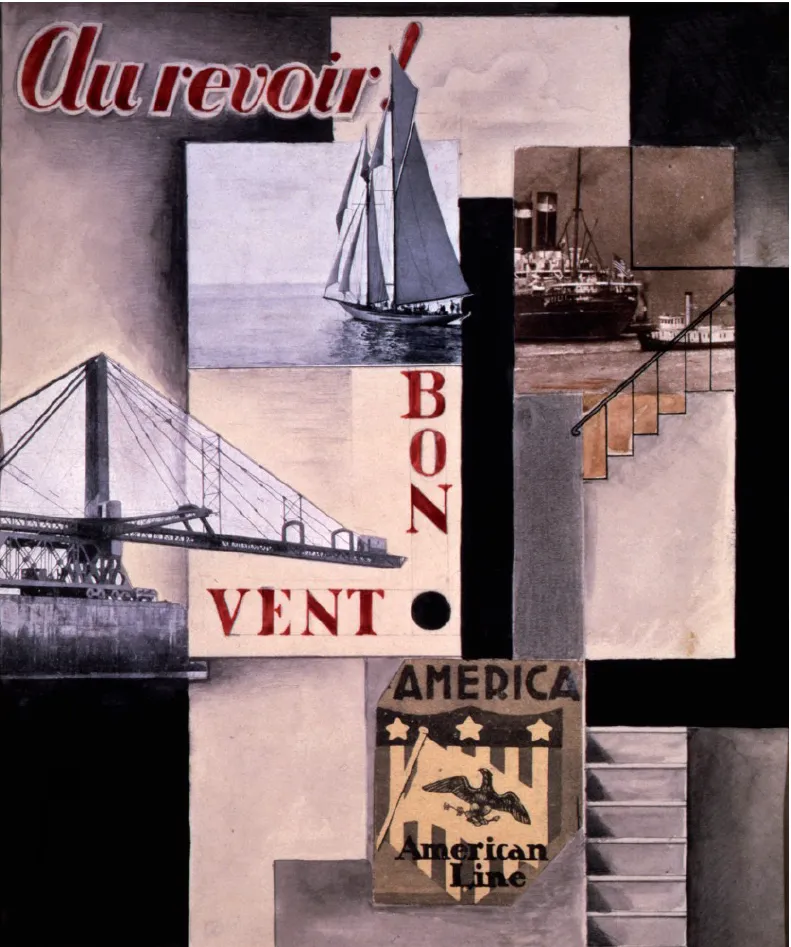
Col. fig. 4: Karel Teige’s image poem, “Departure for Cythera” (1923–1924). Courtesy of Prague City Gallery.
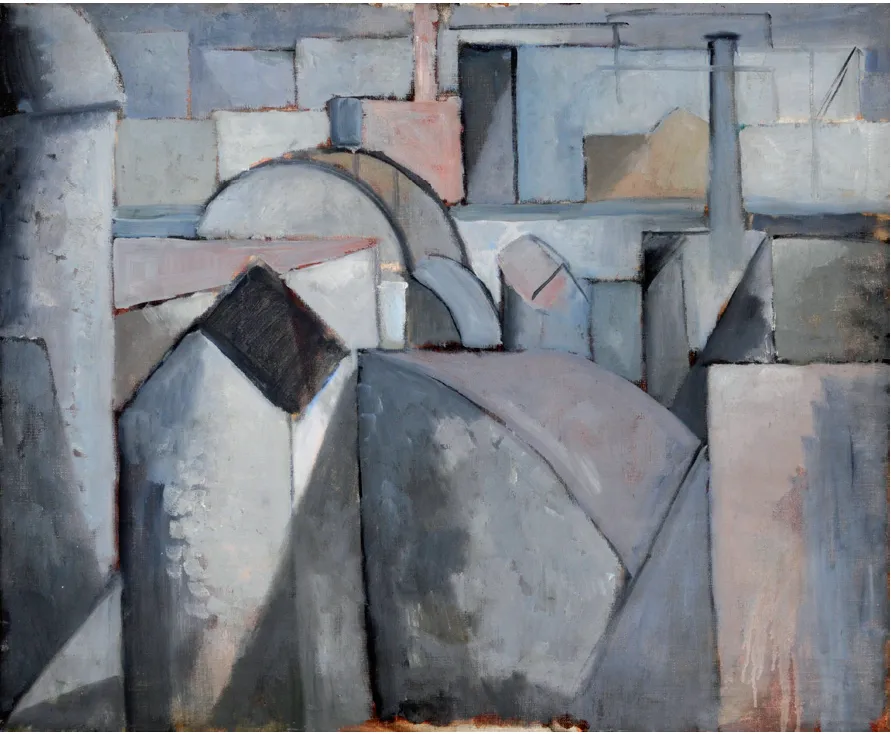
Col. fig. 5: Christopher Wood, Buildings at Passy, Paris, 1927. Image courtesy of Museums Sheffield.
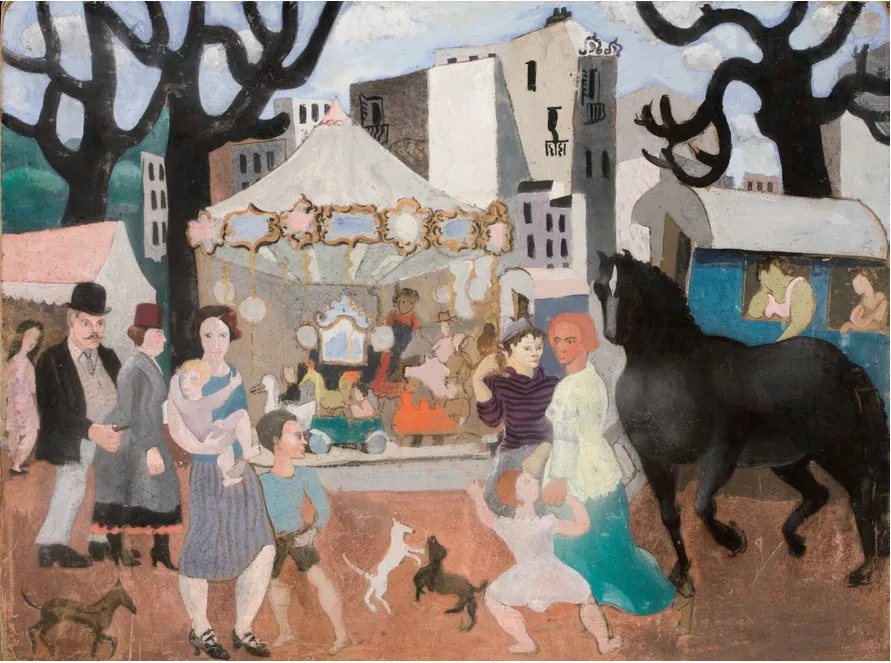
Col. fig. 6: Christopher Wood, Fair at Neuilly, Paris, 1923. Image courtesy of Towner, Eastbourne.
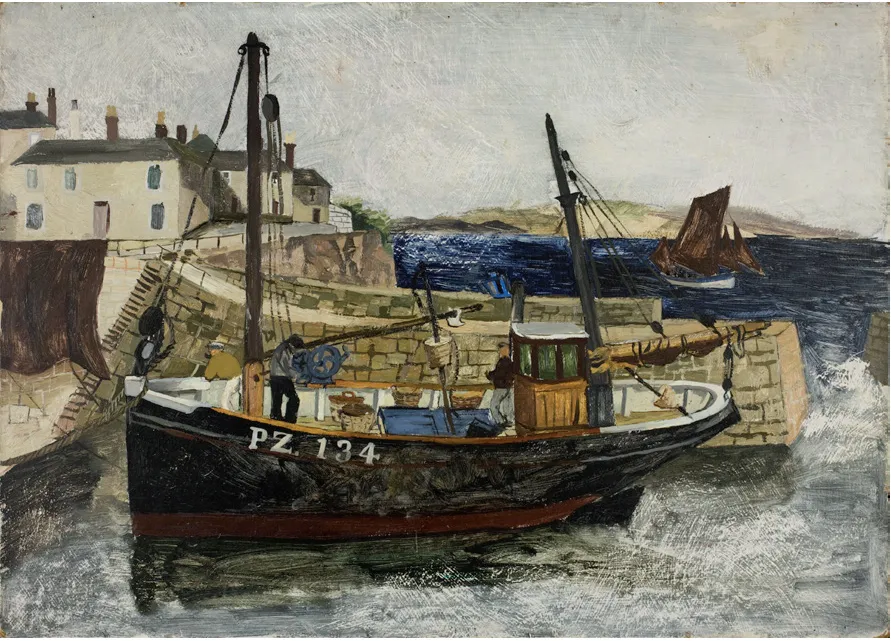
Col. fig. 7: Christopher Wood, PZ134, Cornwall, 1930. Image courtesy of Towner, Eastbourne.
Endnotes
1 Edith Södergan, « Vierge moderne », in : Le pays qui n’existe pas et PoĂšmes, trad. Carl Gustaf Bjurström et Lucie Albertini, Paris 1992, 43.
2 Edith Södergan, cité dans Ebba Witt-Brattström, « Edith Södergran », https://litteraturbanken.se/red/forfattare/SodergranE/presentation/SodergranE_presentation.pdf. (consulté de 5 octobre 2017). Ma traduction.
3 Edith Södergran, « Remarque liminaire », in : PoÚmes complets, trad. Régis Boyer, Paris 1973, 87.
4 L. Moholo-Nagy, « Literature », in : Richard Kostelanetz (Ă©d.), The Avant-Garde Tradition in Literature, Buffalo 1982, 78–141, ici 131. Ma traduction.
5 Voir par exemple Lawrence Buell, « The Ecocritical Insurgency », New Literary History, 30, 1999, n° 3, 699–712; et StĂ©phanie Posthumus, « Vers une Ă©cocritique française : le contrat naturel de Michel Serres », Mosaic, 44, 2011, n° 2, 85–100.
6 Allison Carruth, « The Green Avant-Garde : Food Hackers and Cyberagrarians », Resilience, 2, 2014, n° 1, 48–65, pas de pagination. Voir aussi Cecilia Novero, Antidiets of the Avant-Garde: From Futurist Cooking to Eat Art, Minneapolis 2010. Sur les paysages recyclĂ©s, voir Elisa Poli, « Landscape Ready-mades », in : Michela De Poli et Guido Incerti, An Atlas of Recycled Landscapes, Milano 2014, 13–15.
7 Voir Nathalie Heinich et Roberta Shapiro (Ă©ds.), De l’artification. EnquĂȘtes sur le passage Ă  l’art, Paris 2012.
8 Sur ces discussions, voir par exemple Paul Stephens, « What Do You Mean by ‘Literary Experimentalism ?’ : Notes Toward a History of the Term », Arizona Quarterly, 68, 2012, n° 1, 143–173 ; Theo D’Haen, « European Postmodernism : The Cosmodern Turn », Narrative, 21, 2013, n° 3, 271–283 ; et Elizabeth E. Guffey, Retro. The Culture of Revival, London 2006.
9 F.-T. Marinetti, « Le Futurisme », Le Figaro 20 février 1909, https://monoskop.org/images/6/64/Marinetti_FT_1909_Manifeste_du_Futurisme.webp (consulté le 5 octobre 2017).
10 Voir Filippo Tommaso Marinetti, The Futurist Cookbook, Lesley Chamberlain (éd.), transl. Suzanne Brill, London 2014.
11 Voir Sianne Ngai, Our Aesthetic Categories. Zany, Cute, Interesting, Cambridge (Mass.) et London 2012, et bien entendu Rosalind E. Krauss, The Originaliyt of the Avant-Garde and Other Modernist Myths, Cambridge (Mass.) 1985.
12 From amongst the many titles, see Enrico Crispolti, Il mito della macchina e altri temi del futurismo, 2nd ed. Trapani 1971; Roberto Tessari, Il mito della macchina: Letteratura e industria nel primo Novecento italiano. Milano 1973; Fanette Roche-PĂ©zard, “La Peinture futuriste italienne devant le monde de l’industrie: Fascination, illustration, Ă©carts (1909–1915)”, in: Denis Woronoff (ed.), Les Images de l’industrie de 1850 Ă  nos jours, Paris 2002, 134–139; Jeffrey Schnapp, “Propeller Talk”, in: Modernism / Modernity 1, 1994, 3, 153–178. Ada Masoero, Renato Miracco, and Francesco Poli (eds), L’estetica della macchina: Da Balla al futurismo torinese, Milano 2004; Rita Fantasia, “La macchina e l’arte: Lineamenti della poetica futurista; Marinetti e l’Uomo Moltiplicato; Il futurismo e l’analogia”, in: Rita Fantasia and Gennaro Tallini (eds.), Poesia e rivoluzione: Simbolismo, crepuscolarismo, futurismo, Milano 2004, 153–179; Chiara Gatti, Francesco Tedeschi, and Filadelfo Ferri (eds.), 1905–2005: L’estetica della velocitĂ : “Poesia” e universo futuri...

Table of contents

  1. Cover
  2. Title Page
  3. Copyright
  4. Contents
  5. Introduction
  6. Exploring the Intersections of Science, Technology and Art
  7. Other Forms of Knowledge
  8. Inquiries into the History of the Avant-Gardes and Modernism
  9. List of Contributors
  10. Index
  11. Colour Illustrations

Frequently asked questions

Yes, you can cancel anytime from the Subscription tab in your account settings on the Perlego website. Your subscription will stay active until the end of your current billing period. Learn how to cancel your subscription
No, books cannot be downloaded as external files, such as PDFs, for use outside of Perlego. However, you can download books within the Perlego app for offline reading on mobile or tablet. Learn how to download books offline
Perlego offers two plans: Essential and Complete
  • Essential is ideal for learners and professionals who enjoy exploring a wide range of subjects. Access the Essential Library with 800,000+ trusted titles and best-sellers across business, personal growth, and the humanities. Includes unlimited reading time and Standard Read Aloud voice.
  • Complete: Perfect for advanced learners and researchers needing full, unrestricted access. Unlock 1.5M+ books across hundreds of subjects, including academic and specialized titles. The Complete Plan also includes advanced features like Premium Read Aloud and Research Assistant.
Both plans are available with monthly, semester, or annual billing cycles.
We are an online textbook subscription service, where you can get access to an entire online library for less than the price of a single book per month. With over 1.5 million books across 990+ topics, we’ve got you covered! Learn about our mission
Look out for the read-aloud symbol on your next book to see if you can listen to it. The read-aloud tool reads text aloud for you, highlighting the text as it is being read. You can pause it, speed it up and slow it down. Learn more about Read Aloud
Yes! You can use the Perlego app on both iOS and Android devices to read anytime, anywhere — even offline. Perfect for commutes or when you’re on the go.
Please note we cannot support devices running on iOS 13 and Android 7 or earlier. Learn more about using the app
Yes, you can access Beyond Given Knowledge by Harri Veivo, Jean-Pierre Montier, Françoise Nicol, David Ayers, Benedikt Hjartarson, Sascha Bru, Harri Veivo,Jean-Pierre Montier,Françoise Nicol,David Ayers,Benedikt Hjartarson,Sascha Bru in PDF and/or ePUB format, as well as other popular books in Literature & History of Modern Art. We have over 1.5 million books available in our catalogue for you to explore.