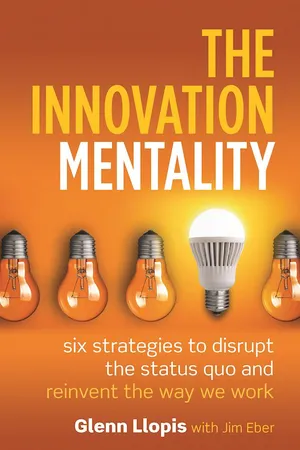
Companies and their leaders need a new strategy for success, because without that strategy, change is merely substitution not evolution. Simply put, business today is becoming less about the business defining the individual and more about the individual defining the business. That’s how people feel they are making contributions and connect to leaders and their companies – as individuals who create shared cultures that drive change and foster growth. You must be accountable to this as a leader – you need to have the wisdom and the courage to turn the spotlight of accountability on yourself as a leader.Problem is, most of us have no idea how to do this. Instead, leaders continue to manage by the templates of old and cannot evolve to become the leaders America needs, because those templates stripped them of their identities and left them insecure about who they are and how to face change. To change the conversation and get beyond words, beyond diversity, we need diversity of thought to stimulate new growth, attract new talent, and generate new marketplace opportunities.That's where Glenn Llopis comes in. Featuring six ways to disrupt the status quo and reinvent the way we work, The Innovation Mentality gives leaders in both entrepreneurial and corporate arenas the tools they need to get the most out of their colleagues and employees to harness the power of positive change for the long term.
eBook - ePub
The Innovation Mentality
Six Strategies to Disrupt the Status Quo and Reinvent the Way We Work
- 224 pages
- English
- ePUB (mobile friendly)
- Available on iOS & Android
eBook - ePub
The Innovation Mentality
Six Strategies to Disrupt the Status Quo and Reinvent the Way We Work
About this book
Information
PART I
EMBRACE THE SIX CHARACTERISTICS OF THE INNOVATION MENTALITY
CHAPTER 1
LEARN THE SIX CHARACTERISTICS OF THE INNOVATION MENTALITY

Dr. Ben Carson made waves as a black Republican Presidential candidate in 2015. But the fact that he is a black medical doctor is even more of an anomaly. Only about 5 percent of all doctors in the U.S. are black, while approximately 6 percent of the black population voted for Mitt Romney over Barack Obama in 2012. With Dr. Carson’s retirement in 2013, those numbers on the medical side got even worse: According to the Association of American Medical Colleges, 515 black men entered medical school in 2014—27 fewer than went to medical school in 1978, the year after Dr. Carson got his medical degree. There can be no doubt that the need for more black male doctors and black doctors overall is profound. Blacks make up more than 13 percent of the American population. Having more doctors who look like you is important, not only for patient health (as numerous studies show all people are more likely to listen to and follow their doctors’ directions if they identify and have a cultural affinity with them) but also for getting those patients to trust enough to go to the doctor in the first place. Still, Ivy League and most universities have struggled for decades to find solutions to the problem. Meanwhile, a relatively small institution, Xavier University in New Orleans, did.
See the Opportunities and You Start to Evolve
Never heard of that Xavier? Neither had I until I read a 2015 frontpage story by Nikole Hannah-Jones in The New York Times Magazine. “A Prescription for More Black Doctors” tells a fascinating tale of the university. Despite having no national name recognition, tuition under $20,000, and a student body of only 3,000, Xavier “consistently produces more black students who apply to and then graduate from medical school than any other institution in the country.” This is more than any Ivy League university, state schools ten times its size, or traditional black colleges with more prestigious names. According to Jones, “Xavier is also first in the nation in graduating black students with bachelor’s degrees in biology and physics. It is among the top four institutions graduating black pharmacists. It is third in the nation in black graduates who go on to earn doctorates in science and engineering.” Yet Xavier has no high-tech science buildings to rival those other institutions. In fact, it has only one small complex. It doesn’t even attract the elite black students that the Ivies and other top universities do. In fact, Jones added, “Most of Xavier’s students are the first in their families to attend college, and more than half come from lower-income homes.”
When asked how all this happened, Dr. Norman C. Francis, the former president of the university who supervised this remarkable rise for nearly half a century replied, “We decided we could do something about it. And what we did, what our faculty did, was just plain common sense.” This is not an understatement: Their solution was a system to address students’ problems early and direct them toward help early, study groups led by the smartest students who had mastered the material, collaboration by the faculty to coordinate what and how they teach, and a blueprint “to help students navigate every step in the process of becoming desirable medical-school candidates” so students always know what they need to do to get into medical school. Sure sounds like common sense to me.
There can be no doubt that universities can be innovative, but they are also among the most traditional—change does not come easily or quickly to most of them. And while most universities are not-for-profit, they are businesses, and when one breaks free from tradition and template like Xavier it is worth asking: How did Xavier affect its change? They owned who they are and who they serve, and embraced diversity of thought, using the six characteristics of the innovation mentality (shown later in Figure 1.2 on page 10):
1. Seeing an opportunity for its students to be premed, despite the hurdles.
2. Anticipating the unexpected problems they would face.
3. Unleashing the passionate pursuits that all its students can bring to the sciences.
4. Having an entrepreneurial spirit to build relationships and maximize resources.
5. Working with a generous purpose of having other’s best interests at heart.
6. Collaborating to lead to leave a legacy that affects the health of not only black Americans but all Americans these future doctors treat.
Here’s what also makes Xavier even more extraordinary: Its legacy touches its community (more than half its students come from Louisiana) and has brought a more diverse black population into the medical pipeline. Here’s what I mean: Reflecting on the “immigrant perspective” that informed the evolution of my thinking on the innovation mentality, it might not be surprising to hear that many black medical students in America today have more in common with Dale Okorodudu, Oviea Akpotaire, and Jeffrey Okonye. The three men were part of a follow-up story about Xavier on National Public Radio’s Weekend Edition Sunday about the decline in the number of black male medical students. Akpotaire and Okonye put in long days working with patients at the veterans hospital in south Dallas as fourth-year medical students at the University of Texas Southwestern. Dr. Okorodudu is a third-year pulmonary and critical care fellow there. But as NPR reported, “A desire to care for others isn’t the only thing that Okonye, Akpotaire, and Okorodudu have in common. All three have had doctors or nurses in their families. And all three are the children of immigrants from Nigeria. Okorodudu says that means the group of black men who are applying to medical school now is very different from the group in 1978. ‘In 1978, those people we’re looking at, a lot of them were probably black American males’ whose families had been in this country for generations, he says. Today’s black medical school students may be more recent immigrants from Nigeria or the Caribbean. ‘So if we broke it down that way, that factoid is actually even more alarming.’”
Xavier University bucks this trend by using the six characteristics of the innovation mentality and the four skills of opportunity management—see, sow, grow, and share—to close opportunity gaps by maximizing all black students’ potential and strengthening their identities in society. Xavier did more with its people and what it had to strategically activate all its students. In other words, it did what most companies don’t do: moved diversity and inclusion to the center of the organization. It saw it as a strategy for growth. It took enough time to define their strategies as the basis for accountability, which is about people first—people who care on the deepest level about both the advancement of their careers and the community they serve as they strive to lead to leave a legacy and resow opportunities for themselves and others.
Who does the innovation mentality solve for? People whose differences we must listen to and are wise enough to value to multiply opportunities previously unseen.
And it all started with that first characteristic: seeing opportunity. Knowing this, however, only gets us so far. Problem is, those same people as well as their leaders have been conditioned only to see and be accountable for what others want them to see and be, rather than what they seek. As a rule, people in the workplace like doing what they are told. They are most comfortable when they are being told what do to and when they are incentivized to do that and only that. When assigned a task, given a special project, or asked to execute a plan, employees who take direction well will work to get the job done. That’s what they are best at: knowing how to execute and deliver immediate, short-term results. That’s why most employees, especially diverse ones, are not engaged and are scared to speak up, let alone evolve their thinking, because they see their nondiverse colleagues and leaders have become complacent and stuck in substitution mode. So, they keep sowing, sowing, sowing, and sowing like those around them and forget about seeing, sharing, or growing.
This is not just hyperbole or unsubstantiated generalization. It’s based on data from my company’s two proven qualitative and quantitative assessments: The “Workplace Serendipity Quiz” (an online quiz taken by more than 500,000 individuals since 2009) and the “Workplace Culture Assessment” my company uses to measure organizations through surveys of their leaders and managers. Taken together, they measure individuals’ and organizations’ ability to propel innovation and initiative in the four skills of opportunity management and the six characteristics of the innovation mentality:

Table of contents
- Cover
- Title Page
- Copyright
- Dedication
- Contents
- Origin Story: Beyond Diversity
- PART I: EMBRACE THE SIX CHARACTERISTICS OF THE INNOVATION MENTALITY
- PART II: MASTERING THE SIX CHARACTERISTICS OF THE INNOVATION MENTALITY
- Appendix: A Primer on What the Six Characteristics Solve
- Acknowledgments
- About the Author
- Index
Trusted by 375,005 students
Access to over 1.5 million titles for a fair monthly price.
Study more efficiently using our study tools.
Frequently asked questions
Yes, you can cancel anytime from the Subscription tab in your account settings on the Perlego website. Your subscription will stay active until the end of your current billing period. Learn how to cancel your subscription
No, books cannot be downloaded as external files, such as PDFs, for use outside of Perlego. However, you can download books within the Perlego app for offline reading on mobile or tablet. Learn how to download books offline
Perlego offers two plans: Essential and Complete
- Essential is ideal for learners and professionals who enjoy exploring a wide range of subjects. Access the Essential Library with 800,000+ trusted titles and best-sellers across business, personal growth, and the humanities. Includes unlimited reading time and Standard Read Aloud voice.
- Complete: Perfect for advanced learners and researchers needing full, unrestricted access. Unlock 1.5M+ books across hundreds of subjects, including academic and specialized titles. The Complete Plan also includes advanced features like Premium Read Aloud and Research Assistant.
We are an online textbook subscription service, where you can get access to an entire online library for less than the price of a single book per month. With over 1.5 million books across 990+ topics, we’ve got you covered! Learn about our mission
Look out for the read-aloud symbol on your next book to see if you can listen to it. The read-aloud tool reads text aloud for you, highlighting the text as it is being read. You can pause it, speed it up and slow it down. Learn more about Read Aloud
Yes! You can use the Perlego app on both iOS and Android devices to read anytime, anywhere — even offline. Perfect for commutes or when you’re on the go.
Please note we cannot support devices running on iOS 13 and Android 7 or earlier. Learn more about using the app
Please note we cannot support devices running on iOS 13 and Android 7 or earlier. Learn more about using the app
Yes, you can access The Innovation Mentality by Glenn Llopis, Jim Eber in PDF and/or ePUB format, as well as other popular books in Business & Human Resource Management. We have over 1.5 million books available in our catalogue for you to explore.