![]()
Part I
The Globalist Humanist Tourist
![]()
Chapter 1
Home and Away
![]()
To be a mass tourist, for me, is to become a pure late-date American: alien, ignorant, greedy for something you cannot ever have, disappointed in a way you can never admit. It is to spoil, by way of sheer ontology, the very unspoiledness you are there to experience.
– David Foster Wallace (2009)
The first thing we see as we travel round the world is our own filth, thrown into the face of mankind.
– Claude Lévi-Strauss (1992: 24)
Traveling begins with basic, pragmatic questions: where are we going, how long will we stay, how much will it cost, what will we do? Alongside these, I want to pose some more theoretical and philosophical inquiries: What does travel mean? How and why do we do it? How do we think (and talk and write) about our travels? What experiences render us changed (and how) when we return? How does traveling intersect with culture – cultural artifacts, cultural experiences, cultural appreciation? In this difficult moment for the world, is traveling really fundamentally important, or is it just an escapist indulgence reflecting privileged hedonism? How has travel changed in this globalist era, and what do we hope to achieve by stepping into globalism?
‘Stepping into globalism’ may sound lofty, but it fittingly captures my ambitions as a traveler. ‘Globalism’ is a vast and daunting concept: corporate, institutional, hardly relevant (as most people understand the term) to the mere traveler, the mere individual. My own mere humanism involves reading a great deal, writing a bit, and moderating semiformal discussions with two dozen young people every Monday and Wednesday about such matters as ekphrasis, Imagism, and intertextuality. How presumptuous it must seem to suggest that my cerebral literary credentials provide any authority to represent myself and my work as globalist.
The trope of globalism is overwhelming: billions of people, trillions of dollars, innumerable inventories of soybeans, or microchips, or some other kind of widget. Globalism means industry, finance, technology, transportation, health, militarism, and diplomacy, all ensconced in a technocratic vocabulary of geopolitics and multinationalism infelicitous to those of us who engage the world on a more human scale and in a more mellifluous timbre. As globalism became a twenty-first-century buzzword in academia (and in commerce, media, activism, and most other realms of civic participation), have we writers, artists, philosophers, and other assorted aesthetes fallen out of the loop? Globalism seems to connote a world where humanists should fear to tread – too large, too complicated for our simple and delicate engagements. Our everpresent anxieties impel us to worry that we are out of our league when it comes to such macrocosmic, important, real-world phenomena. A globalist conveys the sense that ‘I am large, I contain multitudes,’ although the astute humanist will recognize that this phrase comes not from a president or a CEO but rather from Walt Whitman: one of ours.
‘Global’ signals urgency, and often danger: global terror, global contagion, global warming. Global systems and problems – global trade, global health, global security – operate in a realm far beyond the reach of humanism. ‘Far’ is the key obstacle here: globalism is large, and its components are distant. Humanism, on the other hand, is proximate, intimate, local, contained – it takes place, to be tautological, on a human scale. The globe is a colossal realm – though in another sense, a globe itself (an office desk globe, or a free-standing classroom globe) is not all that large: perhaps only a foot or two in diameter. What a globe represents, as a scale model of our planet, is indeed large. That facet, that fact of representationality, suggests the humanists’ ingress: we are clever at understanding and grappling with representations of things.
In the mid-sixteenth century, the Latin word ‘globus’ (a round, three-dimensional structure) produced an English cognate, ‘globe’: a spherical representation of the earth with its map on the surface, often fixed to a stand which may be rotated on a vertical axis. Not long after the word appeared, a London dramatist of some renown founded a theater he called The Globe, featuring plays where a few dozen actors, with the aid of some colorful costumes, minimal props, a bit of background music and dancing, and some highly imaginative dialogue, created a dazzling array of stories about not just England but also Verona, Egypt, Scotland, Denmark, Troy, Vienna, Rome, Harfleur, Paris, Navarre, Bohemia, Venice, Athens, Tyre, Sicily, Cyprus, Padua, and, for the most engrossing global travel narrative of his age, a remote enchanted island of indeterminate geographic location.
You may guess where this is leading.
It is indeed possible (and also fun!) to transgress an implicit proscription by becoming a globalist humanist. I have done it. Traveling to China and Dubai, Iceland and Budapest, Costa Rica and Lisbon, I have ticked off more countries than I ever thought I would – 40 at present, and still tramping the perpetual journey (Whitman again) across the globe.
The expedition embodied in this book grows out of my own personal and intellectual excursions. My approach is autotheoretical: autobiographical writing that exceeds the boundaries of the personal, as Maggie Nelson, author of The Argonauts, characterizes it, ‘deploying [one’s] own experience as an engine for thinking that spins out into the world’ (Lorentzen). I celebrate myself, and sing myself, and theorize myself. Following the disciplinary pathways that have shaped me, I am drawn to analyze the metaphorical and semiotic strata that overlay, or underlie, the practice of traveling. But I value equally the simple, colorful, and sometimes mundane details of my trips – how I got there, what I saw, and enjoyed, and ate, and learned before it was time to return home.
My itineraries often start with museums. After I have seen as many of them as I can stand, I drop in on author’s homes, arthouse cinemas, and architectural spectacles. I visit historical sites, famous and obscure, and also touchstones of urban design: the Paris arcades, London’s and Milan’s canals, Warsaw’s socialist showpiece Marszałkowska Dzielnica Mieszkaniowa (MDM) sector, Tel Aviv’s art deco district. Language permitting, I attend theaters and cabarets. Next, food venues (markets, ethnic enclaves, cafés, street food) and neighborhoods known for fashion, design, antiques and collectibles, murals and other public art. I go shopping (for the purposes of cultural anthropological investigation, of course). I like to stroll through riverwalks and quays, business districts, parks, gardens. I take organized walking tours, and also impromptu ad hoc excursions – that is, I get blissfully lost. I enjoy spending much longer than necessary in train stations and airports taking mental notes as I watch other people at the beginnings and endpoints of their travels. Public squares are great places for humanist fieldwork, as are libraries. I tour a country’s parliament building and supreme court whenever possible; banking museums, too, I find, are usually unexpectedly fascinating. I visit places that manifest extraordinary beauty – Bruges, the ancient city of Petra, the hills looming over Lake Como, any gothic cathedral – as well as places that embody a less famous but still profound appeal. I enjoy both the usual tourist sites and ones that are off the beaten track; places with plaques and statues, and places without; things that millions before me have Instagrammed ad absurdum, along with things I seem to have happened upon on my own, accidentally, serendipitously.
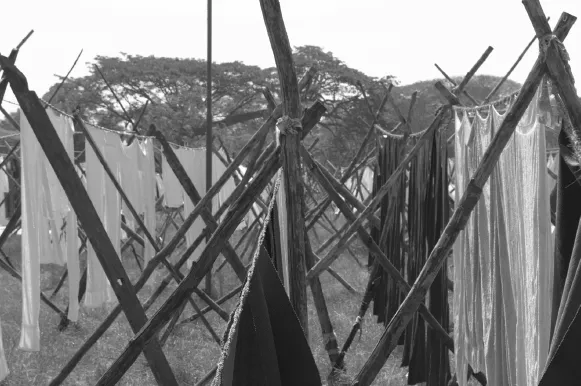
Figure 2: In India’s rural Kerala, an immense ‘laundry farm’ attracts a few travelers looking for unconventional sights of interest. Photo by Jake Simonds-Malamud.
I enjoy people (mostly): encountered and overheard; jostled up against; befriended and misunderstood. And landscapes, and non-human animals: elephants, cows, water buffaloes, and monkeys in Delhi, geckos in Manila, sloths in Central America. But no zoos (see Part II, ‘Tierra del Fuego’). I always watch local television, even if I do not speak the language, and I ride the subways and buses. And if I happen to end up in a dentist’s office or an emergency room, well, I’ll try to be more careful next time but it’s not a bad way to experience something out of the ordinary.
I am not the first or only humanist who fancies himself a globalist. Many of us have expanded our course syllabi to include Ha Jin, Deepa Mehta, and Ngũgĩ wa Thiong’o as we study the inflections of postcolonialism. But this is a narrowly conscribed praxis of globalism, bookish and relatively homogenous. To what extent do we really go there – traffic in globalism, cavort in globalism? Can we truly ‘own’ globalism, or are we merely tourists? Embracing my inner globalist humanist tourist, I decided to write about travel (probably like most travel writers) because I hoped this project would give me the excuse to do a great deal of it, which indeed it did, at least at first.
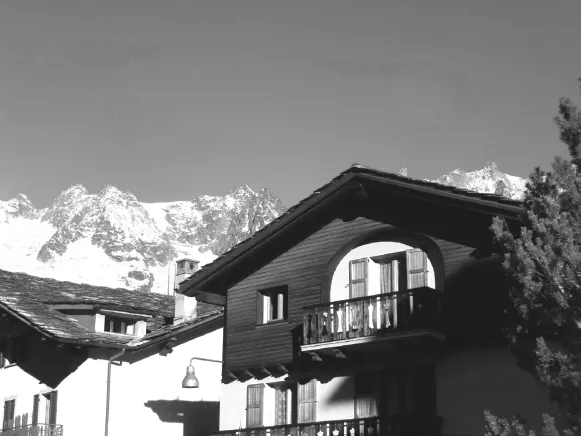
Figure 3: An assignment in the shadow of Mont Blanc may leave the travel writer more distracted than productive. Author’s picture.
But once it got to the point when I actually had to start composing a manuscript, travel writing became less of a ticket to ride and more of an albatross around my neck. There was not as much travel on the docket; it had been supplanted, unsurprisingly, by writing. I was too circumspect to request that my publisher or my university support me while I sat in a café in Porto or Berlin for several months firming up my drafts, and in any case I doubt I would have come home with the completed book. More likely, I would have done a bit more flânerie – the luxury of the writer, but the enemy of writing – which would have left me, finally, simply with more that I would have to write.
I have tried to write in an Alpine hotel room, which was ebulliently conducive to gazing out the window but otherwise completely unsuccessful. I have a hard time writing on planes because I have a number of habitual flying rituals I have created to keep myself busy and displace the habit I had for many years, which was having elaborately traumatic panic attacks. One of these displacement rituals is listening to a long loop of travel songs: ‘Never Been to Spain,’ ‘City of New Orleans,’ ‘Manchester England,’ ‘Kokomo,’ ‘Leaving on a Jet Plane,’ ‘Werewolves of London,’ and so on. Certain destinations have their own unique soundtracks: Warren Zevon’s ‘Werewolves’ accompanies the descent into Heathrow, of course; ‘Midnight Train to Georgia’ is for returning home to Atlanta, and ‘No Sleep Till Brooklyn’ is for JFK, even though the airport is in Queens – ‘Rockaway Beach’ would be more geographically apt, but I prefer the Beastie Boys. Another time-intensive ritual (precluding writing) is imagining what geniuses from the past – Frederick Douglass, Jane Austen, Thomas Edison – would think if they could be sitting next to me, looking out over the earth and clouds at 35,000 feet.
Nor have I made much headway writing on a train with the landscape rolling by. When Amtrak created a writer-in-residence program, its first recipient described how productive she found her gig on the Lake Shore Limited. Self-identifying as a fervent claustrophile, Jessica Gross reported that the tiny sleeper cabin provided a salubrious writing environment and the train’s dreamy forward motion greased her brain (2014). Emily St. John Mandel likes writing on the Manhattan subway: ‘There’s a certain paradoxical privacy […]. It’s New York City, and we’ve all seen everything down here: if you start writing on the train nobody’s likely to give you a second glance, unless of course you’re writing on your laptop and they’re planning on stealing it at the next stop’ (2009). But unlike them, I have learned that I cannot travel writing or write traveling. I have to return to base in order to finish the experience, and to write about it.
Object lesson: The importance of elsewhere must be processed at home. Corollary: The best part of any trip is coming home. Planning the trip beforehand is the second-best part, in my opinion, and actually traveling, oddly, comes in at third place. Homecoming – nostos, we humanists call it – means the long-awaited return to my bed, my shower, my cats. There is no moment more pleasant, albeit mildly neurotic, than turning the corner onto my street and confirming that my house did not burn down in my absence, suggesting that the world is not a place of entropic danger. Although I have traveled 10,000 miles, my ice cubes are still frozen and my electric toothbrush is charged up: all is well with the world.
For a short time after people come back from a big trip, my colleague Audrey Goodman remarks, we seem to have more possibilities in our lives than before we left, a sensibility that soon dissipates. There are a few days, maybe a week, when the returned traveler is in limbo: home, but also still a little bit elsewhere. We have an expanded horizon; routines are less rigid than usual. Physically, our bodies retain the markings of our travels: a suntan, or mosquito bites; strengthened calf muscles, counterbalanced by a few extra pounds in the midsection; a backache from ergonomically unkind airplane seats, imperfect mattresses, and too many suitcases lugged to too many places. The timespan of this fugue state may coincide roughly with the recovery from jet lag, but it is more than that: it’s the overlapping fused consciousness of home and elsewhere, unsettling but also pleasant. Returning from England back to the United States, we might start to get in the car through the passenger’s side door – a quick instinctual glitch reminding us that there is still a bit of ‘elsewhere’ floating around in our system. We use a word or a gesture picked up elsewhere, and momentarily forget some common home routine. Not just our body-clock but also our mind-clock, our culture-clock, is still set on elsewhere, or like one of those multiple timezone banks of world clocks, it may be set on elsewhere and home at the same time, side by side.
Where I have been and what I have done linger after I return home: memories like the route to my favorite café, and cravings like the nightly gelato I indulge as one of the pleasures of elsewhere. But it is not just the specific memories and tastes that endure in my system. It’s also more abstract sensibilities and sensations – my elsewhere-pace, my style, my energy, my perambulations; my new ‘friends,’ perhaps just people like the clerk in the convenience store I saw three or four times, exchanging smiles of recognition on the last encounter. How long until she realizes (or will she even notice) I am not coming back? And then as more home things pile up, the elsewhere-experiences sink deeper down beneath the pile, receding further back in the recesses of my memory bank, mostly bundled up and put away in my ‘elsewhere’ folder, but still occasionally making reprise appearances as invoked by, say, a particular cheese.
I had had Manchego before I visited Barcelona but never realized how good it could be, sharp and dry, nutty-buttery, rich, waxy in texture, as it crumbles into little chunks that are just the right size to strew atop a slice of bread (barra, a Spanish baguette). It was delicious during every day of my Spanish travels, and also fantastic once I returned home. My local cheese shop’s Manchego, which I had always enjoyed, tasted immeasurably better after I had experienced the brilliant Barcelona queso than it did before I had been there; the Catalan savor endured from elsewhere even long after I had returned home. The end of our exploring will be to arrive where we started and know the cheese for the first time. (T. S. Eliot said something along the same lines, though less explicitly cheesy, in Four Quartets.)
The Manchego I eat at home, my monger confirms, is hecho en La Mancha (not Catalonia, but not far), so it’s a question of whether I travel from Atlanta to Spain to encounter the cheese, or the cheese travels from Spain to Atlanta to encounter me. Cheaper and more efficient the second way, vastly more interesting the first way. But why would the same Manchego from the same local cheese shop taste better after I had eaten it in Spain than it did before I had gone there?
I come back from every trip with a new food discovery – or sometimes, as with the Manchego, a re-discovery, or re-assessment – which I eat at home specifically to remind me of my travels: in Milan I became an aficionado of the shakerato, quite similar to an iced coffee and yet… different. Served in a martini glass, it is (as its name suggests) shaken rather than stirred, which, as James Bond knows, makes it somehow superior. In Krakow, for the first time in my life I ate beets, which are now part of my souvenir-diet. I had had the odd empanada before visiting Buenos Aires, but I never had any idea how varied and voluptuous they could be: queso y cebolla, jamón y roquefort, humita, salteña, even just plain old carne picante. It’s hard, but possible, to find empanadas of an Argentinian caliber at home, and when I do I usually eat three. In Delhi, I fell in love with Limca soda, which seemed to be basically the same lemon-lime combination found in so many other soft drinks and yet it packed an incomparably thirst-relieving pleasure. Perhaps it tasted better than any other similar drink simply because India was so hot, making the soda especially refreshing. When I find Limca in an Asian grocery at home, even though it’s not as hot here, it still evokes that extremely satisfying kick I remember from drinking it in India.
Fried bread from Scotland, Chinese lotos root – I could go on, but take my word for it: the importance of elsewhere has a crucial culinary component. ‘The true journey,’ Italo Calvino confirms, ‘implies a complete change of nutrition, a digesting of the visited country’ (1988: 12). Everywhere I have ever traveled I found a novel taste treat that sensorily arouses my ever-expanding palate, enlarging a repertoire that grows in measure exactly pacing my over-stamped passport (and also, of course, my waistline: over the course of my globalist adventure I have become the quintessential fat and happy traveler).
Food is the most obvious ple...