![]()
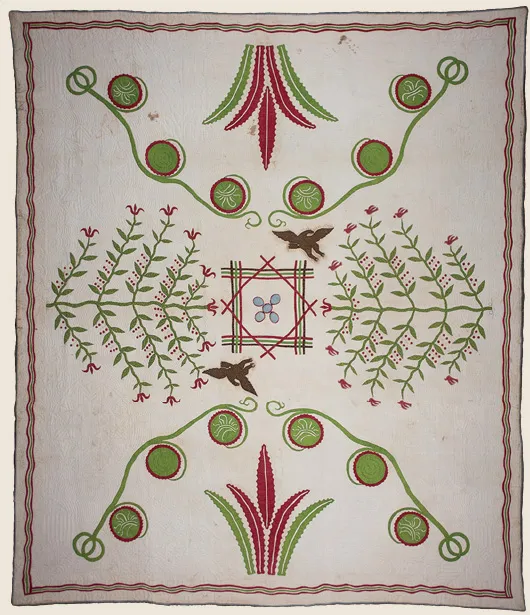
FIGURE 1.1. QUILT BY MARY FRYE VAN VOORHIS (1788–1881), CIRCA 1850, PENNSYLVANIA.
Courtesy of the Witte Museum, San Antonio, Texas.
According to family history, Mary Frye Van Voorhis made this quilt when she received her “second sight.” As happens with many aging people, then and now, her eyesight changed from farsightedness to nearsightedness. As a result, she would have been able to see clearly more closely, enabling her to appliqué and quilt more easily.
1
THE PHYSICAL CHALLENGES OF NEEDLEWORK
ACCORDING TO FAMILY history, Mary Frye Van Voorhis (1788–1881) made a quilt around 1850 (figure 1.1).1 Her quilt, appliquéd in red, green, brown, and blue on a white background, shows an original design called “The Eagle’s Nest.” The bed covering is elaborately quilted around the appliquéd depiction of eagles guarding their nest. The choice of the pattern reflected events that many aging antebellum women experienced firsthand, having reared their children and had them leave home. According to her family, Van Voorhis made this quilt after receiving her “second sight.” Van Voorhis, who was probably farsighted and developed cataracts, would have experienced the focal point of her eyes shifting closer to her body as she aged, resulting in nearsightedness. The nearsightedness allowed Mary to see near targets again after years of only seeing clearly far away, and this was probably what she and her family called “second sight.”2
A second quilt that employs a strikingly similar style and motifs is inscribed “Made by Mrs. D. Van Voorhis, aged 7[?] 1865.”3 While Van Voorhis’s great-granddaughter dated the first quilt to about 1850 and stated that the maker was in her late eighties when she made it, the signature on the second quilt suggests that Van Voorhis was in her seventies in 1865 when she made that one. The family story about the first quilt offers a caution about this type of evidence.
The most important piece of evidence to evaluate is often the object itself, while family stories need to be weighed carefully and corroborated by other sources. According to the 1850 U.S. Census, Daniel Van Voorhis of Carroll Township, Pennsylvania, had a wife named Mary who was sixty-three, which supports the information inscribed on the second quilt. Mary Van Voorhis was born Mary Frye in Pennsylvania in 1788. The two quilts show Pennsylvania German influence. And, indeed, both Daniel and Mary Van Voorhis were raised in Pennsylvania in families of German descent. Because the two quilts employ unusual original patterns, determining a precise date is difficult, but the evidence suggests that the maker is the Mary Van Voorhis who was born in 1788; she thus made the Eagle’s Nest quilt when she was in her sixties, not her eighties.4
As mature women such as Mary Van Voorhis grew older and experienced menopause, signaling the end of their childbearing years, they were set free from the biological restraints of menstruation and pregnancy, giving some a second lease on life along with a new sense of freedom and purpose.5 These life changes affected the needlework that aging women produced. But in antebellum America as well as today, growing older also resulted in increasing infirmity and changes in appearance, which often had an effect on a woman’s dexterity with a needle. When she turned fifty-seven in 1859, Catharine Dean Flint (1802–1869) of Boston noted, “I have lost much in health and strength since my last birth day and look very much older—a very distressing and long illness in the Autumn has probably made in roads on my frame, which can never again be effaced.”6 Historian Janet Roebuck has suggested that the antebellum definition of “old” depended more on appearance and ability than on mere chronological age.7 When Elizabeth Lindsay Lomax (b. 1796) turned fifty-nine in September 1855, she assessed her physical condition and concluded that despite her age, she did not “feel old,” for she had “no aches and pains, no gray hairs, no wrinkles.”8
Few antebellum medical guides and etiquette books addressed the physical effects of aging. Little specific information remains today in published sources to provide a sense of how aging women coped with failing eyesight and hearing, as well as the aches and pains of rheumatism and arthritis, but artifacts for coping—such as canes, spectacles, and ear trumpets—can be found in museum collections. The reason for this, of course, is not that antebellum women did not suffer from these problems but stems from how physicians understood the process of aging. Rather than isolating the effects of old age, antebellum physicians, just like doctors today, looked on aging as a natural process—one that could not be cured. So they treated most adults alike, without considering chronological age.9 Survival and longevity were more noteworthy than the physical problems of the elderly.10 However, the words of antebellum women help define the most common complaints.
When it came to needlework, arguably the most difficult effect of aging was changing eyesight. As fifty-eight-year-old Elizabeth Emma Stuart (1792–1866) noted in an 1850 letter to her daughter, Kate (1820–1853), “Today I am fifty-eight years old! Every thing around me admonishes me that winding up is at hand—I am entirely alone…. I read & write, but sew little [for] I cannot see to thread my needle with ease.”11 Many midcentury medical books devoted pages to this problem, identifying causes of eye pain and vision loss as well as offering ways to prevent and mitigate vision trouble.12 In addition, eyewash products were available from antebellum shops. An 1838 issue of Concord’s New Hampshire Patriot and State Gazette newspaper advertised Dr. Dana’s Eye Wash, which claimed to be “excellent for sore eyes, and peculiar to remove inflammation around the eyes and strengthen the sight, and enable you to see longer without glasses.”13
The lenses in the eyes grow continuously over time, becoming less flexible. As a result, as the body ages, the muscle that focuses the lens has a harder time focusing on near targets; this is called “presbyopia” and is the reason that people over forty need reading glasses. Midcentury medical guides observed that eyesight started to change around the age of forty. Those who are farsighted usually become presbyopic earlier in their lives than do those who are not. At the same time, ultraviolet light causes cataracts in the lenses. The most common cataracts change the focus of the eyes closer to the body (known as “myopia”).14 “Most persons begin to feel the necessity for some assistance to their eyes in reading and working after the age of forty,” noted John Harrison Curtis.15 The age of forty as a common onset for vision deterioration is supported by antebellum women in their letters and diaries. For example, forty-four-year-old Sarah Jones Hildreth Butler (1816–1876) wrote to her daughter in October 1860, “My eyes still trouble me. I have for a time given up reading and sewing, and walk more than I did when you were at home.”16
Sewing or reading in low light was often cited as the most common enemy of eye health. One 1844 needlework manual strongly recommended pursuing needlework in “the clear bright light of morning,” stating that doing so was important not only for accuracy and “proper choice of color” but also for health reasons: “We should, indeed, strongly advise our fair readers seduously to avoid candlelight, not only with reference to the accuracy of their work, but with a view also to the ‘good keeping’ of that delicate organ, the eye.”17 An 1852 medical guide concurred, writing that for people “attempting to read, or to finish off the last stitches of their work, by twilight … common sense should tell them … that such efforts cannot be made without detriment to the eyes.”18
Several of the quilts examined here, such as the two made by Mary Van Voorhis, show designs with strong contrast between dark and light sections. While these color combinations were popular for quilt makers of all ages during the mid-nineteenth century, the contrast may have been especially helpful for older quilters because contrasting pieces were easier to see and to work with.
Yet author Lydia Maria Child (1802–1880) counseled her readers not to “read or sew … by too dazzling a light.”19 William-Edward Coale, perhaps the most detail-oriented author among the ones cited here, provided the following list of the causes of eye damage and problems: “habitual errors in living, the high temperatures of our houses, sitting before the intense glow of anthracite fires, want of out-door exercise, wearing thin shoes, reading badly-printed books[,] … too great [an] application to study, constant nervous excitation and … a general overestimation of mind and body, without any hygiene correctives.”20 He also believed that eyesight would be affected not by the amount of light but by its position, and he asserted that “light should always come from above[;] … an immense deal of the bad eyesight and weariness of the eyes so often complained of by needle-women is caused” by sewing with misplaced light sources.21 Still another medical text argued, “Old women, having little else to do, sometimes read too constantly, and frequently with the very same glasses that they used twenty years before. Thus the eyes are kept constantly inflamed.”22 Fifty-one-year-old Elizabeth Dorr of Boston noted in her diary on June 5, 1855, that she “could work but little[,] having had the unaccountable or unaccounted for pain intensely in the left eye last night.” Almost three weeks later, her eye pain had abated, as she wrote in her diary, “Rainy day. We enjoyed the opportunity for sewing.”23
Mature women, such as Dorr, expressed familiarity with this sort of medical advice, although they did not always follow it. For example, seventy-year-old Dolley Payne Todd Madison (1768–1849) wrote to her friend, sixty-year-old Margaret Bayard Smith (1778–1844), in 1838, “I found myself involved in a variety of business—reading, writing, and flying about the house, garden, and grove—straining my eyes to the height of my spirits, until they became inflamed, and frightened into idleness and to quietly sitting in drawing-room with my kind connexions and neighbours … being thus obliged to give up one of my most prized enjoyments[,] that of corresponding with enlightened and loved friends like yourself.”24 In July 1853, sixty-four-year-old Catharine Maria Sedgwick (1789–1867) lamented her dependence on her spectacles in a letter to her niece, Katherine Maria Sedgwick Minot (1820–1880):
There are miseries in human life that Job, or Solomon, or Jeremiah have never described, because probably prophecy never revealed to them the folly of those fools who attempt to write after their eyes lie in a pair of spectacles. For the last quart d’heure (of infinite length) I have been looking for my spectacles with the desperate conviction that I have dropped them in my flower-beds, and shall never find them! And I have looked up an old pair with one glass (typically) looking heaven-ward and the other earthward, and now I proceed [to] what I should have begun my letter wi...