The Offenses Against the Person Act of 1828 opened magistrates' courts to abused working-class wives. Newspapers in turn reported on these proceedings, and in this way the Victorian scrutiny of domestic conduct began. But how did popular fiction treat "private" family violence? Bleak Houses: Marital Violence in Victorian Fiction traces novelists' engagement with the wife-assault debates in the public press between 1828 and the turn of the century.
Lisa Surridge examines the early works of Charles Dickens and reads Dombey and Son and Anne Brontë's The Tenant of Wildfell Hall in the context of the intense debates on wife assault and manliness in the late 1840s and early 1850s. Surridge explores George Eliot's Janet's Repentance in light of the parliamentary debates on the 1857 Divorce Act. Marital cruelty trials provide the structure for both Wilkie Collins's The Woman in White and Anthony Trollope's He Knew He Was Right.
Locating the New Woman fiction of Mona Caird and the reassuring detective investigations of Sherlock Holmes in the context of late-Victorian feminism and the great marriage debate in the Daily Telegraph, Surridge illustrates how fin-de-siècle fiction brought male sexual violence and the viability of marriage itself under public scrutiny. Bleak Houses thus demonstrates how Victorian fiction was concerned about the wife-assault debates of the nineteenth century, debates which both constructed and invaded the privacy of the middle-class home.
- 272 pages
- English
- ePUB (mobile friendly)
- Available on iOS & Android
eBook - ePub
About this book
Information
Subtopic
Modern British HistoryIndex
Literature|1|
PRIVATE VIOLENCE IN THE PUBLIC EYE
The Early Writings of Charles Dickens
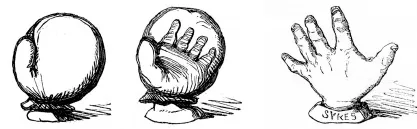
Figures 1.1, 1.2, 1.3. Details from “Handy Phrenology,” Punch 15 (1848): 104.
On 9 september 1848, Punch published a spoof on the trend of “Hand Phrenology,” or the analysis of human character by the shape of the hand (104). The accompanying cartoons featured a cast of a boxing glove (fig. 1.1) and the blunt-fingered, powerful hand inside it (fig. 1.2). A third detail showed the blunt hand from the back (fig. 1.3), with a label around the wrist denoting its owner’s identity: “Sykes”—Bill Sikes, the criminal who brutally murders the prostitute Nancy in Charles Dickens’s Oliver Twist.1 The Punch cartoon of 1848, published in a period of protest concerning inadequate penalties for wife assault, suggests the extent to which the figures of Sikes and Nancy became a kind of shorthand for wife beater and victim in the Victorian period. Published in January 1839, the scene of Nancy’s murder horrified and fascinated Victorians throughout the time span of this study. Featured in music hall songs, feminist discourse, Punch, and in Dickens’s famous readings from 1868 to 1869, the figures of Bill and “poor wretched Mrs. Bill Sikes” became cultural icons of the spousal abuse problem with which Victorians struggled from the 1820s to the end of the century.2 This first chapter examines the cultural context that made the murder scene in Oliver Twist so powerful to its original readers of the late 1830s. I will suggest that the figure of Nancy, as well as the other portraits of battered women in Dickens’s sketches and early fiction, responded to a dramatic cultural shift in the late 1820s and early 1830s whereby wife beating entered the public eye through the daily newspapers.
In her study of marital violence and sensation fiction, Marlene Tromp argues that Oliver Twist looks back to tales of family violence in The Newgate Calendar.3 I want to suggest a more immediate context for Dickens’s depictions of marital violence—that is, the newspaper coverage of marital assault trials following the 1828 Offenses Against the Person Act, the first piece of nineteenth-century legislation to address wife beating. It is well known that the young Charles Dickens became a journalist during the “upheavals of the early thirties,” when the Reform Bill, cholera, economic depression, and incendiarism combined to create considerable social tension.4 He joined the Mirror of Parliament in 1831, just in time to record some of the Reform Bill debates, and the Morning Chronicle in 1834, in the heat of the post–Reform Bill era, as the newspaper championed Whig reform measures in the face of political opposition from the Tories and journalistic opposition from the Times.5 What is important to my study is that Dickens became a journalist for a reformist newspaper in the wake of the 1828 Offenses Against the Person Act, which extended the jurisdiction of magistrates’ courts to cover common assault and battery, thus opening up these accessible courts to battered women.
We do not know whether Dickens actually worked as a reporter in the magistrates’ courts that heard these wife-assault charges. (We do know that he was familiar with at least some magistrates’ names, characters, and decisions.)6 But it is reasonable to assume that he knew the content of the six to eight pages of the daily paper for which he worked as a reporter. And if he read the Morning Chronicle, Dickens would inescapably have been familiar with the litany of domestic assaults and wife murders that filled its police and court news section in the wake of the 1828 act. “Extraordinary Charge of Murder” (4 August 1834); “Cutting and Maiming” (14 August 1834); “The Way to Get Rid of a Wife” (16 August 1834); “Desperate Assault and Attempted Suicide” (20 August 1834); “Matrimonial Miseries” (27 August 1834); “Murder in Hulme, Manchester” (28 August 1834); “Matrimonial Miseries” (3 September 1834); “Serious Assault” (24 September 1834); “Matrimonial Jars” (26 September 1834)—such headlines from the Morning Chronicle during just the first two months of Dickens’s employment as a staff journalist indicate how prevalent and disturbing were reports of wife assault at this time. And just as Dickens’s early sketches and fiction pick up the hot topics of the day—such as dangerous omnibus drivers (described in “Omnibuses”), the Norton-Melbourne trial (parodied in the Bardell-Pickwick trial), and electoral corruption (parodied in the Eatanswill election in The Pickwick Papers), so too the references to marital violence in Dickens’s journalism and fiction indicate his awareness of this contemporary issue. Battered women appear in “Gin Shops” (7 February 1835), “The Pawnbroker’s Shop” (30 June 1835), “Seven Dials” (27 September 1835), “The Hospital Patient” (6 August 1836), “Meditations in Monmouth Street” (24 September 1836), The Pickwick Papers (April 1836–November 1837), Oliver Twist (February 1837–April 1839), The Old Curiosity Shop (1840–41), and The Life and Adventures of Martin Chuzzlewit (1843–44). Moreover, these abused women take on more and more important roles: they are incidental in Dickens’s early sketches of London, central to “The Hospital Patient,” feature in interpolated narratives in The Pickwick Papers, form a thematic focus in The Old Curiosity Shop, and play a central and redemptive role in Oliver Twist. In both his journalistic “Sketches of London” and his early fiction, Dickens thus both responded to and participated in the new prominence of marital assault in the public press.
What these early writings about battered woman share is an enormous anxiety concerning the new visibility of wife assault. Dickens’s newspaper sketches and early fiction return repeatedly to scenes of public intervention in marital violence, to the moment when magistrate, private citizen, or journalist witnesses, testifies to, or interferes in spousal assault. From his early sketches and tales—Sketches by Boz (1836) through The Pickwick Papers (1836–37), to Oliver Twist (1837–39) and The Old Curiosity Shop (1840–41)—he dwells almost obsessively on this moment when the “private” violence of the home enters the public eye. Thus, even as Dickens’s texts participate in the newfound visibility of marital violence, they reveal a deep ambivalence concerning public intrusion into domestic privacy. And so these texts come, paradoxically, to uphold those characters who resist that intrusion—women who maintain the privacy of the home by remaining loyal to their abusers, refusing the proffered intervention of the police, the courts, the journalist, or the doctor. Dickens’s reverence for the passive victim is striking because it flies in the face of the known fact that working-class women did seek relief in the courts (Doggett, 30); it also contradicts what we know about working-class women’s traditional resistance to violence—their willingness to fight to protect themselves or other women from abuse (see Hammerton, Cruelty, 21). In place of these two historically documented forms of resistance, Dickens created working-class female characters who are passive in the face of abuse, and who refuse or resist intervention when it is offered—characters who, in other words, work to produce and reinforce the emergent middle-class values of domestic privacy and the companionate marriage. Dickens’s subjects may be working-class battered women, but his texts are thus laced with the growing middle-class concerns over the impact of public intrusion on the private home.
Wife Assault in the Early Victorian Public Press
After the 1828 act, magistrates’ courts were “flooded” with battered working-class wives (Doggett, 30). In turn, stories about battered women appeared frequently in the court reports of daily newspapers, precipitating a significant cultural shift in how images of marital violence were produced and circulated in early nineteenth-century Britain. This is not to say that newspapers had been free of spousal violence before 1828, but after the 1828 act, with magistrates able to handle such cases, less serious assaults came to trial more frequently. The key issue, as I note in my introduction, was thus the level of violence in question. There was no doubt in the public mind that murderers such as William Corder should be punished. But marital assault trials heard by magistrates after the 1828 act concerned a level of violence that had not previously been brought under serious public scrutiny, and contemporary press accounts evinced considerable anxiety and doubt as to whether this kind of violence belonged in the courts at all. It was at this charged moment that Charles Dickens wrote his sentimental and influential portrayals of lower-class battered women.
In order to establish the context in which to understand Dickens’s concern with battered women, I have examined wife-assault trials from the mid-1830s in the Times and the Morning Chronicle, thus choosing the leading Tory and Whig newspapers of the period, including the paper for which Dickens worked as a staff reporter in the 1830s. M. J. D. Roberts notes that the combined circulation of the Times and the Morning Chronicle (eleven thousand per day) accounted for one-third of daily newspaper sales in London; the two papers thus “constituted a formidable engine for the manufacture of public opinion” and, by extension, key forums in which class identity and gender roles were circulated and reinforced.7 We should note that the very great majority of marital assault cases that reached the magistrates’ courts were from the lower classes—people of the middle class considered the police courts to be below their purview. Moreover, the magistrates, journalists, and readers of the daily newspapers identified with the emergent middle class. The 1828 act thus functioned very largely as a means by which lower-class private conduct was regulated, and can be seen as one of a number of pieces of legislation (including the new Vagrant Act of 1822 and the Poor Law Amendment Act of 1834) that defined and regulated the emergent working class, still in the process of both external definition and self-definition in the early decades of the nineteenth century. So what was at stake post-1828 was not so much the regulation of marital assault in general as the regulation of such assaults in the lower classes by middle-class institutions such as the court and the newspaper.
What is crucial to the present study is that in the early 1830s, when the effects of the 1828 act began to be felt in the public press, there was as yet no consensus on how and when the state should intervene in marital assault cases. As social historians have established, in the turbulent decades of the early nineteenth century, two models of working-class marriage competed in the public mind, the courts, and the press. The first represented a strong tradition of combative marriage, according to which “women were neither ladylike nor deferential, where men struggled to hold on to their authority over them, where ‘sexual antagonism’ was openly acknowledged” (Ross, 576; see also Hammerton, Cruelty, 31). At the same time, however, a new model was gaining ground, one that was “far more critical of the working-class tolerance of violence between husband and wife” (Tomes, 339). Nancy Tomes’s research shows that between 1840 and 1875, magistrates were increasingly guided by a middle-class ideal of marital harmony based on male protection and female submission. They started to view “the physical abuse of women as ‘barbaric’; wife-beaters in particular were called ‘brutes,’ ‘ruffians,’ and ‘tyrants’” (Tomes, 339). But in the early 1830s, when Dickens’s career was beginning, the class structure that emerged from the industrial revolution (and its attendant assumptions about social control of marital violence in the lower classes) was only just forming. In the 1830s’ newspaper accounts of wife-assault trials, we see, then, a lack of consensus as to how (and indeed whether) marital assault should be controlled. In some cases, couples, magistrates, and reporters seem to take mutual combativeness for granted and to resist interference in a seemingly self-regulating (albeit violent) system. This attitude competes in contemporary newspapers with a deep seriousness more typical of later Victorian writings on marital assault, in which mutual combativeness is felt to violate matrimonial harmony and to signify a worrying degree of general violence in the working class.
In the following pages, I provide examples of cases that exemplify these contradictory impulses in the early Victorian public press. In using newspaper accounts, I am cognizant of Shani D’Cruze’s warning: as she notes, the impression that such reports render “real voices” must be tempered by the knowledge that these reports were shaped by the institutional requirements of the courts and the newspaper, were limited by the types of questions and answers permitted in court, and thus are are often formulaic in structure (D’Cruze, 13). D’Cruze nevertheless affirms that newspaper articles can reveal the “points of view of both wives and husbands … as well as the judgments of the bench and the editorial voice of the reporter” (D’Cruze, 80). I am especially interested in how such cases reveal contestation or consensus surrounding what kinds of marital assault should be regulated. For the purpose of this inquiry, then, the editorializing of the reporter and the comments of the judge and others—that is to say, the visible institutional context(s) in which the assault is framed—form a critical part of the historical record.
I will start with three cases in which intervention is deemed inappropriate and then contrast these with three cases in which it is seen to be appropriate. Typically, a reporter signals that court interference is inappropriate if the case is characterized by open acrimony or sparring in court, as well as by the abused woman’s active resistance. Such cases also often involve age or size disparity or couples of Irish extraction. The reporter may signal lack of seriousness by tone, comedic devices, or simply by recording the magistrate’s dismissal of the case. A case reported in both the Times and the Morning Chronicle on 11 October 1834 represents a situation in which legal intervention was deemed unsuitable. Mr. Johnson had been charged with “having disturbed the neighbourhood with the very sound of the blows which he inflicted on his wife Louisa” (Morning Chronicle, 11 October 1834, 4c). The dialogue between Louisa Johnson and the magistrate captures a collision between class-based assumptions about marriage:
The LORD MAYOR (to the wife).—Well, I suppose you are come to complain of your husband?
Mrs. Johnson.—No, I an’t.
The LORD MAYOR.—Didn’t he give you that black eye?
Mrs. Johnson.—Not he, indeed. I’ve got a violent cold in my eye. To be sure, he sometimes gives me a dab in the face, but then that’s only between he and I. It’s nothing to nobody else.…
The LORD MAYOR.—Then, you have no complaint to make against him?
Mrs. Johnson.—Complaint! What would I complain against him for? I have a right to complain of those that wouldn’t let him alone.
The LORD MAYOR.—You deserve to be treated well, my poor woman. He must be a great brute who would strike you, and I must protect you against the violence of this man.
Mrs. Johnson.—Why, then, God bless your...
Table of contents
- Cover
- Title
- Copyright
- Contents
- List of Illustrations
- Acknowledgments
- List of Abbreviations
- Introduction
- 1. Private Violence in the Public Eye: The Early Writings of Charles Dickens
- 2. Domestic Violence and Middle-Class Manliness: Dombey and Son
- 3. From Regency Violence to Victorian Feminism: The Tenant of Wildfell Hall
- 4. The Abused Woman and the Community: “Janet’s Repentance”
- 5. Strange Revelations: The Divorce Court, the Newspaper, and The Woman in White
- 6. The Private Eye and the Public Gaze: He Knew He Was Right
- 7. Marital Violence and the New Woman: The Wing of Azrael
- 8. “Are Women Protected?” Sherlock Holmes and the Violent Home
- Notes
- Bibliography
- Index
Trusted by 375,005 students
Access to over 1.5 million titles for a fair monthly price.
Study more efficiently using our study tools.
Frequently asked questions
Yes, you can cancel anytime from the Subscription tab in your account settings on the Perlego website. Your subscription will stay active until the end of your current billing period. Learn how to cancel your subscription
No, books cannot be downloaded as external files, such as PDFs, for use outside of Perlego. However, you can download books within the Perlego app for offline reading on mobile or tablet. Learn how to download books offline
Perlego offers two plans: Essential and Complete
- Essential is ideal for learners and professionals who enjoy exploring a wide range of subjects. Access the Essential Library with 800,000+ trusted titles and best-sellers across business, personal growth, and the humanities. Includes unlimited reading time and Standard Read Aloud voice.
- Complete: Perfect for advanced learners and researchers needing full, unrestricted access. Unlock 1.5M+ books across hundreds of subjects, including academic and specialized titles. The Complete Plan also includes advanced features like Premium Read Aloud and Research Assistant.
We are an online textbook subscription service, where you can get access to an entire online library for less than the price of a single book per month. With over 1.5 million books across 990+ topics, we’ve got you covered! Learn about our mission
Look out for the read-aloud symbol on your next book to see if you can listen to it. The read-aloud tool reads text aloud for you, highlighting the text as it is being read. You can pause it, speed it up and slow it down. Learn more about Read Aloud
Yes! You can use the Perlego app on both iOS and Android devices to read anytime, anywhere — even offline. Perfect for commutes or when you’re on the go.
Please note we cannot support devices running on iOS 13 and Android 7 or earlier. Learn more about using the app
Please note we cannot support devices running on iOS 13 and Android 7 or earlier. Learn more about using the app
Yes, you can access Bleak Houses by Lisa Surridge in PDF and/or ePUB format, as well as other popular books in Literature & Modern British History. We have over 1.5 million books available in our catalogue for you to explore.