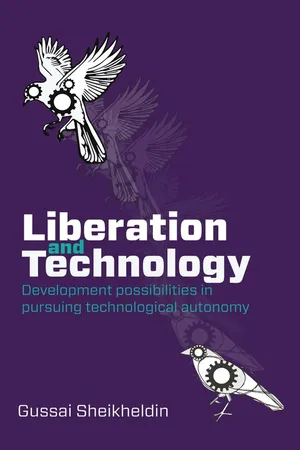
The most fundamental difference between developing and developed societies is technology, in a broad yet specific sense; so states the author of this important study, Liberation and Technology: Development possibilities in pursuing technological autonomy. The ways in which technology is developed, institutionalized, animated and celebrated, form the core of development (human, economic, environmental, etc.) and ultimately civilization itself. But techno-spheres are not only technical. They are also social, political, and ideological. For societies and countries that have long been kept from realizing their own prosperity and dignity, development is also liberation. The main treatise of this book is that each developing society ought to seek to achieve technological autonomy in its quest for positive transformations and prosperity for its people. Technological autonomy is about attaining a high level of self-determination in planning and managing technological affairs. Attaining endogenous capacity to guide and execute decisions on production and innovation; creating and transferring key technological products and services; steering relevant foreign and local investment as well as trade; setting own priorities of development free from external manipulation; are goals that must be central to such planning efforts. With evidence and argument, and in plain language, this book suggests a novel way of thinking about development, through envisioning and building better techno-social systems. For these reasons this book is a welcome addition to the body of ideas informing practitioners and theorists in the field of developmentpolitical leaders, economists, sociologists, engineers, technologists, scientists, scholars, planners and activists who are involved in relevant development processes and liberation struggles.
eBook - PDF
Liberation and Technology
Development possibilities in pursuing technological autonomy
- 202 pages
- English
- PDF
- Available on iOS & Android
eBook - PDF
Liberation and Technology
Development possibilities in pursuing technological autonomy
About this book
Information
Table of contents
- Cover
- Title page
- Copyright page
- Contents
- Dedication
- Acknowledgements
- Abbreviations
- Introduction
- Chapter One - Technology, Institutions and Change
- Chapter Two - Towards Technological Autonomy
- Chapter Three - Agents of Technological Change
- Chapter Four - Influences on Technological Affairs: Politics, Cultures and Ecologies
- Chapter Five - Technology and Justice
- Chapter Six - Selected Stories
- Last Remarks
- References
- Back cover
Trusted by 375,005 students
Access to over 1.5 million titles for a fair monthly price.
Study more efficiently using our study tools.
Frequently asked questions
Yes, you can cancel anytime from the Subscription tab in your account settings on the Perlego website. Your subscription will stay active until the end of your current billing period. Learn how to cancel your subscription
No, books cannot be downloaded as external files, such as PDFs, for use outside of Perlego. However, you can download books within the Perlego app for offline reading on mobile or tablet. Learn how to download books offline
Perlego offers two plans: Essential and Complete
- Essential is ideal for learners and professionals who enjoy exploring a wide range of subjects. Access the Essential Library with 800,000+ trusted titles and best-sellers across business, personal growth, and the humanities. Includes unlimited reading time and Standard Read Aloud voice.
- Complete: Perfect for advanced learners and researchers needing full, unrestricted access. Unlock 1.5M+ books across hundreds of subjects, including academic and specialized titles. The Complete Plan also includes advanced features like Premium Read Aloud and Research Assistant.
We are an online textbook subscription service, where you can get access to an entire online library for less than the price of a single book per month. With over 1.5 million books across 990+ topics, we’ve got you covered! Learn about our mission
Look out for the read-aloud symbol on your next book to see if you can listen to it. The read-aloud tool reads text aloud for you, highlighting the text as it is being read. You can pause it, speed it up and slow it down. Learn more about Read Aloud
Yes! You can use the Perlego app on both iOS and Android devices to read anytime, anywhere — even offline. Perfect for commutes or when you’re on the go.
Please note we cannot support devices running on iOS 13 and Android 7 or earlier. Learn more about using the app
Please note we cannot support devices running on iOS 13 and Android 7 or earlier. Learn more about using the app
Yes, you can access Liberation and Technology by H. Sheikheldin in PDF and/or ePUB format, as well as other popular books in Social Sciences & Global Development Studies. We have over 1.5 million books available in our catalogue for you to explore.