- English
- ePUB (mobile friendly)
- Available on iOS & Android
eBook - ePub
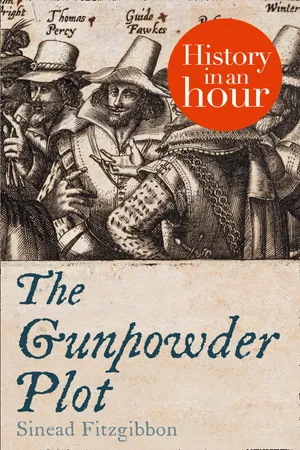
The Gunpowder Plot: History in an Hour
Information
Subtopic
British HistoryIndex
HistoryAppendix 1: Key Players
Guy Fawkes 1570–1606
Guy Fawkes was born in York in April 1570. Although there is some uncertainty surrounding the exact date of his birth, church archives confirm that he was baptized on 16 April 1570 at the church of St Michael le Belfrey. His parents, Edward and Edith Fawkes, were Protestant and it is believed that Guy was raised in the Protestant faith.
When he was eight years old, the young Fawkes attended St Peter’s School in York. It was here that he first made the acquaintance of two brothers, Jack and Christopher Wright, who would become his comrades in the plot to blow up the Houses of Parliament thirty years later.
Guy’s father died in 1579 when Guy was just nine years old, and within two years his mother had remarried a Catholic man called Denis Bainbridge. Many believe that Guy’s conversion to the Catholic faith was due to his stepfather’s influence. It is unclear exactly when Fawkes adopted Catholicism, but it is widely accepted that he was a confirmed and devoted Catholic by the time he turned twenty-one.
In 1591, as soon as he came of age, he sold the property he had inherited from his father and made preparations to leave England for the Continent. An active, passionate man of striking appearance, Fawkes wasted no time in signing up to the Spanish Army of Flanders. He was to spend the next twelve years as a mercenary soldier in the Low Countries, fighting with Catholic forces against Protestant resistance. It was during this time that Fawkes, who had earned the reputation of a good-living, loyal and brave soldier, gained a knowledge of gunpowder.
Contrary to much common perception, Guy Fawkes, despite his name being synonymous with the Gunpowder Plot, was not the main architect of the conspiracy. The scheme was propounded by a group of Catholic cousins in England, two of whom were Guy’s old school-friends, the Wright brothers. The leader of this tight-knit group of conspirators set about recruiting Fawkes (who had by then adopted the name Guido) on the strength of his reputation. Fawkes landed in England in April 1604, ready to take up the Catholic cause.
When the scheme was foiled, Guido was caught red-handed on the night of 4 November, in a vault under the Palace of Westminster. This vault contained thirty-six barrels of gunpowder, enough to demolish the Houses of Parliament. He was arrested, imprisoned in the Tower of London and tortured. He succumbed on the night of 7 November and confessed all.
Fawkes’ trial took place on 27 January 1606. He was found guilty of treason and sentenced to death by hanging, drawing and quartering. However, Fawkes’ execution, which took place on 31 January, was mercifully swift: the hangman’s noose broke his neck and he was thus spared the agony of a traitor’s death.
Every year on the 5 November as bonfires blazed throughout the Kingdom to commemorate the King’s deliverance from the terrorist plot, the legend of Guy Fawkes became inextricably linked with the story of the Gunpowder Plot, to the extent that 5 November has become known as ‘Guy Fawkes Night’.
Robert Catesby 1573–1605
The name Robert Catesby is not familiar to most of us, but it was Catesby, not Guy Fawkes, who was the principal architect of the Gunpowder Plot of 1605.
Born in 1573 into a wealthy and established Catholic landowning family from Warwickshire, Robert Catesby (also known as Robin) was the only surviving son of Sir William Catesby and Anne Throckmorton. The Catesby’s Catholic faith brought them into constant conflict with England’s Protestant establishment. Robert’s father was subjected to crippling fines and frequent imprisonment for his recusant ways. It is not surprising, then, that the young Catesby adopted an anti-Protestant stance from a relatively young age.
It is believed that he studied for a time at a Jesuit seminary in Douai, where he was taught theology and classical languages. He also attended Oxford University but his refusal to take the Oath of Supremacy – which declared Elizabeth I to be Supreme Head of the Church in England – meant that he left without gaining a degree.
Catesby’s marriage to Catherine Leigh in 1593 was a significant departure from his vehemently Catholic stance. Catherine was a Protestant from a well-connected family. The marriage was a happy one, producing two sons, one of whom died in infancy. Although Robert continued the Catholic traditions of his family, his wife’s Protestantism shielded him from the full force of the severe recusancy laws which had so damaged his father.
Catesby’s father died in 1598, leaving a considerable fortune to his son. The same year also saw the death of Catesby’s beloved wife, a loss which profoundly affected him. Grief-stricken, Catesby once more wholeheartedly embraced his faith, and devoted his life to the Catholic cause.
When James I of England succeeded Elizabeth I in 1603, Catholics were hopeful that he would be more sympathetic to their plight. When this hope proved to be futile, Robert Catesby decided it was time for action. On 20 May 1604, he gathered together a group of cousins and close friends for a meeting in London. It was at this meeting that Catesby unveiled his plan to use gunpowder to blow up the Palace of Westminster. The attack would mean certain death for the new King, members of the Royal Family, and the sitting Government. In the chaos which would inevitably follow, Catesby hoped that the oppressed Catholic nobility would stage an uprising and seize the reigns of power from the Protestant establishment.
The date was set for 5 November 1605 – the official opening of Parliament. Despite careful planning, the Plot was uncovered by the King’s men late in the night of 4 November. Over the next couple of days, Catesby and his men rode into the Midlands, relentlessly pursued by the authorities. On the night of 7 November, the group reached Holbeach House in Staffordshire, but were discovered by government forces. A brief gunfight left all conspirators injured, and Catesby with fatal wounds. Robert Catesby died with a picture of the Virgin Mary in his arms, devoted to the bitter end.
James I 1566–1625
Charles James Stuart was born on 19 June 1566 at Edinburgh Castle. He was born to Mary, Queen of Scots and her second husband Lord Darnley at a time of extreme religious and political unrest in Scotland. His mother’s Catholic faith had brought her into conflict with the powerful Protestant Presbyterians. After James’s birth, Mary was forced to abdicate in favour of her infant son, who became James VI of Scotland at the age of one. A succession of regents acted as caretaker rulers until 1581 when, at the age of fifteen, James took control in his own right.
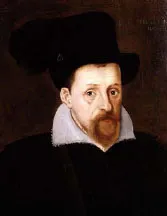
James I
After the enforced abdication of his Catholic mother, James’s guardians ensured that he was educated in a strict Calvinist tradition. This move was calculated to further alienate the young King from his mother’s religious beliefs, while at the same time securing the success of the Scottish Reformation.
From early on, James set his sights on the English throne; as the grandson of Henry VIII’s sister, Margaret Tudor, he had a legitimate claim to it. If Elizabeth I of England were to die childless, James was the most likely successor. With a view to gaining favour with the ageing queen, James signed the Treaty of Berwick with her in 1586. The Treaty agreed that, should either country be invaded by the King of Spain’s Catholic forces, the other would come to its aid. The fact that the Treaty survived intact even after Elizabeth executed James’s mother the following year was indicative of the extent of James’s ambitions for the English Crown. James married Anne of Denmark in 1589. The union produced seven children, of whom only three (Henry, Charles and Elizabeth) survived into adulthood.
When Elizabeth I died in 1603, James finally realized his ambition to ascend to the throne of England. Despite the age-old rivalries which existed between the two nations, James’s succession was one of the smoothest transitions to power in English history, perhaps due to his reputation for being a tolerant and fair-minded king, or an English fatigue of religious strife. In any case, James VI of Scotland became James I of England largely unopposed. England and Scotland were now united, symbolically, under a common monarch. After this, James appeared to lose all interest in his native land, returning to Scotland only once, in 1617.
The Gunpowder Plot aside, James’s reign was notable for its political and religious stability. He also left the legacy of the King James Bible, a literary masterpiece, which had an enormous impact on the development of the English language. James also presided over the first tentative steps of British imperial expansion – he sanctioned the beginnings of the colonization of America, with the first British settlement named Jamestown in his honour. H...
Table of contents
- Cover
- Title Page
- About History in an Hour
- Contents
- Introduction
- A Country Divided
- The Conspirators
- The Hatching of a Plot
- The Discovery
- An Attempt to Escape
- Torture and Capture
- Trial and Execution
- Repercussions, Traditions and Legacy
- Appendix 1: Key Players
- Appendix 2: The Gunpowder Plot Timeline
- Copyright
- Got Another Hour?
- About the Publisher
Trusted by 375,005 students
Access to over 1.5 million titles for a fair monthly price.
Study more efficiently using our study tools.
Frequently asked questions
Yes, you can cancel anytime from the Subscription tab in your account settings on the Perlego website. Your subscription will stay active until the end of your current billing period. Learn how to cancel your subscription
No, books cannot be downloaded as external files, such as PDFs, for use outside of Perlego. However, you can download books within the Perlego app for offline reading on mobile or tablet. Learn how to download books offline
Perlego offers two plans: Essential and Complete
- Essential is ideal for learners and professionals who enjoy exploring a wide range of subjects. Access the Essential Library with 800,000+ trusted titles and best-sellers across business, personal growth, and the humanities. Includes unlimited reading time and Standard Read Aloud voice.
- Complete: Perfect for advanced learners and researchers needing full, unrestricted access. Unlock 1.5M+ books across hundreds of subjects, including academic and specialized titles. The Complete Plan also includes advanced features like Premium Read Aloud and Research Assistant.
We are an online textbook subscription service, where you can get access to an entire online library for less than the price of a single book per month. With over 1.5 million books across 990+ topics, we’ve got you covered! Learn about our mission
Look out for the read-aloud symbol on your next book to see if you can listen to it. The read-aloud tool reads text aloud for you, highlighting the text as it is being read. You can pause it, speed it up and slow it down. Learn more about Read Aloud
Yes! You can use the Perlego app on both iOS and Android devices to read anytime, anywhere — even offline. Perfect for commutes or when you’re on the go.
Please note we cannot support devices running on iOS 13 and Android 7 or earlier. Learn more about using the app
Please note we cannot support devices running on iOS 13 and Android 7 or earlier. Learn more about using the app
Yes, you can access The Gunpowder Plot: History in an Hour by Sinead Fitzgibbon in PDF and/or ePUB format, as well as other popular books in History & British History. We have over 1.5 million books available in our catalogue for you to explore.