![]()
Appendix 1: Key Players
Vissarion Dzhugashvili ‘Basu’ c.1849–1909
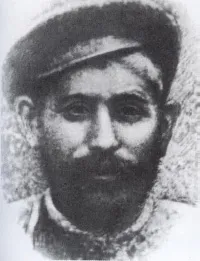
Basu was a cobbler, who learnt his trade in the Georgian capital, Tiflis, and whose working life was often afflicted by alcoholism. He met his future wife during a visit to Gori, fifty miles away, later setting up his own business there. His family lived well until the drink took hold again.
Vissarion Dzhugashvili
He argued violently with his wife over their son’s future – while he wanted the young Stalin to follow him into the trade, she wanted him to enter the church.
The beatings Dzhugashvili meted out on his wife and son were severe. On one occasion, the intensity of violence against his son caused Stalin’s urine to be streaked with blood for a week. On another occasion, Stalin threw a knife at his father while attempting to defend his mother. Eventually, the couple split up. The violence embittered Stalin, who maintained minimal contact with his father. Stalin last saw him in 1901, when Dzhugashvili still chastised his son for not becoming a cobbler. He died in 1909 from tuberculosis.
Ekaterina Dzhugashvili ‘Keke’ 1858–1937
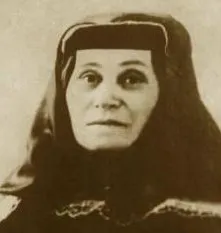
Stalin’s mother married at the age of fourteen. Her first two children, both boys, died within their first year. Joseph, although struck by a bout of smallpox, survived. Seeing her son’s survival as a gift from God, she was determined to see him enter church school to train to become a priest, fighting off, often physically, her husband’s determination for him to become a cobbler.
Ekaterina Dzhugashvili
Having freed herself from her violent husband, Keke moved from one accommodation to another, picking up work where she could. In later life, Stalin arranged for his mother to move into a large mansion in Tiflis, but, a woman of humble needs, she felt uncomfortable with such luxury and confined herself to one small room. She turned down his requests to visit him in Moscow, and Stalin, never fond of travelling, visited her only rarely. She once asked her son, ‘Joseph, what exactly are you now?’ He replied, ‘do you remember the Tsar? Well, I’m like a tsar.’ ‘You’d have done better to have been a priest,’ she said in response.
She died in 1937. Stalin upset Georgian tradition and sensibilities by not attending her funeral, sending Laventry Beria, at the time Stalin’s man in Georgia, in his stead.
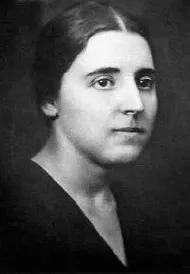
Ekaterina Svanidze 1885–1907
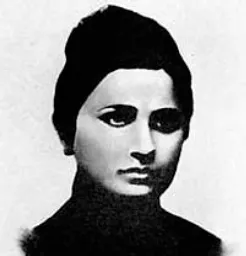
Alexander Svanidze, an old school friend of Stalin’s and a fellow revolutionary, introduced Stalin to his sister, Ekaterina Svanidze. Nicknamed Kato, Ekaterina was born in Georgia in 1885. Respecting her devoutness, Stalin put aside his atheism and the couple were married in an Orthodox church in Tiflis in 1906.
Ekaterina Svanidze
With Stalin often absent, Kato spent much of her time alone, praying for his safe return. They had a son, Yakov, born in March 1907, but the following December Kato was struck by typhus and died. She was twenty-two. Her death greatly affected Stalin and he later claimed that, beside his mother, Kato was the only women he had loved.
Alexander Svanidze was arrested in 1937 and shot four years later. His wife and sister also fell victim to Stalin. His son disowned him as an ‘enemy of the people’ and was himself later arrested and sent to the gulag.
Nadezhda Alliluyeva 1901–1932
As a two-year-old, Nadezhda, or Nadya, Alliluyeva was reputedly saved from drowning by the visiting twenty-five-year-old Stalin. When staying in St Petersburg (later Petrograd), Stalin often lodged with the Alliluyev family. In March 1917, Stalin returned to Petrograd from exile to join the unrest following the overthrow of the Tsar. By then Nadya was sixteen and she fell for the romantic revolutionary.
Nadya became Stalin’s personal assistant as he embarked on his role as the People’s Commissar for Nationalities and joined him in the city of Tsaritsyn during the Civil War. They married in 1919 and had two children: Vasily, born 1921, and Svetlana, born 1926.
Nadezhda Alliluyeva
Nadya found life in the Kremlin suffocating. Her husband, whom she once saw as the archetypal Soviet ‘new man’, turned out to be a quarrelsome bore, often drunk and flirtatious with his colleague’s wives. A manic-depressive and prone to violent mood swings, Stalin’s colleagues thought her ‘mad’.
In 1929, bored of being cooped up in the Kremlin, Nadya enrolled on a course in chemistry. She diligently went to university each morning by public transport, shunning the official limousine. Her new-found student friends, not realising who she was, told her horrific stories concerning Stalin’s collectivisation policy. When she confronted her husband, accusing him of ‘butchering the people’, he reacted angrily and had her friends arrested. Days before her death, according to her daughter, Nadya confided to a friend that ‘nothing made her happy’, least of all her children.
On the evening of 8 November 1932, Stalin and Nadya hosted a banquet to celebrate the fifteenth anniversary of the October Revolution. Nadya, offended by the way her husband spoke to her, stormed out. Molotov’s wife chased after her and together they walked round the Kremlin grounds until Nadya calmed down and retired for bed. Next morning, servants found her dead. She had shot herself with a small, toy-like pistol that her brother, Pavel, had brought back from Berlin as a present. She was thirty-one. She’d left a note for Stalin which, according to Svetlana, was both personal and ‘partly political’. Although she never saw it, Svetlana described it as being ‘full of reproach and accusations’.
The public, and her daughter, then aged six, were told that Nadya Alliluyeva had died from appendicitis. Svetlana found out the truth by accident a decade later. On the day of her State funeral, Stalin muttered, ‘She went away as an enemy’.
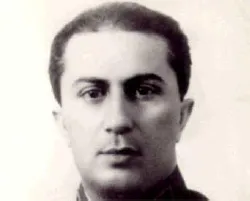
Yakov Dzhugashvili 1907–1943
Yakov Dzhugashvili was the product of Stalin’s first marriage to Ekaterina Svanidze. His mother died during his first year. Deprived of his father’s affections and upset by a failed romance, Yakov once tried to shoot himself. As he lay bleeding, his father scathingly remarked, ‘He can’t even shoot straight’.
Yakov Dzhugashvili
Yakov joined the Red Army at the outbreak of war in the East in June 1941, serving as a lieutenant in the artillery. On 16 July, within a month of the Nazi invasion, Yakov was captured and taken prisoner. Stalin considered all prisoners as traitors to the motherland and those that surrendered he demonized as ‘malicious deserters’. Families of PoWs, or ‘deserters’, faced the harshest consequences for the failings of their sons or husbands – arrested and exiled. Yakov may have been Stalin’s son but his family was not spared. He was married to a Jewish woman, Julia. Stalin had managed to overcome his anti-Semitism and grew to be quite fond of his daughter-in-law. Nonetheless, following Yakov’s capture, Julia was arrested, separated from her three-year-old daughter and sent to the gulag. After two years, Stalin sanctioned her release but she remained forever traumatised by the experience.
The Germans made propaganda capital of Yakov’s capture, dropping leaflets in the Soviet Union that claimed that the Great Leader’s son had surrendered and was feeling ‘alive and well’. ‘Follow the example of Stalin’s son’, the Germans urged Soviet soldiers, ‘stick your bayonets in the earth’.
In 1943, Stalin was offered the chance to have his son returned. The Germans had been defeated at Stalingrad and their Field Marshal, Friedrich von Paulus, was taken prisoner by the Soviets, their highest-ranking capture of the war. The Germans offered a swap – von Paulus for Yakov. Stalin refused, saying, ‘I will not trade a Marshal for a Lieutenant … what would other fathers say?’ On 14 April 1943, the thirty-six-year-old Yakov died in captivity by reputedly throwing himself onto an electric fence.
Vasily Dzhugashvili 1921–1962
Following the death of his mother, Vasily and his sister, six-year-old Svetlana, were brought up by a succession of nannies which proved particularly disturbing for the eleven-year-old Vasily. At the age of seventeen, despite only obtaining poor grades, Vasily joined an aviation school. His father’s aides had to ensure his entry. Stalin once described Vasily as a ‘spoilt boy of average abilities’ and advised his son’s teachers to be stricter with him.
As a young man, Vasily continually used his name to further his career, to obtain perks and seduce women. It was a trait that his father deplored. Vasily drank to excess and denounced anyone he disliked. Amazingly, he managed to graduate as a pilot. Continually drunk, he would commandeer planes and fly them while inebriated. Promoted to the rank of colonel at the beginning of the war, Vasily was elevated numerous times, becoming a Major-General in 1946, a rank far beyond his ability. His drinking, loutish behaviour and intolerable temper made him both unpopular and a liability. He had no sense of responsibility and Stalin once had to intervene by sacking his colonel son for ‘hard drinking, debauchery and corrupting the regiment’.
Vasily was married twice but never managed to curtail his womanising. He was frightened of no one but his father, in front of whom he was often reduced to a stammering wreck. He lived in fear of what would become of him after his father’s death, believing that Stalin’s successor, whoever it may be, would ‘tear me apart’.
Sure enough, following Stalin’s death he was dismissed from the air force and arrested for ‘misappropriation of State property’ – using air force funds to finance his lavish lifestyle. He served seven years in prison and on appealing to Stalin’s successor, Nikita Khrushchev, was released in 1960. Within a year, he was back in prison, this time for causing a traffic accident. Ill health secured his release the following year, but he was exiled to Kazan, where he cut a lonely and dejected figure.
His years of hard drinking finally caught up with him and he died on 19 March 1962, two days short of his forty-first birthday.
Svetlana Alliluyeva 1926–2011
Stalin’s daughter was born on 28 February 1926. Being brought up in the stifling atmosphere of the Kremlin was difficult for a young girl and she later complained that her mother, Nadezhda Alliluyeva, never showed her any affection. In November 1932, when Svetlana was only six, her mother committed suicide. Svetlana was...