Collins Good Grammar
eBook - ePub

Collins Good Grammar

  1. English
  2. ePUB (mobile friendly)
  3. Available on iOS & Android
eBook - ePub

Collins Good Grammar

About this book

An invaluable guide to the world of good grammar which breaks down the barriers that prevent so many articulate, intelligent people from communicating effectively.

Frequently asked questions

Yes, you can cancel anytime from the Subscription tab in your account settings on the Perlego website. Your subscription will stay active until the end of your current billing period. Learn how to cancel your subscription.
At the moment all of our mobile-responsive ePub books are available to download via the app. Most of our PDFs are also available to download and we're working on making the final remaining ones downloadable now. Learn more here.
Perlego offers two plans: Essential and Complete
  • Essential is ideal for learners and professionals who enjoy exploring a wide range of subjects. Access the Essential Library with 800,000+ trusted titles and best-sellers across business, personal growth, and the humanities. Includes unlimited reading time and Standard Read Aloud voice.
  • Complete: Perfect for advanced learners and researchers needing full, unrestricted access. Unlock 1.4M+ books across hundreds of subjects, including academic and specialized titles. The Complete Plan also includes advanced features like Premium Read Aloud and Research Assistant.
Both plans are available with monthly, semester, or annual billing cycles.
We are an online textbook subscription service, where you can get access to an entire online library for less than the price of a single book per month. With over 1 million books across 1000+ topics, we’ve got you covered! Learn more here.
Look out for the read-aloud symbol on your next book to see if you can listen to it. The read-aloud tool reads text aloud for you, highlighting the text as it is being read. You can pause it, speed it up and slow it down. Learn more here.
Yes! You can use the Perlego app on both iOS or Android devices to read anytime, anywhere — even offline. Perfect for commutes or when you’re on the go.
Please note we cannot support devices running on iOS 13 and Android 7 or earlier. Learn more about using the app.
Yes, you can access Collins Good Grammar by Graham King in PDF and/or ePUB format, as well as other popular books in Languages & Linguistics & Grammar & Punctuation. We have over one million books available in our catalogue for you to explore.
Adjective or Adverb?
Both adjectives and adverbs describe things, but in different ways. Adjectives add extra meaning to nouns while adverbs help tell us how, why, when and where things happened. So, can you tell which of these are adjectives, and which are adverbs?
1.She is a bright girl who talks quickly.
2.It’s the large white house over there.
3.Of all the younger boys she liked James the least.
4.Of the older pair Phoebe is the taller of the two.
5.Look at that old dog, fast asleep.
(Adjectives: bright, large, white, younger, older, old; Adverbs: quickly, there, least, taller, fast)

Describing Things: Adjectives and Adverbs

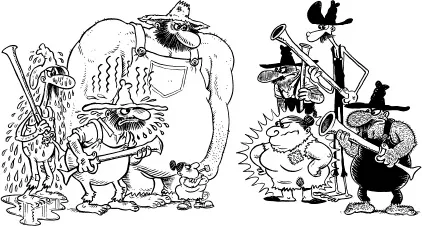
Adjectives define and modify nouns and pronouns while adverbs do the same for verbs, adjectives and other adverbs. They are two big families of words, interrelated and often difficult to tell apart, which is why we sometimes misuse or abuse them. Nor are they always amicable; as with the Martins and McCoys or the Montagues and Capulets, a bit of inter-family feuding goes on. It’s therefore useful to learn all we can about adjectives and adverbs and how we can use them to better effect.
Here’s a sentence in which the meaning depends almost entirely on adjectives and adverbs:
You’re buying the best,
adjective
most
adverb
expensive,
adjective
exciting
participle used adjectivally
and arguably
adverb
highest performance
adjective / noun
saloon
noun used adjectivally
car.
noun
There are four kinds of modifier in that sentence: three adjectives, two adverbs, a participle (a verb turned into an -ing adjective) and two nouns (performance, saloon) that are used in an adjectival way.
Writing a sentence like that is a bit like juggling four balls in the air, but most of us manage to do it tolerably well without too many mishaps.
Image
ADJECTIVES AND ADVERBS: Inter-family feuding
In the chapter on Parts of Speech we found that adverbs could be identified by their -ly endings. That’s fine for adverbs with -ly endings, but there are many without, and there are also some adjectives with -ly endings. It is these that cause confusion:
ADJECTIVES
ADVERBS
He is a slow driver.
He drives slowly.
She is an early riser.
She always rises early.
That’s very loud music.
John’s playing loudly.
Further confusion is caused by the same word doubling as adjective and adverb:
ADJECTIVE
ADVERB
It was a straight road.
Anne drove straight home.
She took the late train.
Brian was always late.
He read a daily newspaper.
He reads a paper daily.
Obviously we must be wary of adjectives and adverbs that don’t play by the rules.
We’ve all seen road signs that say GO SLOW! and perhaps wonder, on reflection, if it ought to say GO SLOWLY! It may be that we have a subconscious awareness that slow in SLOW LANE is an adjective, and that slowly, because of its -ly suffix, is an adverb, and therefore the sign should warn us to GO SLOWLY. That would be grammatically correct but the road engineer would argue the safety benefits of brevity and few today would dispute the usage. The following adverbial examples, however, are not regarded as good usage:
She put her lips to his ear and spoke soft.
(softly)
I’m afraid I’ve let him down...

Table of contents

  1. Title Page
  2. Contents
  3. The Thirteen Gremlins of Grammar
  4. Introduction
  5. What is Grammar? Why use it?
  6. You know more about grammar than you think: Test
  7. Grammar Test Answers and Scorecard
  8. Let’s look at Sentences
  9. The building blocks of sentences: Parts of Speech
  10. Naming things: Nouns
  11. You, me and other Pronouns
  12. It’s a plane! It’s a bird! No! It’s Superverb!
  13. Describing things: Adjectives and Adverbs
  14. Grammatical glue: Determiners, Conjunctions, Prepositions
  15. Punctuation: What’s the point?
  16. Punctuation: Devices for separating and joining
  17. Punctuation: Symbols of meaning
  18. Writing good English: The Elements of Style
  19. Index
  20. Keep Reading
  21. About the Author
  22. Writing Guides by Graham King
  23. Copyright
  24. About the Publisher