The authors explore employee wellbeing from a Malaysian perspective as a developing country, but they also reflect on the broader Asian and wider global context. The key themes analysed in this book include work addiction, cyber bullying, sexual harassment in the workplace and the ethics of workplace behaviour. The book contributes to the theoretical discourse around organisation studies and employee wellbeing, while also seeking to integrate academic concepts with practice. In this way, it offers practical steps towards promoting positivity and happiness in the workplace.
eBook - ePub
A Meaningful Life at Work
The Paradox of Wellbeing
- 198 pages
- English
- ePUB (mobile friendly)
- Available on iOS & Android
eBook - ePub
A Meaningful Life at Work
The Paradox of Wellbeing
About this book
A Meaningful Life at Work addresses a range of contemporary issues that impact on an individual's experiences in the workplace, including those that may restrict opportunities for personal growth in a professional setting. Understanding an employee's values, their choices and the problems they face in the workplace may help organisations to better structure their human resource policies, compensation packages and working conditions.
Information
CHAPTER 1
PASSIONATE ABOUT WORK OR ADDICTED TO WORK?
Some people strive to make a living, while others strive to make a life.
INTRODUCTION
Work has been an integral part of our lives. In the past, work was perceived to be a purposeful human action which involves physical and mental efforts that are carried out for economic values, and not for pleasure (Budd, 2011). In other words, people work to live. Many of us have the belief that the harder we work, the better we become. This has led to the hierarchical structure of work where individuals are often segregated according to their status at work. With the advent of technology, today’s working conditions have also changed as organisations become competitive with one another. In the modern world, organisations need employees who are dedicated to their work and who perform their best at work. This makes up for the organisation’s productivity and quality. To begin with, it is important to note that some employees allocate more time and energy to their work, in comparison to others. On the one hand, organisations may push their employees towards working hard, but on the other hand, the individual themselves may want to put in heavy work investments into their jobs. As employees, this is the choice we often make at work, for the purpose of making a living out of our work or for making a life out of it. Making a living involves securing sufficient income while making a life concerns the issue of work–life balance. Our wellbeing is very much dependent on the choice that we need to make.
The fact that some choices may be good does not mean that more choices are better. At times, the choices that we make can cause more harm than good. Schwartz and Ward (2004) assert that doing more could actually mean achieving a lot less. For example, people who are perfectionists, tend to do more to exceed their usual standard of performance. However, this could have detrimental effects on the person’s efficiency; in fact, it could actually reduce work productivity (Sherry, Hewitt, Sherry, Flett, & Graham, 2010), thereby, lowering work satisfaction (Fairlie & Flett, 2003). While work has been a means for one’s survival in the past, the contemporary way of looking at work is that it is more than just for survival purposes. To understand its success, some relevant questions can be asked: Would hard work equate to success? Would success be an antecedent to our happiness and wellbeing, and what does it take to be successful?
A large array of studies (e.g. Chang, Jia, Takeuchi, & Cai, 2014; Macky & Boxall, 2008; Shin & Konrad, 2017) have shown that competitive working conditions cause employees to compete among themselves so as to achieve that state of ‘success’. Employees seem to equate success with better compensation, respectable top management positions, bigger houses, longer life savings plans and many other goals. Thus, the concept of ‘survival of the fittest’ blends in well with their lifestyle which is to compete for higher positions, better pay and perhaps, even longer working hours, all of which cause major drawbacks on the wellbeing of the individuals. Some potential drawbacks can be traced to the incidences of depression, anxiety, mental disorders and physical health problems.
A recent report by the World Health Organisation (WHO, 2017) showed that anxiety and depression have a significant impact on the economy. This amounted to an estimated cost of about US $1 trillion per year, just for lost productivity, throughout the world. In 2017 alone, more than 300 million people worldwide experienced depression, and in 2015, the estimated number of people living with anxiety disorders throughout the world was 264 million. Additionally, about one in five adults in the US, that is, 43.8 million people, became victims of mental illness within a given year. In Malaysia, The Star newspaper (2 April 2017) reported that four out of every 10 Malaysians will experience some mental health issues in the course of their lives, and psychologists are confident that the figure will continue to rise. Other studies (e.g. Rusli, Edimansyah, & Naing, 2008) which focused on Malaysian employees have also shown that many individuals at work are suffering from job stress symptoms such as anxiety and depression (Idris & Dollard, 2014).
One factor relating work with anxiety and depression is work-related stress that is usually caused by overwhelming work demands, but the perplexing thing about this is that these anxieties and depression symptoms are not treated. Lauber and Rossler (2007) reported that mental illnesses are rarely dealt with in developing countries in Asia and the reason is often traced to the problem of stigma, and neglect as well as discrimination. In this regard, employees, as human beings susceptible to these emotional distress, are often prevented from getting the help and treatment they require. More often than not, these problems occur within a culture that views stress and depression as well as mental illness, negatively, as if it is the individual who is unstable. Consequently, the anxiety and depression issues become some kind of stigma and taboo in society. Moreover, Asians, in particular, do not like to talk about their problems, especially with regards to work. Therefore, individuals keep many issues to themselves and then become overwhelmed and suffer internally. Observations show that individuals who suffer from emotional problems are often perceived to be weak, therefore, when overwhelmed with work-related stress, these individuals are more likely to put the blame on their physical problems, such as their back pain, headache, inability to sleep and constant fatigue, instead of their internal distress. Undeniably, these issues with stress stem from the modern day culture of working.
In today’s changing and challenging organisations, employees tend to work longer hours (Drago, 2000). The pressure exerted by the organisation’s management as well as the economy has prompted organisations to compensate those employees who are willing to work hard and sacrifice their time for their profession. As a result of this, individuals continuously aim to enhance their capability and knowledge, build networks with others inside and outside the organisation and work harder than ever, so as to remain competitive and be ready for the rewards offered by their organisations. Taken together, these pressures can stimulate employees to work hard in their career because they want to move up the corporate ladder in their respective organisations.
WORK ENGAGEMENT AND WORKAHOLISM
A review of relevant literature indicates two categories of ‘working hard’: (1) an intrinsically positive form of working hard where employees are passionate about their job; this is known as work engagement, and (2) an intrinsically negative form of working hard where employees seem to be more addicted to work; this is known as workaholism. Nevertheless, the motive that propels people to be engaged at work or to become workaholics, has not been examined extensively, thus, it remains unclear. Despite the growing significance noted in scholarly and management literature, there seems to be a disconnection between the two constructs where the outcome is not related to work. This chapter aims to explore the differences, similarities and the interconnection between the two constructs, and the impact these may have on the wellbeing of employees. Ultimately, this chapter will also examine the concept of work engagement and workaholism domains so as to understand how this affects the employees’ attitude towards work and its implications for their wellbeing.
Drawing from the self-determination and choice theory, this chapter looks at the differences between employees who are passionate about their work and employees who have an addiction to their work. Within these theories, a major motivation regulating an individual’s behaviour is intrinsic motivation. As workaholics and as engaged employees, both actually focus on the degree in which individual is self-motivated to make their own decisions without the influence of external factors. For instance, workaholism has little to do with a person’s love or truthful need to contribute to organisational goals. Instead, workaholics work excessively hard because they feel that they must do so. Not doing so may induce anxiety and unhappy emotions such as shame, guilt and anxiety (Beek, Hu, Schaufeli, Taris, & Schreurs, 2012). In contrast, work engagement is associated with positive outcomes and it is characterised very much by the individual’s dedication towards work, an absorption with work and the vigour in doing work (Schaufeli, Salanova, González-Romá, & Bakker, 2002).
Past research tends to underestimate the importance of these two constructs of work (Christian & Slaughter, 2007; Schaufeli, Taris, & Van Rhenen, 2008). In this regard, this chapter posits that both work engagement and workaholism have pertinent roles in affecting employees’ wellbeing at work. To date, there are apparent gaps in the current knowledge and understanding of why people work, and what drives people towards working hard. These gaps can be addressed accordingly, so that the outcomes drawn can serve as the foundation for future studies to understand what drives people towards working hard. The outcome extracted will serve as the significance of this chapter, thereby setting it apart from previous studies. The justification for addressing this research centres on the claim that both work engagement and workaholism have pertinent implications for employees’ personal wellbeing and other work-related outcomes. The argument and conceptualisation of work engagement and workaholism will serve as two different models of working hard.
ENGAGEMENT AS PASSION TOWARDS WORK
Scholars and practitioners (e.g. Gorgievski & Bakker, 2010; Towers Watson, 2010; Zivnuska, Kacmar, Ferguson, & Carlson, 2016) assert that passion or engagement for work is a major determinant of employees’ wellbeing and performance. Passion for work has been conceptualised as a strong inclination towards work that one loves, it is considered as highly important and it serves as a vital part of one’s self-concept; work is an area where one invests a significant amount of time and energy (Forest et al., 2012). Recent years have witnessed an immense degree of research that focused on the concept of engagement at work. Due to some of their outcomes, consultancy agencies have begun calling for some variants of engagement to be adopted at the workplace as a policy goal for organisations.
The notion of employees being engaged at work focuses on positivity; it looks at the fulfilling aspects of doing work. In a sense, being engaged at work allows the individual to feel satisfied and happy. This positive reflection is in line with the notion of positive organisational behaviour. Thus, work engagement presents a positive form of resource that can be beneficial for the individual. Studies (e.g. Kahn, 1990; Schaufeli et al., 2002) indicate that work engagement can be defined as a positive, fulfilling, work-related state of mind where employees bring all their physical, cognitive and emotional energies into the work, and this is equivalent to passion. Work engagement predominantly refers to the experiences employees have while working. Being passionate helps the employees to identify themselves with the work they are doing.
Work engagement is a disposition that was found to be relatively stable. It also comprises three elements: vigour, dedication and absorption in work (Schaufeli et al., 2002) (see Figure 1.1). The first of these, vigour, refers to the energetic resources that the individual has, for example, physical strength, emotional energy and cognitive liveliness. Vigour, as a resource, demonstrates a high level of mental resiliency, thus, individuals who have a high level of perseverance in facing any difficulty at work are considered to have vigour. Individuals who are high on vigour also experience a higher will power to achieve their goals; they invest exceptional effort in at their work or job. A person who is vigorous demonstrates a person who is engaged at work and consequently, he/she grows into a passionate employee.
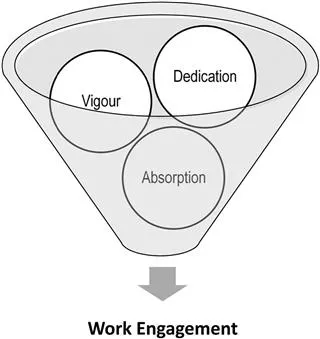
Figure 1.1. Elements of Work Engagement.
Source: Schaufeli, Martinez, Pinto, Salanova, and Bakker (2002).
The second element, dedication, represents the experience the individual feels, such as a feeling of significance, motivation, pride and enthusiasm, when doing work. Dedication is demonstrated by giving one’s best at work. In a sense, a dedicated employee would be a very disciplined person who follows rules and regularly tries his/her best in solving work problems. An individual who is dedicated to his/her job would surely be an engaged person.
The third element, absorption, is relevant to the feeling of contentment while performing one’s work. It demonstrates a state of attentiveness. An individual who is absorbed at work exhibits the characteristics of persistency and being engrossed in doing work. In most cases, absorbed individuals are happy to undertake responsibilities at work. They also do not notice how time flies. Essentially, an individual who is absorbed would be very much engaged in his/her work, appearing to be passionate in the job.
Unlike workaholics, engaged employees lack the typical compulsive drive; they treat work as fun, not an obsession, and they work hard due to their intrinsic motivation. These individuals are hardworking not only because they like their job, but also because they are driven by a resilient internal urge which they find difficult to fight (Bakker & Schaufeli, 2008). Engaged workers feel drawn to their work out of passion. They have effective connections to their work. However, they remain in control. Due to this, they normally find a balance between work and family. Not only do they enjoy work and find work a challenge, but they also enjoy their free time. Hence, an engaged employee will work hard, but only to the extent...
Table of contents
- Cover
- Half Title Page
- Introduction
- 1 Passionate about Work or Addicted to Work?
- 2 ‘Being Good or Being Bad in the Workplace?’ Does Moral Imagination Influence Employees’ Ethical Behaviour?
- 3 Cyberbullies: Hurt Me Not!
- 4 It’s Not a Compliment, It’s Harassment!
- 5 Positivity and Happiness in the Workplace
- Employee Wellbeing: A Matter of Choice
- Index
Trusted by 375,005 students
Access to over 1.5 million titles for a fair monthly price.
Study more efficiently using our study tools.
Frequently asked questions
Yes, you can cancel anytime from the Subscription tab in your account settings on the Perlego website. Your subscription will stay active until the end of your current billing period. Learn how to cancel your subscription
No, books cannot be downloaded as external files, such as PDFs, for use outside of Perlego. However, you can download books within the Perlego app for offline reading on mobile or tablet. Learn how to download books offline
Perlego offers two plans: Essential and Complete
- Essential is ideal for learners and professionals who enjoy exploring a wide range of subjects. Access the Essential Library with 800,000+ trusted titles and best-sellers across business, personal growth, and the humanities. Includes unlimited reading time and Standard Read Aloud voice.
- Complete: Perfect for advanced learners and researchers needing full, unrestricted access. Unlock 1.5M+ books across hundreds of subjects, including academic and specialized titles. The Complete Plan also includes advanced features like Premium Read Aloud and Research Assistant.
We are an online textbook subscription service, where you can get access to an entire online library for less than the price of a single book per month. With over 1.5 million books across 990+ topics, we’ve got you covered! Learn about our mission
Look out for the read-aloud symbol on your next book to see if you can listen to it. The read-aloud tool reads text aloud for you, highlighting the text as it is being read. You can pause it, speed it up and slow it down. Learn more about Read Aloud
Yes! You can use the Perlego app on both iOS and Android devices to read anytime, anywhere — even offline. Perfect for commutes or when you’re on the go.
Please note we cannot support devices running on iOS 13 and Android 7 or earlier. Learn more about using the app
Please note we cannot support devices running on iOS 13 and Android 7 or earlier. Learn more about using the app
Yes, you can access A Meaningful Life at Work by Raida Abu Bakar,Rosmawani Che Hashim,Sharmila Jayasingam,Safiah Omar,Norizah Mohd Mustamil in PDF and/or ePUB format, as well as other popular books in Business & Business Ethics. We have over 1.5 million books available in our catalogue for you to explore.