![]()
Marx’s Life and Works
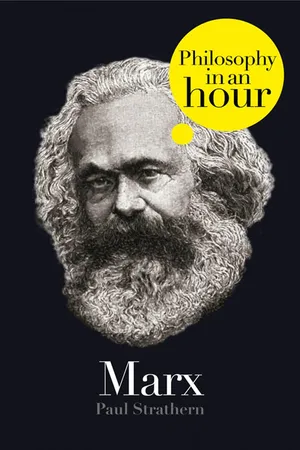
Karl Marx was born in the German provincial city of Trier on 5 May, 1818. Trier is just six miles from the Luxembourg border, on the Mosel River, which is renowned for its vineyards. Its proximity to the border and its love of wine make Trier an easy-going cosmopolitan spot, factors which were to have a significant influence on Marx.
Like so many ardent revolutionaries, Marx was brought up amidst comfortable bourgeois surroundings. His father, Hirschel, was a successful local lawyer who also owned a couple of small vineyards; and one of Karl’s uncles went on to found the Dutch industrial giant Philips.
Although descended from a line of rabbis, Hirschel Marx was not religious. Like many German Jews during this period – such as the composer Felix Mendelssohn and the poet Heinrich Heine – he converted to Christianity. This was largely a formality, enabling him to assimilate more easily into German middle-class society. Hirschel (who now became Heinrish) Marx had already enthusiastically embraced European culture. His favourite authors were Kant and Voltaire: a characteristic blend of German profundity and French subversive wit. Germany was in the process of becoming a unified nation state, and in 1815 the Rhineland provinces had been taken over by Prussia. The new Prussian rulers were deemed autocratic and oppressive by the more liberal locals. Karl’s father joined a political club that pressed for the Prussian state to adopt a constitution, which would enshrine the rights of its citizens.
Few details of Karl’s childhood have come down to us, apart from his so-called habit of forcing his sisters to eat mud pies. This sounds like a legend based upon a single incident: weeping muddy-lipped girls, outraged mother, skulking Karl, etc. Needless to say, commentators have exploited its metaphorical implications to the full – this is what the mature Karl did to us all, and so forth. By the time he went to nearby Bonn University at the age of eighteen, Karl was already an avid imbiber of books and wine, dividing his time equally between the library and the taverns. During some riotous activity in the latter he managed to provoke a local officer cadet into challenging him to a duel, and was lucky to emerge from this episode with nothing more serious than a traditional dueling scar. Karl was never the athletic type and even managed to evade military service on health grounds (aided by a somewhat suspect doctor’s report).
A year later Marx transferred to the University of Berlin, ostensibly to continue his law studies. But by now he had discovered philosophy, and all else paled into insignificance. Berlin was the capital of Prussia, far from the wine-loving Rhineland, and here student life was a much more serious matter. This was where the great Hegel had been professor of philosophy, becoming almost the official philosophical apologist for the Prussian state. But Hegel had died five years earlier, and a wide range of his followers had by now developed his ideas in a wide range of directions. Hegel’s vast idealistic philosophical system had proved open to many contradictory interpretations, several of which were anything but sympathetic to the repressive Prussian state and all it stood for.
Marx dutifully attended the official lectures on Hegel’s philosophy but claimed that he eventually fell ill “from intense vexation at having to make an idol of a view I detested”. Ironically, Hegel proved to be one of the main influences on Marx’s philosophy. But it was the dynamics and scope of this philosophy, rather than its actual content, that appealed to Marx.
Hegel’s philosophy viewed the world and all history in terms of a vast, all-embracing, ever-evolving system. This evolution grew out of the struggle between contradictions, and worked in a dialectical fashion. Each notion implied and generated the notion of its contradiction. For instance, the very notion of “being” implied the notion of “nonbeing,” or nothingness. These two opposites (the thesis and its antithesis) then came together to form their synthesis, which was “becoming”. In Hegel’s all-embracing dialectical system, this synthesis then became a new thesis, which in its turn developed its own antithesis, and so on. This dynamic system moved through all ideas, all history, and all phenomena – up to the highest level of Absolute Spirit reflecting upon itself, which is the totality of all that exists.
More specifically, Hegel’s philosophy of history insisted that the evolution of laws and government institutions in a society reflected the ethos and character of the people who made up that society. This may seem obvious to anyone who is used to living in a more liberal society, but it was far from obvious 150 years ago in the repressive, bureaucratic Prussian state. Hegel insisted that there was a dialectical link between the state and its citizens. This dialectic assumed both a logical and an organic aspect. The evolving structure of the state and the evolving traditions of its people were part and parcel of the same thing.
Hegel’s immensely prolix and complex philosophy appeared at an opportune historical moment. Its idealism, its insistence that all was moving toward the Absolute Spirit, filled the spiritual vacuum left by a growing disillusion with religion. It was Hegel who originally pronounced “God is dead” in 1827, not his firebrand successor Nietzsche, who is usually associated with this saying. Hegel was referring here to the more limited Christian idea of God, which would be superseded by the Absolute Spirit. Even so, his remark was highly blasphemous. Yet it was buried deep in the obfuscation of his all but unreadable work, and passed largely unnoticed. As a result, his philosophy appeared essentially conservative to the Prussian authorities. Its emphasis on a vast hierarchical system seemed like the absolute dream of a bureaucratic state. It was Hegel’s insistence on the spiritual, his religiosity, and the repressive conservatism of his system that made Marx sick.
Another major influence on Marx’s intellectual development at this juncture was the German humanist philosopher and moralist Ludwig Feuerbach, who was born in 1801 and had originally studied theology. In his early twenties Feuerbach had abandoned theology in favour of studying under Hegel in Berlin. But by the time Feuerbach published his major works, he had progressed far beyond the orthodox theology and orthodox Hegelianism of his earlier years. According to Feuerbach, Christianity had nothing to do with humanity’s relation to God. This religion, like all religions, covertly involved the relation between humanity and its own essential nature. The attributes of God were nothing more or less than the projected attributes of humanity. Our so-called knowledge of God was in fact no more than knowledge about ourselves and our own nature. For Hegel, the pinnacle of his system had been God – in the form of Absolute Spirit reflecting upon itself. Feuerbach accepted this structure, and even its dynamic, but interpreted it from a humanistic viewpoint. Absolute Spirit reflecting upon itself was nothing more or less than humanity’s own self-consciousness – man’s consciousness of his own essential nature, his understanding of his substantive self. What for Hegel had been idealistic and spiritual, became for Feuerbach humanistic and materialistic. There was no “spirit” involved. As we shall see, these ideas had a profound effect on Marx, though he did not swallow them whole. Ironically (and tellingly), Marx accepted the materialism of Feuerbach’s ideas but criticized their lack of Hegelianism. Feuerbach’s ideas were fine as they stood, but they lacked all dialectical and historical perspective. History, society, humanity itself (or its consciousness of itself in the form of God) were not changeless. They all evolved. They developed dialectically: the ...