Chapter One
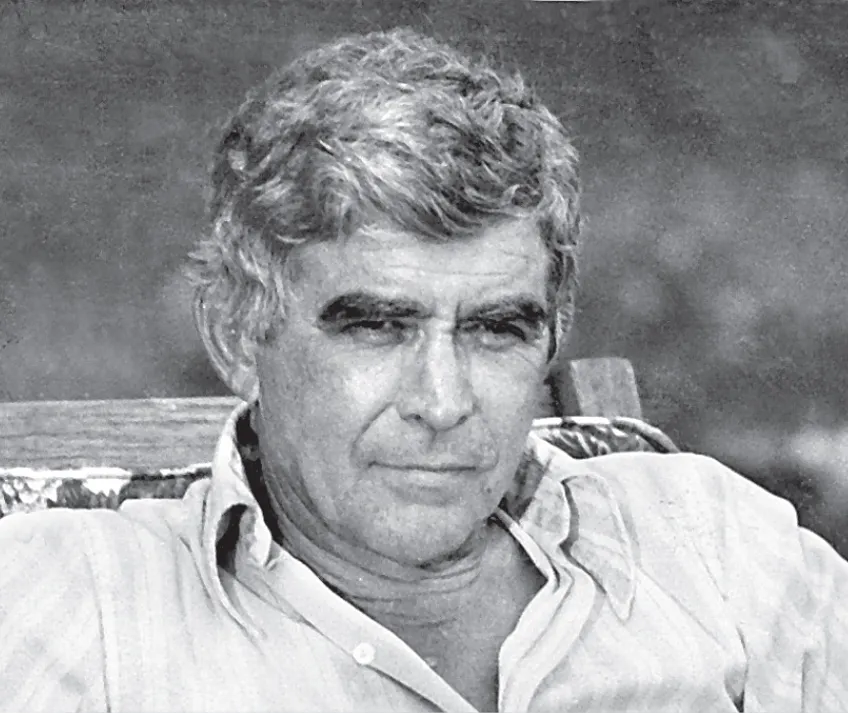
He died first, quickly and quietly. It was like my father to outwit my mother, even at the end. Cancer had sprouted in his lung and traveled slowly upward, until it had found an auspicious nesting place on his brain stem. My father, who despised doctors, could probably have bought himself some significant time had it not been for his overweening love of crossword puzzles. He spent his days fastened to a corner of the living room couch, a crossword puzzle laid out before him on the coffee table. To his left, on the dark wood end table, rested his props. A pack of Pall Mall cigarettes, neatly opened, the foil exposing the slim brown and white soldiers stationed within. A heavy gold-plated ashtray with a miniature eagle saddled in such a way as to offer a resting place for the burning cigarette. The requisite silver lighter lay nearby, square and heavy and satisfying to flip open and ignite. A cup of coffee stood innocently by, sipped carefully in the morning, but often left untouched for long periods of time, until the day softened into dusk, at which point it was replaced with a glass of vodka. This beverage, served in a slightly dirty glass with only the suggestion of ice, never stood idly by. It was relished by my father, and his hand left the coolness of the glass only long enough to attend to a challenge on the crossword puzzle before him.
One day, he leaned in to address the problem of a particularly perplexing word and realized he couldn’t make out the characters, despite his best efforts. The vision in his left eye would not adjust itself, and the words swam in front of him, causing increasing frustration. My father pulled himself up from his customary place on the couch and made his way slowly to the small bathroom located under the stairwell, where he studied himself in the mirror over the sink. Then he walked back into the living room and peered at the mantel, searching for the small white first aid kit that had rested there, mostly undisturbed, for decades.
Grasping the first aid kit, my father walked into the back of the house, where a long table stood in the middle of the laundry room. He placed the box on the table and quickly withdrew the necessary items: gauze pads and surgical tape. Then he moved into the bathroom off the kitchen and, locking the door behind him, began in earnest to solve the problem of his errant left eye.
This was the sight that greeted my brother Joe when he visited our father later that winter afternoon, and how terrible it must have been for him. All alone, he stood in the middle of the living room and studied his eighty-three-year-old father sitting before him on the couch. The year was 2004, but the old man looked like someone who time had forgotten, peering stoically forward, the left lens of his glasses patched with white gauze and crossed twice over with surgical tape. Joe stared at our father and said, “Jesus, Dad.” Joe was no fool and had an intuitive understanding of the game about to be afoot, but neither was he a glutton for punishment, so he tried to slow things down.
“What the hell happened to you?” he asked, sitting across from our father on a black and red floral ottoman, a permanent depression at its center, so that one had no choice but to sink into it. Joe, sunken, looked miserable, as he leaned forward, arms braced on his thighs.
Our father lit a cigarette, inhaled deeply, and said, “Couldn’t do the crossword puzzle. Frustrating as hell.”
Joe said nothing. His love for his father was complicated, and often ran along parallel lines of anxiety and devotion. When in our father’s presence, Joe felt himself helplessly reduced to a kind of childlike insecurity, hesitant to be completely himself with this man, for whom he would do anything. As a result, they often sat together in silence, Dad working on his crossword puzzle and Joe reading the paper. Today, however, Joe found the silence intolerable, and because he could not bear the heaviness that lay over the room, he spoke more boldly than was his custom.
“I think we should visit the ophthalmologist, Dad, and see what’s going on. See if we can’t get this thing corrected so you can get back to your crossword puzzles.”
My father raised an eyebrow and asked, “You think so? Think it’s an easy enough fix?”
The two good-looking men, father and son, studied each other. Deceit did not suit their relationship, which was unlike any other in the family. Joe and my father shared a relationship in which each attached a special value to the other, so that in many ways theirs was a secret, unspoken affection, one that defied articulation. Joe’s need for his father was primal, the father’s need for his son plaintive. This chemistry produced an allegiance at once tenuous and sacred.
After a time, my father looked up from his unfinishable crossword puzzle and fixed his good eye on his son.
“Shit,” he said, in acquiescence.
* * *
THE PHONE RANG in the bedroom of my apartment in West Palm Beach, where I had retired to take a nap between shows. The tour of Tea at Five, a one-woman bio-drama in which I played Katharine Hepburn in both her youth and her dotage, had begun to take its toll. This was precious time for me, since my efforts on the stage were considerable, and when two performances were demanded in one day, it was imperative to lie as still as possible for as long as possible so as to be able to seduce the audience at the evening performance into believing that I was both much younger then I actually was and, fifteen minutes later, much, much older. Therefore, I hesitated before reaching over and then decided, in a moment of curious karmic resolve, to pick up the phone and answer.
“Hello.”
“Kate, this is your brother Joe.”
The curious formality with which my brother always addressed me had the odd effect of bringing me instantly to attention. My heart skipped a beat, as it did whenever Joe called. This was because Joe was not given to phone calls of a purely social nature. I knew he was not inquiring after my well-being. I intuited, instead, that my brother had something important to tell me and that I had better prepare myself.
“What’s up, Bobo? You sound grim,” I said.
“Something’s up with Dad,” Joe replied, shortly.
It was this very curtness of tone that alerted me to the seriousness of the matter at hand. It was not Joe’s style to deliver bad news with finesse. He was not one to measure the sound of his remarks, nor was he likely to put himself in the other person’s shoes. When darkness was my brother’s message, he delivered it with the blunt force of a metal hammer.
“Dad had a problem with his vision and it was fucking with his ability to do his crossword puzzles. This was beginning to drive him nuts, so he taped up the left lens of his glasses in an effort to see more clearly through his right eye. It didn’t work, so I convinced him to let me take him to the ophthalmologist.”
Joe paused. I swung my legs over the side of the bed and stood up.
“Go on, sweetheart,” I urged.
“Looks like there might be—something, some malignancy—somewhere. The ophthalmologist wouldn’t tell me much, but he arranged for an appointment with an oncologist at Finley, who immediately ran a number of tests, but I started to get really nervous when he insisted on taking a biopsy. He did, and that’s where we are. The doctor wants Dad back at the clinic on Monday.”
I sat again, abruptly. An oncologist did not bode well, not in our family. For many years, this clinical title meaning “one who spots death” had been anathema in our house. We disparaged this word, laughed at it, dismissed it, anything to defuse it. It always meant an appointment in a bleak place with a racing pulse, clammy hands, a clock ticking loudly in a dull green corridor. It meant head scarves and autumn leaves, a buckling at the knees, racking sobs on a moonlit night, no more school, a leeching of what was.
“Listen to me, Bo,” I said. “Today is Friday. Please make the appointment for next Tuesday, and I’ll be there.”
“Come on, Kate, you don’t have to do that,” Joe countered, but I felt him relent, even as he resisted. In that moment, I understood that this had been his intention all along. He knew that of all our siblings, I was in the best position to get our father the care he needed. These circumstances demanded not only compassion but a capable hand and a modicum of fame. I possessed all three.
I didn’t for a moment fault my brother for cashing in on my celebrity status. There was even a possibility that he was not conscious of this manipulation, although I found that possibility so remote as to be nonexistent. Joe was grasping for straws in what he anticipated might become a high-stakes game. The medical game. The game of chance, where some are overlooked, some condemned, and some elevated as if by magic to a level of excellent care, thereby increasing their chances to greet another day with the element of promise. Joe was prepared to do anything to ensure my father the greatest number of promising days, where crossword puzzles were dispatched with ease and a vodka on the rocks appeared with happy regularity at the stroke of five. He was prepared to do this because of all the people in the world whom he loved, he loved our father with a singular, unbridled passion.
The tenderness I felt for my brother developed only after years of watching him wreak havoc. I disliked him intensely when he was a young boy and considered him almost pathologically attracted to danger. In a typical summer, he might burn down the barn one day and run away to Chadron, Nebraska, the next.
My father was his own boss and, with his brother, Bob, owned a contracting business called Mulgrew Blacktop. Dressed in khakis and work boots, furious with his son and frustrated by his own impotence, he slammed in and out of the back door over the next two weeks, making for the bottle of J & B when he came in at night and occasionally muttering, “Jesus H. Christ!”
Then, one night the phone rang, and my father picked up the receiver. After listening with intense concentration to whoever was on the other end of the line, he hung up, drained his glass and, looking at his wife and sundry other offspring, burst into laughter and shouted, “The little shit is in Nebraska, for Christ’s sake! They picked him up after a bar fight and threw the little creep in jail! He must have really pissed someone off because now he’s sitting behind bars with a couple of broken mitts in bleeping Chadron, Nebraska, for Christ’s sake! And he somehow managed to rescue a puppy, while he was at it! Jesus!”
Early the next morning, I woke to the sound of Dad’s car pulling out of the driveway and I knew that he was embarking on the long journey to Chadron, Nebraska, where he would recover his young and completely unmanageable son, whom he would greet with a terrible sternness meant to send shivers down the kid’s spine, and the kid would feel those shivers for a while but then somewhere along the highway, the puppy would start to yelp and Dad would mutter invectives about dog shit in his clean car and Joe would smile his shy, crooked smile of phony remorse and hold up his hands, bandaged in gauze, and look at my father with a curious mixture of sweetness and bravado. My father, disarmed, would need to turn away and light up a cigarette.
My younger brother, separated from me by no more than fourteen months, was born with a beautiful face, perfectly formed limbs, a keen intelligence, and a serious penchant for trouble. He was a colicky baby, a hyperactive child, a troubled youth, and an adult male whose beauty captivated and destroyed many women. He and my father looked very much alike, and had either of them acquired in height even so much as two inches more than nature had allotted them, life would have been insupportable. My father stood at five feet six, my brother at five ten, and both men regarded their stature as an affliction. They worked aggressively to dispel the effects of their relative shortness by sharpening their God-given gifts of wit, charm, and sexual allure until it no longer appeared to the naked female eye that they were anything but completely desirable.
One evening in the early summer of 1971, it happened that my father, contrary to custom, joined his family at the dinner table. Tom, the firstborn, favored and openly adored, held the seat of honor, directly to my father’s left. Next to him, brimming with resentment at his diminished status, sat Joe. Laura, a soft-spoken and uncertain thirteen-year-old, was placed at our mother’s right, and to our mother’s left, in a state of perfect contentment, perched Tessie. The two youngest, Sam and Jenny, had eaten earlier in the kitchen under the supervision of Mother’s helper, Doris, a painfully shy young woman whose capacity for hard work saved her from making an outright fool of herself with my father, whom she worshipped. My place at the long oval dining table was to my father’s right, signifying the importance of my stature as the second-born child and oldest daughter.
There we sat, basking in the sunshine of our father’s highly unusual presence. Tales were told, jokes exchanged, candles flickered as we bent to our food, and I thought, How like a normal family we are, after all! Here is our mother, and here is our father! It doesn’t matter that he’s not eating—he is here, and his glass is full, and soon the plates will be cleared and Dad will indicate that he would like me, his eldest daughter, to leave my seat and station myself behind his chair, where I will begin to run my fingers through his hair and where soon the sound of my father’s pleasure will escape his lips in low growls, followed by encouragements such as “Ahhh” or “Now you’re talking, sugar,” when in fact I would not have been talking at all but only rubbing away and now and again twisting his thick, wavy hair into devil’s horns and sending my siblings into howls of laughter. Even Mother, from her place at the opposite end of the table, seemed to be enjoying herself. She leaned forward and, putting her elbows on the table, cupped her face in her hands and watched with a kind of vacant amusement as her children chattered and laughed and ate.
Suddenly, the phone rang, startling everyone into silence. The telephone seldom rang in the evening because my father despised the telephone and had put a moratorium on our use of it. He found the empty chatter it inspired to be excessive, irritating, and unduly expensive. Accordingly, we had warned our friends not to call in the evening, when the probability of our father being at home was at its greatest.
The phone rang and continued to ring until finally my father looked up and demanded, “Who the hell is calling at this hour?” It was seven-thirty. I leaned down and, plucking up courage in my role as designated head rubber, whispered, “You better get it, Dad, don’t you think?” My father sighed deeply, as if interruptions such as these were unrelenting. He picked up his unused napkin, threw it on the table and, as he marched into the kitchen, exclaimed, “Merde de cheval!”
Minutes passed, as we strained to eavesdrop on the telephone conversation taking place. Occasionally, we heard our father grunt in response, and once he said, “Is that so?” There were long, unbroken moments of silence in the kitchen, and this, we knew instinctively, meant that our father was listening to something that he found particularly interesting. Before he hung up, he deliberately lowered his voice and said, “Okay, pal, we’ll see about that.”
The door to the dining room opened at last, and our father appeared. He looked directly at Joe, and so seve...