1 ‘Not afraid of the impossible’
Ragnar Frisch (1895–1973)
Ragnar Anton Kittil Frisch was born on 3 March 1895.1 His father, Anton Frisch, was a jeweller from an old family of mining specialists,2 very active in local politics as a member of the Liberal Party and an elected member of the executive committee of the city council of Oslo. His mother was Ragna Fredrikke Kittilsen.
In 1913, the young Ragnar completed the normal examinations taken after secondary school. But then he suspended his studies and worked as an apprentice for some years in a firm owned by David Andersen, in order to follow his father’s career in jewellery: there, Ragnar completed his probationary period as a craftsman. He was now a goldsmith, but then considered going back to school, under the influence of his mother.
Consequently, this twenty-one-year-old professional applied for admission to Oslo University. Much later, in an autobiographical note written to mark his acceptance of the Nobel Prize, Ragnar Frisch explained that facility and rapidity had been the sole criteria for his choosing the course of economics: ‘we perused the catalogue of Oslo University and found that economics was the shortest and easiest study’ (Frisch, 1970a: 211).3 Economics, a recently established two-year course (1908) at the Faculty of Law, was considered to be an easy topic (Bjerkholt, 1995: xiv). Yet, Frisch excelled as a student: as an active member of the faculty, he was chairman of the educational programme of the Oslo Students Union; as an undergraduate, he prepared himself for crossing over the boundaries of economics. The year after graduation, in 1920, Ragnar married Marie Smedal.4 Professional life was beginning for this goldsmith turned apprentice economist and mathematician: whilst he managed the family’s jewellery business, he would become one of the most influential economists of the century. Not bad for someone who had chosen economics for the simplicity and rapidity of the course.
In a youthful manifesto written as an examination report, Ragnar claimed that ‘Man must not be afraid of what seems impossible to do. History has shown that human beings possess a wonderful gift of being able to obey the saying of Aristotle: “Measure the unmeasurable” ’ (quoted in Andvig and Thonstad, 1998: 6). More than fifty years later, Frisch recapitulated this Aristotelian assertion in his Nobel lecture: ‘deep in human nature there is an almost irresistible tendency to concentrate physical and mental energy on attempts at solving problems that seem to be unsolvable’ (Frisch, 1970b: 214). Solving what seems to be unsolvable, not being afraid of what seems impossible: measuring the unmeasurable – that could have been Frisch’s motto in life.
Measuring the unmeasurable
In the early 1920s, Oslo was a pleasant place to be: the foundations of the economics course were just being laid and there was not too much competition for its leadership, the city was close to Sweden where important economic research was being conducted and Russian mathematicians were also within contactable range. But it was not an important research centre: from 1811 until 1930, only six or seven doctoral dissertations were approved in economics and one in statistics – that written by Frisch himself (Bjerkholt, 2005: 493). Ragnar wisely decided to seek better qualifications and, from spring 1921 until 1923, he moved to Paris in order to study mathematics and prepare his dissertation. He then travelled until the spring of 1924 in order to discover more about the state of the art in economics: Britain, Germany and Italy were his next destinations.
The very first paper that Frisch ever wrote was on numerical computation (1923), a subject he remained fascinated about throughout his life. During that period, he was also confident enough to prepare other papers on different topics related to mathematics and statistics. His main themes of interest were time series analysis, the measurement of the marginal utility of income and mathematical studies aimed at different applications.5 His first paper on economics, ‘Sur un Problème d’Economie Pure’, was published in 1926 by the Norwegian Mathematical Association of Oslo University and includes the inaugural reference to the concept of ‘Econometrics’:
Econometrics has as its aim to subject abstract laws of theoretical political economy or ‘pure’ economics to experimental and numerical verification, and thus to turn pure economics, as far as is possible, into a science in the strict sense of the word.
(Frisch, 1926a: 3)
According to an unpublished manuscript from 1925 or 1926, econometrics should correspond to a very well defined research programme based on the following priorities:
- To continue the work established by Cournot, Jevons, Walras, Fisher,6 Pareto and others. That is, to construct a general mathematical analysis of statistical phenomena, without specifying the relevant functions or achieving numerical results.
- To extend the analysis by using this method to dynamic phenomena.
- The statistical-econometric task: to specify the relevant functions and to determine the values of the parameters by a rational use of economic statistics, thereby gaining numerical results.
(quoted in Andvig, 1981: 703)
The last task was the one that Frisch embodied in his own doctoral dissertation, implicitly admitting that both the other two would also be complied with. Written in French, as was most of his work in that early period,7 the thesis dealt with ‘Semi-invariants et Moments d’Ordre Supérieure’ and was published in Oslo in 1926.8 The introductory pages present an overview of the current state of the art of statistics. According to Frisch, the calculation of probabilities followed one of two possible paths, being either (i) a rational, a priori form of statistics, or (ii) a stochastic, a posteriori form of statistics, as Bernoulli and then, later on, Bortkiewicz suggested. The author noticed that the second form was beginning to emerge: ‘Since some years, this part of the probability computation knew such development that it almost constitutes a new science, intermediary between mathematics and statistics’ (Frisch, 1926b: 1).
But that development was not the relevant one for Frisch, since his own point of interest lay elsewhere: the essential problem, he argued, was the determination of the laws of distribution followed by a concrete series describing a process. This was, of course, another way to approach the second task of his programme, the analysis of dynamic phenomena. Taking a series, ‘we first try to determine the most likely type of scheme from which the series is created. Then we try to determine the “presumptive” value of the parameters defining the scheme’ (ibid.).9 Frisch admitted to being under the spell of Tschuprow’s 1924 lectures at Oslo University, but it is quite clear that the preparation of his dissertation was well underway when he first heard the mathematician speak, and he took care to emphasise that new theories and innovative approaches were necessary for complying with his own research programme. This was Frisch’s aim in life: to measure the unmeasurable.
The dissertation deals with this problem: in analytical terms, how to interpret the results from empirical observation – or how to describe the process generating the data. This was what Frisch referred to as the inversion problem, as is usual in physics:
The inversion problem: how to go back from an empirical distribution to the scheme originating this observed distribution, it is a very different problem. In order to deal deeply with it, we cannot avoid discussing philosophical questions, in particular questions related to the theory of knowledge. We believe that the critical interpretation of the functioning and methods of statistics did not follow the technical development and extension of the field of application of our discipline both in the domain of social sciences and in that of natural sciences. This interpretation quite often suffered from the refusal of statisticians and mathematicians to discuss philosophical questions in order to limit themselves to discussing exclusively technical questions.
(ibid.: 101, or 86 in the published version)
This is an accurate description of what Frisch endeavoured to do from the first moment of his entry into the world of economics in 1920 until the outbreak of the Second World War.
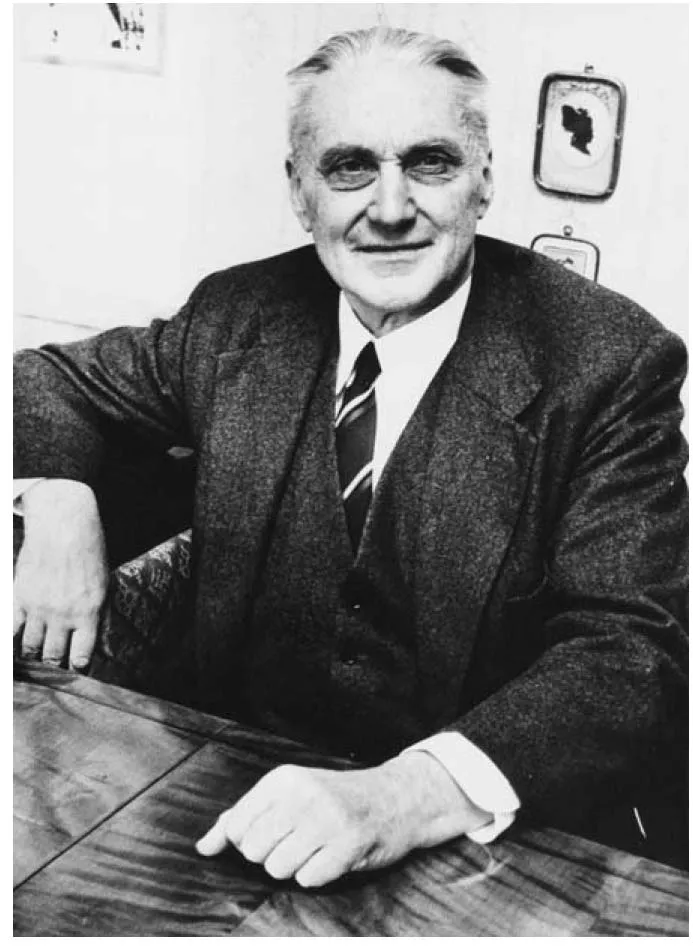
Figure 1.1 Portrait of Ragnar Anton Kittil Frisch sitting by his desk. Taken in 1968 (source: Frisch Archive, University of Oslo).
In 1925, Frisch was appointed universitetsstipendiat (junior assistant professor) of economics and defended his dissertation the following year. In 1928, he was nominated docent (associate professor) and, following the creation of a new chair by a special government decision, effective from 1 July 1931, full professor. 10 Economics had been part of the faculty of law since the creation of the course and it would remain so until 1963; from 1935 onwards, the course was extended to five years. At the same time, the Økonomisk Institutt (Institute of Economics) was created; although installed on the University premises, the Institute was autonomous. It became a centre for research into national accounting and other topics, always headed by Frisch, the research director and alma mater.
From the beginning, the Institute received a yearly grant of $5,000 from the Rockefeller Foundation and the guarantee of a further 5,000 if some local money was added to the sum. Yet, this interest quickly waned, since the Oslo Institute was mostly interested in ‘highly abstract mathematical theory’, as John Van Sickle, from the Rockefeller office in New York, put it. The office consulted other economists in order to get their assessment of what was going on in Oslo. Hayek, for one, stated that Frisch was ‘more of a mathematician than an economist and is not convinced of the soundness of his economics’,11 but could eventually ‘develop techniques that in another generation might prove highly useful’ (Bjerkholt, 2005: 523). In short, he was neither understood nor admired, but clearly not disregarded by that generation of economists for whom mathematics was a conundrum.
Looking beyond these borders, Frisch established his leadership of the new programme of mathematical economics. In 1947, just after the war ended, four professors taught the economics course. Frisch was the most influential among them.
Crossing the ocean
As soon as he received the faculty appointment, Frisch decided to establish new working relationships with other economists and to look for kindred spirits, consequently crossing the ocean in 1927 and staying in the US until 1928, again with the convenient support of the Rockefeller Foundation.
Ragnar Frisch disembarked into the midst of a small although effervescent and expanding milieu of social scientists. He already knew, either by name or in person, some of the most distinguished European economists, but only a few shared his ambition of creating a new breed of economics, which he defined as econometrics, the science of measuring the unmeasurable. Never afraid of the impossible, he addressed the most prominent of the economists and immediately received their understanding and cooperation: Wesley Mitchell and the Rockefeller Foundation kindly offered to distribute a manuscript in which Frisch summarised his views on how to measure business cycles.
The paper was prepared for Frisch’s lectures and was highly critical of the dominant methods defined by Warren Persons, especially since the young economist rejected the assumption of the constant period and shape of cycles (see Chapter 4).12 Frisch launched a vigorous attack against the uncritical use of regression analysis, considered Mitchell’s periodogram too mechanical and suggested a geometric framework to study collinearity. By that time, he was already aware of the dangers of spurious regression and the illusory effects of averaging over time, as established by Yule and Slutsky in their 1927 papers.
The same month in which he finished that text, December, Frisch presented another paper at the joint meeting of the American Economic Association and the American Statistical Association in Washington, at a round table on the ‘Present Status and Future Prospects of Quantitative Economics’. The paper, which has no title, still survives in the Oslo University Archive, and is constructed as an argument for the development of quantitative economics, which should include ‘that part of economic theory which is concerned with the logic of our quantitative notions’, as opposed to simple economic statistics. In other words, Frisch joined forces with those theoretical economists who had embraced the neoclassical approach, the likes of Irving Fisher and John Bates Clark, the introducers of that vision of economics into the US, and his acquaintance François Divisia, a specialist in monetary theory: ‘For lack of a better term we might call this part of economic theory the axiomatic part of quantitative economics or simply axiomatic economics’ (Frisch, 1927a: 2). Declaring his allegiance to axiomatics, Frisch placed himself at the centre of the mainstream, fighting for an operative analogy with the empirically oriented sciences, physics above all. But this was not enough for him, since most of the cultivators of this very canon still came from a literary and non-mathematical tradition in economics: Frisch provided guidance for the econometric generation in imposing their new method, although he followed a very peculiar version of axiomatics, as argued below.
Immediately after the meeting and eager to obtain the widest possible dissemination of his ideas, Frisch submitted the paper to the NBER (National Bureau of Economic Research) for publication. His argument in favour of axiomatic economics as opposed to, or as an explanation for, the results of empirical economics was alien to the NBER and the institutionalist tradition. At that time – and for many years afterwards – Mitchell and his collaborators were engaged in rather successful research into the measurement and explanation of business cycles, and either tended to ignore or were critical of mainstream equilibrium concepts. Some years later, these differences would ignite a fierce debate, but in the late 1920s they did not prevent Mitchell from providing his young colleague with a list of addresses of relevant economists and encouraging him to distribute his paper on business cycles, although the NBER could not find the space to publish his methodological remarks. Consequently, Frederick Mills13 wrote to Frisch announcing, after consultation with Schultz and Burns, the rejection of his round table paper for reasons of space.14
Frisch did not give up and remained busy looking for other companions who could share his ambition and faith. The project for the creation of a new association grew from contacts and discussions with very different people, including those who would later split into diverse schools of thought and method. After discussions with Charles Roos, a meeting was set for the next year, at the Colonial Club in Harvard: on 29 February 1928, Frisch met Haberler and Schumpeter in order to draw up a list of ‘econometric people’. They found seventy-seven names and proceeded to contact as many as they could, inviting them to join the new econometric movement. The Colonial Club meeting initiated a round of letters and contacts all over the world in a search for like-minded thinkers, and led eventually to the creation of the Econometric Society. At the very end of December 1930, a meeting was held at the Statler Hotel in Cleveland, Ohio, at which the new Society was founded. That story is the main theme of Chapter 2 and covers most of Frisch’s activity during the 1930s, the period in which he devoted most of his time to the consolidation of the newborn econometric movement.
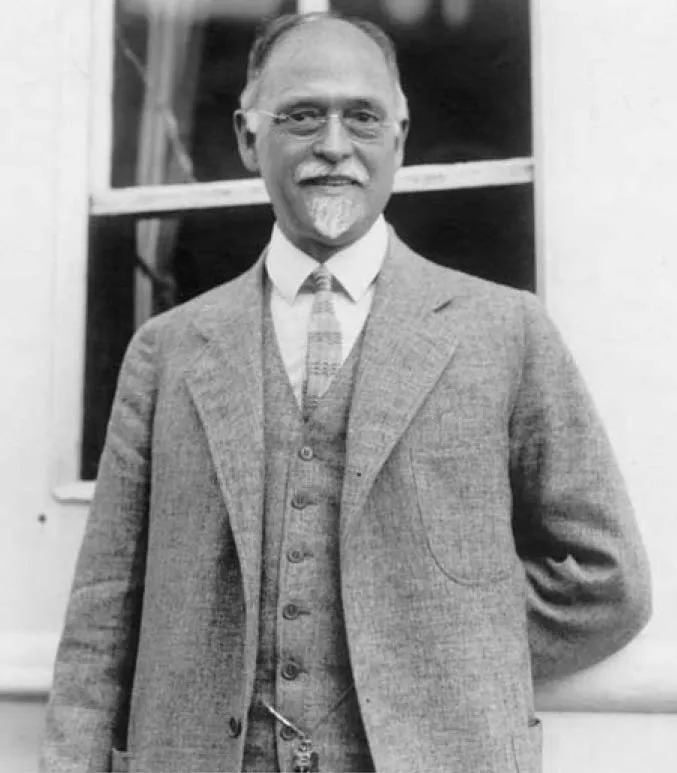
Figure 1.2 Irving Fisher, the first president of the Econometric Society (source: Manuscripts and Archives, Yale University Library).
In 1930, Ragnar returned to the US to spend a year and half there, first at Yale, at the invitation of Irving Fisher, and then at Minnesota University.15 The students were engaged in strenuous numerical exercises designed to check the methods of cycle identification that Frisch was devising, namely in constructed series with superimposed noise. The first sketches of the mechanical impulsepropagation interpretation were put to the test and were very soon presented in public, at a conference in Stockholm in June 1931.
In 1931 (published 1932), Frisch delivered the inaugural lecture for a chair that had been created for him at Oslo University. The title was itself a programme: ‘New Orientation of Economic Theory. Economics as an Experimental Natural Science’. The lecture presented a vast overview of economics, evaluating the neoclassical revolution and the emergence of the ‘subjective side of valuation activity (1870–1890)’, including the Austrians, Walras and Jevons. According to Frisch, as neither classical nor neoclassical theories were suitable for statistical checks, the price to be paid was the emergence of different antitheoretical schools: the German historicists (Schmoller) and the institutionalists (Mitchell), ‘the fundamental starting point of both these schools is the same, namely an emphasising that the economic laws are strictly bound to time and place’, although the institutionalists engaged in ‘exa...