1 New wine, old bottle
[A]ccording to typological analysis, urban existence represents the antithesis of the communal, unified, homogeneous, and primary kind of life present in ethnically grounded communities.
(Cousins and Nagpaul 1979: 422)
Many Hui and Han informants in Lanzhou explained ethnic behavior in their beloved city in terms of traditionality and modernity.1 The said pair embodied the two end points of an evaluative continuum of urban life. Behavioral patterns were immediately labeled as “modern” if they were considered as individualistic, instrumental, cosmopolitan, and universalistic, as opposed to “traditional” behavior that was communal, expressive, parochial, and particularistic.
For instance, Han Chinese, the ethnic majority group in the city, were agreed by these informants to be more calculating and detached than ethnic minority people, thereby exemplifying the end point of modernity in Lanzhou. In comparison, Hui Muslims, the largest ethnic minority group in the city, were allocated by these informants at the other end of the traditionality–modernity scale due to their consensus over Hui traditional codes of conduct. Seven specific ethnic contrasts emerged in their discourse on urban life in Lanzhou:
- Neighborhood interaction. Community involvement among the Hui was said to be mandatory and extensive, whereas neighborhood interaction among the Han was thought to be optional and limited (Chapter 2).
- Informal solidarity. Friendships among the Hui were admired as some sort of sworn brotherhoods, whereas companionships among the Han were said to be based on status match and cultural propinquity (Chapter 3).
- Network mobilization. The Hui were asserted to rely on social networks for both practical and emotional support, whereas the Han were alleged to exploit personal ties for utilitarian purposes only (Chapter 4).
- Mate selection. Parental arrangement and matchmaking were thought to be favored mate selection methods among the Hui, as opposed to romance and free choice that reportedly characterized the dating culture of the Han (Chapter 5).
- Spouse choice. The Hui were assumed to seek marriage partners from communal and blood ties such as neighbor and kin, whereas the Han were said to develop love affairs with the opposite sex in the modern contexts such as the workplace and school (Chapter 6).
- Marital homogamy. The degree of marital homogamy on ascribed status was considered to be higher among the Hui than among the Han, whereas the tendency for assortative mating on achieved status was suggested to be stronger among the Han than among the Hui (Chapter 7).
- Family behavior. The Hui were deemed to have an uncontrollable passion for large family size, favor a high birth rate, and support household extendedness, whereas the Han were believed to prefer small families, control fertility, and gravitate towards conjugality (Chapter 8).
Minority ethnicity and traditionality
This book studies these seven Hui–Han contrasts in urban life in Lanzhou to reassess an existing emphasis on the link between minority ethnicity and behavioral traditionality in urban sociology and research on ethnic groups of China. It also seeks to establish status attainment as a key variable to describe and explain ethnic behavior in urban China. To help readers understand these endeavors, it is necessary to provide a brief introduction to the theoretical background against which this book is written.
Majority–minority variation in urban behavior has been a major research topic in urban sociology. Sociological research has upheld that urban life is shown to be typologically alien to ethnic minorities, which are largely “primordial” affiliations and the sources of intense personal and parochial ties in modern cities. Ethnic enclaves and mainstream urban society are presented as the contrasting types of human settlement and as differing forms of social organization and model personality.2
Scholars often explain traditional behavior among ethnic groups in the West by stressing the multidimensional qualities of ethnicity, which in their opinion embodies the confluence of traditional values, ethnic culture, and the like. It involves unique family customs and ways of life. Members of minority groups respond to the legacies and political interpretation of ethnicity in their unique modes of coping with uncertainties in urban areas.3 For example, large family size is maintained since it can bring about more efficient allocation of resources for important matters such as elderly care and the timely distribution of social provisions among family members. Large households are preserved also because of resilient communal traditions and strong familism among ethnic minorities and new immigrants. Multigenerational households in turn support a familiar cultural environment and perpetuate ethnic heritage.4
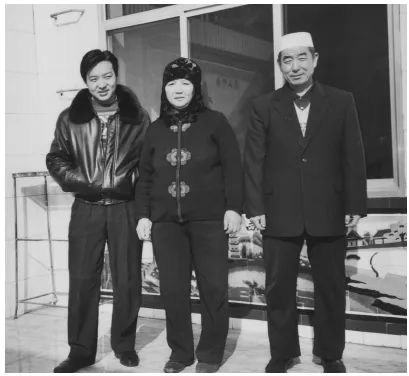
Plate 1.1 A Hui businessman, his wife, and his son
This vast literature may have guided some scholars to consider traditionality as the basic parameter in defining minority ethnicity in China. There is a consensus that the Han are more modern than minority groups, whose associational life is said to habituate to one another by virtue of close kinship, residential proximity, and primordial sentiments and thus embody a spirit of close cooperation, group goals, and communal friendliness.5 For example, the Hui community is described to be composed of strong kinship ties. Traditional behavior such as community attachment and endogamy is used as evidence of minority ethnicity or ethnic consciousness, and these modes of behaviour are explained as the outcomes of Hui primordial ties.6
While these studies have made significant contributions to research on ethnic groups in China, their authenticity and persuasiveness have been compromised due to three outstanding issues. First, it is extremely difficult, if not impossible, to ascertain whether minority groups are indeed more traditional than the Han without explicit and direct inter-group comparisons. Han modernity has been simply taken for granted and used as the background against which minority traditionality is studied. Yet the background has never been clearly demonstrated and substantiated.
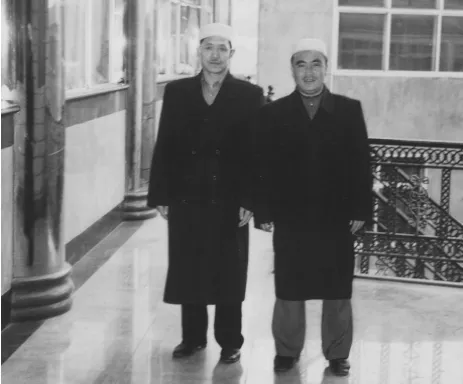
Plate 1.2 A Hui hotel owner (left) and a Hui ahong (right)
Secondly, there has been an enormous interest in the aggregate level of ethnic behavior in the existing studies of ethnic groups of China. Members of an ethnic group are assumed to behave more or less the same way irrespective of their different orientations and attributes.7 This assumption plays a key role in showing the identity of an ethnic group. However, it is a proposition that waits for statistical verification and may not be verified at all. For example, there must be intra-group variation given different life chances that members of an ethnic group have experienced.
Thirdly, minority ethnicity has been the most important and often the only independent variable in the existing studies of ethnic groups in China. Yet thus far no good justifications for this approach have been provided. The effect of social status on behavioral patterns has been inadequately discussed in the studies of ethnic groups in China, which forms a salient contrast to research on minority ethnicity in the West.
Status attainment and behavioral modernity
This book analyzes the Hui–Han contrasts in urban life to address these three outstanding issues in research on minority ethnicity of China. The analysis is guided by the status attainment model used in mainstream social science research that focuses on the effect of social status such as education and employment on behavioral patterns.8 Specifically, the analysis relies on two insights from this model. First, the analysis highlights resources associated with social status and favors a resource dependency explanation of urban life. For example, if urbanites are more likely than rural migrants to discuss major life matters with network dyads, it is not because the former are more traditional than the latter. The reverse is true. The contrast takes place mainly because rural migrants are new and foreign to (and thus do not have a netwo...