The Children of Immigrants at School explores the 21st-century consequences of immigration through an examination of how the so-called second generation is faring educationally in six countries: France, Great Britain, the Netherlands, Spain, Sweden and the United States. In this insightful volume, Richard Alba and Jennifer Holdaway bring together a team of renowned social science researchers from around the globe to compare the educational achievements of children from low-status immigrant groups to those of mainstream populations in these countries, asking what we can learn from one system that can be usefully applied in another.
Working from the results of a five-year, multi-national study, the contributors to The Children of Immigrants at School ultimately conclude that educational processes do, in fact, play a part in creating unequal status for immigrant groups in these societies. In most countries, the youth coming from the most numerous immigrant populations lag substantially behind their mainstream peers, implying that they will not be able to integrate economically and civically as traditional mainstream populations shrink. Despite this fact, the comparisons highlight features of each system that hinder the educational advance of immigrant-origin children, allowing the contributors to identify a number of policy solutions to help fix the problem. A comprehensive look at a growing global issue, The Children of Immigrants at School represents a major achievement in the fields of education and immigration studies.
eBook - ePub
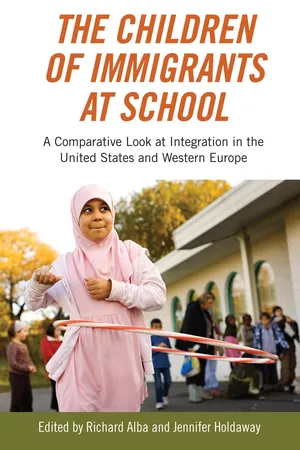
The Children of Immigrants at School
A Comparative Look at Integration in the United States and Western Europe
- 350 pages
- English
- ePUB (mobile friendly)
- Available on iOS & Android
eBook - ePub
The Children of Immigrants at School
A Comparative Look at Integration in the United States and Western Europe
About this book
Information
Topic
Scienze socialiSubtopic
PoliticaCHAPTER ONE
The Integration Imperative: Introduction
Immigration is challenging the societies of North America and Western Europe in ways that could not have been anticipated several decades ago. The wealthy societies of the West have welcomed immigrants at key moments since the mid-twentieth century; and everywhere, immigration has been associated with increasing ethnic, racial, and religious diversity (Castles and Miller 2009). In societies such as Germany or Sweden, which previously thought of themselves as homogeneous, this diversity is a novel fact that they still struggle to absorb. In countries such as the United States, where immigration was already a part of the national story, ever-rising levels of diversity are setting off anxieties among the native majority about its grip on the levers of power and status.
All of the wealthy societies will confront a transition of enormous consequence over the next several decades (Alba 2011; Coleman 2006; Myers 2007). This transition involves a decline in the numbers of young people of “native” origins, however defined, and an increase in the numbers of their age mates from immigrant backgrounds. This shift will not unfold gradually and unobtrusively but rapidly and intensely because of another basic demographic fact: everywhere there was a spurt in the number of births in the decades immediately following World War II; and the baby boomers, who are overwhelmingly members of the native majority, will be retiring during the next several decades. The exit of this group, which occupies a disproportionate share of the most skilled and best-paying jobs, will create powerful churning in the labor market. The question that will have to be faced everywhere is: Who will replace the baby boomers?
One conclusion seems inescapable: these societies will have to rely more and more on young people of nonnative origins to sustain their economic, cultural, and social vitality. These young people will form not only an increasing proportion of the workforce in general, but they will have to make up a larger share of its upper tiers, where highly skilled positions with considerable authority over others are concentrated. The imperative is therefore to integrate young people from immigrant-origin minorities—Turks in Germany, North Africans in France, Mexicans and other Latin Americans in the United States. Integration implies that young people of minority origins are prepared to function in the work force in ways that are similar to those of well-trained natives. If integration falters or remains very incomplete, these societies risk losing their competitive position within the world economy, suffering a decline in the living standards of their populations, and perhaps failing to be able to support their growing elderly populations.
The imperative of integration follows not only from the utilitarian calculus of demographic and economic forces, but also from the moral logic of social justice. First-generation immigrants enter host societies that are more or less welcoming, but the new arrivals are not expected, and indeed do not always wish, to become full members of the national community. Their children, however, are generally citizens who should have equal rights to all the opportunities and public goods provided to the children of native parents. The processes endowing children with capabilities that unfold during adulthood are determined at levels beyond the reach of individuals and families (Sen 1999). Nevertheless, the children of immigrants are equally entitled to realize their full potential as individuals, workers, and citizens; and to do this they must acquire what James Fishkin (1997) refers to as “the essential prerequisites for adult participation in society.” In this context, integration takes on a broad meaning and involves full and robust membership in the new society.
Obviously, the success of integration depends to a great extent on the performance of educational systems. The ability of schools in the United States and Western Europe to integrate children growing up in low-status immigrant homes is the concern of this volume. In the countries that have taken in large numbers of immigrants, such children pose a variety of challenges to schools: they frequently come from homes where an immigrant language, one other than the mainstream language of schools, predominates; and their parents typically have much lower levels of education than do parents of ethnic-majority students. Sometimes immigrant parents are even illiterate. While immigrant-origin students can reach the top of an educational system—in the United States, it is no longer remarkable when they are the valedictorians of their high schools—it is also common for them to be prominent among those at the bottom and, in fact, to leave school early, without credentials that have value in the labor market.
This book is founded on comparisons of six countries that have received substantial immigration since the middle of the twentieth century: France, Great Britain, the Netherlands, Spain, Sweden, and the United States. It takes advantage of variations across these countries in the organization and functioning of school systems. For example, the systems differ in their tracking schemes: some of the systems of northern continental Europe, like the Dutch one, shunt students at an early age along separate tracks heading toward different educational and labor-market outcomes, while the systems of France, Great Britain, and the United States hold students longer within comprehensive educational contexts, allowing them to keep their options open. The main question this book entertains is: What consequences do the varying features of school systems have for children coming from immigrant homes? Or, alternatively put, what can we learn from one system that can be usefully applied in another? We believe that there is much to be gained from a rigorous comparison of how immigrant-origin students fare in different contexts, and this is the major purpose of this volume.
The Second Generation
Observers have long recognized that the integration of immigrants is less determinative of the future of new racial/ethnic groups than is the integration of their children and the generations that come after. The term “second generation” is often taken in a broad sense to encompass children who grow up in immigrant homes, whether they are born in the receiving society or enter it at a young age; we generally use it in this sense throughout this volume. In the more precise language of social-science research, the term is reserved for those children of immigrants who are born in the host society, while the children who arrive at a young age and thus receive part or all of their schooling in the new society are called the “1.5” generation.1
Regardless of where they are born, children growing up in immigrant homes already constitute a large share of the child populations of rich societies, and the demography of these societies more or less guarantees that this proportion will continue to increase. Because the fertility of the native majority is lower than that of immigrant populations, in most wealthy countries, the native-origin population will shrink in relative, if not absolute, terms.
For example: in the Netherlands as of 2008, young people of immigrant origins account for almost a quarter (22.5 percent) of the Dutch population under the age of twenty-one (Statistics Netherlands 2009). This proportion is much higher in big cities such as Amsterdam and Rotterdam, where the immigrant population is concentrated. In those two cities, immigrant-origin children form the majority of students (Crul and Doomernik 2003). Those born in the Netherlands make up by now the largest share of immigrant-origin children, and the fraction belonging to the 1.5 generation is shrinking because of the restrictions on immigration and the growing weight of immigrants in the child-bearing population. Most immigrant-origin children, more than two-thirds overall, have non-Western origins, according to Statistics Netherlands (2009), meaning that their parents come from Morocco, Turkey, or one of the former Dutch colonies.
In Sweden, children of immigrant origins were one-quarter of all young persons under the age of eighteen in 2000 (Westin 2003). The bulk of the children growing up in immigrant families, more than three-quarters, were born in Sweden. Most of these Swedish-born children have parents who immigrated from neighboring countries, either in Scandinavia or elsewhere in Northern Europe (e.g., Germany, Great Britain), and thus face modest challenges in adjusting to Swedish schools. However, the majority of the 1.5 generation came from Eastern Europe (of whom a large number are refugees from the former Yugoslavia) or from outside of Europe. Many of them are facing considerable challenges in the school system.
In the United States as of 2009, almost one-quarter of all children (persons under the age of eighteen) come from immigrant families. The great majority of immigrant-origin children, more than three-quarters, belongs to the second generation in the strict sense of that term (Innocenti Insight 2009; Passel 2011). Reflecting the overall patterns of immigration, about half of the children are of Latin American origin, with parents from Mexico or Central and South America. Of these, children of Mexican origins constitute the majority. Another tenth come from Caribbean backgrounds, approximately half of whom have parents from the Spanish-speaking Caribbean (Cuba, the Dominican Republic). A quarter of immigrant-origin children are of Asian background. The families of these children are very diverse in their national origins, though the largest groups are from the Philippines, Vietnam, India, and mainland China, in that order. The remainder has parents from Europe, Canada, and Africa.
In France, about one-sixth (17 percent) of all children are growing up in immigrant homes. Half of these children have parents who have come from Africa, almost all from countries that were formerly French colonies (Kirszbaum, Brinbaum, and Simon 2009). The bulk of these immigrant parents hail from North Africa, but there are sizable contingents from sub-Saharan countries such as Mali and Senegal. Another third of immigrant-origin children have family roots elsewhere in Europe, mostly in nearby southern European countries, with the largest group originating in Portugal. The remaining children in immigrant families are predominantly of Asian backgrounds, and in this category the Turks form the largest group, followed by Southeast Asians.
In the United Kingdom, the proportion of all children who are in immigrant families is also about a sixth, and in this case, too, the immigrations from former colonies are preponderant. The biggest group among the immigrant-origin children, a plurality of about 40 percent, has parents from Asia, from Pakistan, India, Bangladesh, and China, in that order (Crawley 2009). Another 20 percent has parents from Africa, mostly from former colonies such as Ghana, Kenya, and Nigeria. Despite the visibility of the Afro-Caribbean migration to Britain, the children of these origins are a small group, just 5 percent. Most of the remaining children in immigrant families are of European background, with the Irish composing the single largest group in this category.
There are not yet Spanish data comparable to those enumerated above. However, we can get a glimpse of the changes underway among children from recent birth data. They show that in 2009, 24 percent of the babies born in the country had at least one parent who was a foreigner (INE 2010). The great majority of these parents came from outside of Europe, with Africa and South America the predominant continents of origin. Even among the Europeans, a large number of parents came from poorer countries of Eastern Europe, with Romanians alone accounting for more than 40 percent.
The Immigration Backgrounds of the Second Generation
All immigrations are not the same when it comes to the situation of the second generation. Some involve many individuals with advanced educational credentials—so called high human-capital immigrations—and produce second generations that frequently outperform native children at school. Others, especially those involving immigrants with low levels of schooling (and sometimes no schooling at all), lead to second generations whose members generally are not well prepared to excel in complex school systems, where sustained academic commitment and strategizing about educational choices are required to achieve the most favorable outcomes. In the United States, immigrants from several Asian countries, e.g., India, exemplify immigrations of the first type, and the academic achievements of their children are on average very high. Immigrants from a number of Latin American countries, e.g., Mexico, exemplify the second, and the relatively rates of high school dropout and low rates of university graduation for their children have long been a matter of concern (e.g., Telles and Ortiz 2008). If the nature of an immigration stream matters, it is also the case that the mix of these streams varies across receiving societies, and that the characteristics of the average immigrant received, say, by Sweden are not the same as those of the average new arrival in Spain. If we hope to disentangle the impacts of schools on the children of immigrants, we first have to sort out some key differences among the immigrant parents themselves.
When it comes to the educational inequalities between immigrant-origin and native children, migrations by low-skilled migrants seeking jobs in the bottom tiers of a rich society’s labor market make up the most critical stream. Most of the subsequent essays in this volume focus largely or exclusively on the second generations from these migrations, typified not only by Mexicans in the United States but also by Turks in the Netherlands and Algerians in France. Generally large in size and usually coming from the countries of the global South, whose citizens are perceived to be culturally different from the mainstream of the countries of reception and frequently ethno-racially different, too, the labor migrations of the post–World War II era have created new minorities in many countries or expanded old ones (Portes and Zhou 1993). (Because of the multiple dimensions—socioeconomic and ethno-racial, above all—that distinguish these immigrants from majority populations in receiving societies, we will often refer to them as “low-status” immigrants.) Though often conceived as temporary by the governments that promote them, labor migrations generally lead to permanent settlement by some portion of the immigrant group, which finds the opportunities in the new society, however humble, preferable to those it would face upon return.
The governments and employers of the wealthy countries of the West had a major hand in the labor migrations of the second half of the twentieth century (Castles and Miller 2009). In the United States, the beginnings of the contemporary labor immigration can be spotted in the Bracero Program, which was initiated during World War II to fill the need for labor at a time when many American men were in uniform. In Europe, the labor needs that gave rise to large-scale labor migrations came after the war, during the rebuilding of damaged infrastructures and economies, when additional labor had to be imported because of the massive losses of manpower due to the war itself. France, for instance, established its office of immigration (ONI) in 1945. Germany had perhaps the exemplary program during the postwar period, recruiting so-called guestworkers, who were expected to come without their families and to work for predetermined periods and then return home (Bade 1994).
What started as temporary immigration initiated by the state often turned into permanent settlement. Family reunification has been the key policy provision that has played the role of catalyst in this process and allowed labor immigration to continue to grow in many countries. In the United States, a series of critical laws established family reunification as the primary principle that would govern legal admission. It was a centerpiece in the watershed 1965 act, which has shaped the landscape of immigration ever since its passage. In Europe, active recruitment of low-wage immigrants came to an end in most countries in the early 1970s when their economies were rattled by the shock of oil-price rises. However, immigrant populations have continued to grow as a result of the family-reunification parts of immigration law, which are found in all countries (although there have been some recent attempts to narrow them). Indeed, the end of active recruitment precipitated a process of settlement for many immigrant groups. The Turks in the Netherlands are a case in point: many of the guestworkers did not return home but found ways to stay and to bring their families. Family reunification accelerated with the official halt to guestworker recruitment in 1973, when the immigrants realized that entry into Western Europe would become more difficult. The Turkish population continues to grow through family-reunification immigration, which now often occurs in the form of marriages between second-generation Turks and partners from the home regions of their parents.
In both the United States and Europe, labor immigration also persists in unauthorized ways, with undocumented immigrants often receiving legal sanction after a period of residence and work through amnesties, which have occurred in the United States and in several Western European countries. In the United States, undocumented immigration appears to occur in roughly equal measure as result of clandestine border crossing, especially at the Rio Grande, and visa overstaying. As of 2010, the total number of the unauthorized has been estimated at eleven million, truly an astonishing figure in a nation with a population of just over three-hundred million—according to this accounting, about one of every thirty residents lacks the legal rights to live and work there (Passel 2006; Passel and Cohn 2008). The United States has had one amnesty, which was legislated in the 1986 Immigration Reform and Control Act and resulted in about three million grants of permanent residence to the previously undocumented. Whether and under what conditions the currently undocumented can gain legal status continues, as we complete this book, to be the subject of fierce debate in Congress and the media.
The unuathorized population is not as large in Western Europe, in part because a number of major European countries have more stringent internal controls than the United States does—e.g., the presentation of identity documents is required in many more situations. Its size is estimated at between five and seven-and-one-half million (Castles and Miller 2009, 238). Much of this population comes from the Mediterranean region, and a smaller share comes from sub-Saharan Africa. It is thought to be particularly large in the countries of southern Europe, including Spain, one of the countries in our study. Several of the European countries with sizable undocumented populations have had multiple regularizations—this is true of Spain, for instance, which in 2005 decreed a large-scale regularization that gave legal status to some 700–800 thousand immigrants, including many from Latin America (Arango and Jachimowicz 2005). In a number of countries, including France, Spain, and the United States, schools must at times address the problems of children whose parents are illegally resident or who are so themselves.
Complicating the reception of some labor migrants and their children is their origin in former colonies of the receiving societies. Postcolonial immigrations are initiated when former colonies gain independence. Simultaneous with independence, and to some degree after it, occurs an outpouring of former colonists and of the members of the native population who supported colonial rule or, at least, occupied relatively privileged positions under it. Coming afterwards, often enough, are labor migrations, since citizens of the newly independent countries remain oriented toward the former colonizer, whose language they often speak and whose ways seem familiar. Algeria provides an example, since hundreds of thousands migrated to France after independence, in search of work.
The position of the second generation coming from postcolonial immigrations is affected by the “ethnic” status of its parents. The children of the former colonists are often seamlessly integrated into the societal mainstream—certainly, this appears to have happened to the children of the former Algerian colonists (Alba and Silberman 2002). The children of the immigrants who come afterwards as labor migrants are at best no different from the children of other Third World immigrants; at worst, they are confronted with more intense prejudice because of the stereotypes brought by white elites from their former colonies (Lucassen 2005; Silberman 2011).
If labor immigrants can be regarded on the whole as individuals who have “chosen” to leave their countries of origin and migrate abroad, usually in an effort to improve their economic situations and their children’s opportunities, that is not true on the whole for another important immigration type that can play a role in second-generation educational...
Table of contents
- Cover Page
- Title Page
- Copyright Page
- Contents
- Preface
- 1 The Integration Imperative: Introduction
- 2 Educating the Children of Immigrants in Old and New Amsterdam
- 3 Different Systems, Similar Results: Youth of Immigrant Origin at School in California and Catalonia
- 4 Second-Generation Attainment and Inequality: Primary and Secondary Effects on Educational Outcomes in Britain and the United States
- 5 How Similar Educational Inequalities Are Constructed in Two Different Systems, France and the United States: Why They Lead to Disparate Labor-Market Outcomes
- 6 Promising Practices: Preparing Children of Immigrants in New York and Sweden
- 7 The Children of Immigrants at School: Conclusions and Recommendations
- Bibliography
- Contributors
- Index
Trusted by 375,005 students
Access to over 1.5 million titles for a fair monthly price.
Study more efficiently using our study tools.
Frequently asked questions
Yes, you can cancel anytime from the Subscription tab in your account settings on the Perlego website. Your subscription will stay active until the end of your current billing period. Learn how to cancel your subscription
No, books cannot be downloaded as external files, such as PDFs, for use outside of Perlego. However, you can download books within the Perlego app for offline reading on mobile or tablet. Learn how to download books offline
Perlego offers two plans: Essential and Complete
- Essential is ideal for learners and professionals who enjoy exploring a wide range of subjects. Access the Essential Library with 800,000+ trusted titles and best-sellers across business, personal growth, and the humanities. Includes unlimited reading time and Standard Read Aloud voice.
- Complete: Perfect for advanced learners and researchers needing full, unrestricted access. Unlock 1.5M+ books across hundreds of subjects, including academic and specialized titles. The Complete Plan also includes advanced features like Premium Read Aloud and Research Assistant.
We are an online textbook subscription service, where you can get access to an entire online library for less than the price of a single book per month. With over 1.5 million books across 990+ topics, we’ve got you covered! Learn about our mission
Look out for the read-aloud symbol on your next book to see if you can listen to it. The read-aloud tool reads text aloud for you, highlighting the text as it is being read. You can pause it, speed it up and slow it down. Learn more about Read Aloud
Yes! You can use the Perlego app on both iOS and Android devices to read anytime, anywhere — even offline. Perfect for commutes or when you’re on the go.
Please note we cannot support devices running on iOS 13 and Android 7 or earlier. Learn more about using the app
Please note we cannot support devices running on iOS 13 and Android 7 or earlier. Learn more about using the app
Yes, you can access The Children of Immigrants at School by Richard Alba,Jennifer Holdaway, Richard Alba, Jennifer Holdaway in PDF and/or ePUB format, as well as other popular books in Scienze sociali & Politica. We have over 1.5 million books available in our catalogue for you to explore.