The surprising alliance between Japan and pro-Tokyo African Americans during World War II
In November 1942 in East St. Louis, Illinois a group of African Americans engaged in military drills were eagerly awaiting a Japanese invasion of the U.S.— an invasion that they planned to join. Since the rise of Japan as a superpower less than a century earlier, African Americans across class and ideological lines had saluted the Asian nation, not least because they thought its very existence undermined the pervasive notion of "white supremacy." The list of supporters included Booker T. Washington, Marcus Garvey, and particularly W.E.B. Du Bois.
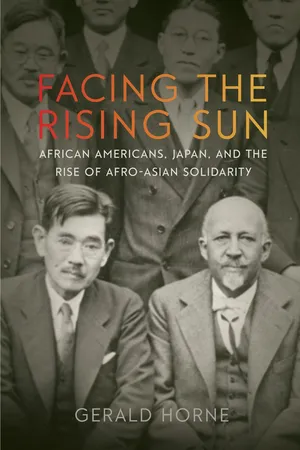
Facing the Rising Sun tells the story of the widespread pro-Tokyo sentiment among African Americans during World War II, arguing that the solidarity between the two groups was significantly corrosive to the U.S. war effort. Gerald Horne demonstrates that Black Nationalists of various stripes were the vanguard of this trend—including followers of Garvey and the precursor of the Nation of Islam. Indeed, many of them called themselves "Asiatic", not African. Following World War II, Japanese-influenced "Afro-Asian" solidarity did not die, but rather foreshadowed Dr. Martin Luther King's tie to Gandhi's India and Black Nationalists' post-1970s fascination with Maoist China and Ho's Vietnam.
Based upon exhaustive research, including the trial transcripts of the pro-Tokyo African Americans who were tried during the war, congressional archives and records of the Negro press, this book also provides essential background for what many analysts consider the coming "Asian Century." An insightful glimpse into the Black Nationalists' struggle for global leverage and new allies, Facing the Rising Sun provides a complex, holistic perspective on a painful period in African American history, and a unique glimpse into the meaning of "the enemy of my enemy is my friend."
eBook - ePub
Facing the Rising Sun
African Americans, Japan, and the Rise of Afro-Asian Solidarity
- 240 pages
- English
- ePUB (mobile friendly)
- Available on iOS & Android
eBook - ePub
About this book
Information
Topic
StoriaSubtopic
Storia del XX secoloTable of contents
- Cover
- Title Page
- Copyright Page
- Contents
- Introduction
- 1. Japan Rises/Negroes Cheer
- 2. Harlem, Addis Ababa—and Tokyo
- 3. Japan Establishes a Foothold in Black America
- 4. White Supremacy Loses “Face”
- 5. Pro-Tokyo Negroes Convicted and Imprisoned
- 6. Japanese Americans Interned, U.S. Negroes Next?
- 7. “Brown Americans” Fight “Brown Japanese” in the Pacific War?
- 8. Aftermath
- Notes
- Index
- About the Author
Trusted by 375,005 students
Access to over 1.5 million titles for a fair monthly price.
Study more efficiently using our study tools.
Frequently asked questions
Yes, you can cancel anytime from the Subscription tab in your account settings on the Perlego website. Your subscription will stay active until the end of your current billing period. Learn how to cancel your subscription
No, books cannot be downloaded as external files, such as PDFs, for use outside of Perlego. However, you can download books within the Perlego app for offline reading on mobile or tablet. Learn how to download books offline
Perlego offers two plans: Essential and Complete
- Essential is ideal for learners and professionals who enjoy exploring a wide range of subjects. Access the Essential Library with 800,000+ trusted titles and best-sellers across business, personal growth, and the humanities. Includes unlimited reading time and Standard Read Aloud voice.
- Complete: Perfect for advanced learners and researchers needing full, unrestricted access. Unlock 1.5M+ books across hundreds of subjects, including academic and specialized titles. The Complete Plan also includes advanced features like Premium Read Aloud and Research Assistant.
We are an online textbook subscription service, where you can get access to an entire online library for less than the price of a single book per month. With over 1.5 million books across 990+ topics, we’ve got you covered! Learn about our mission
Look out for the read-aloud symbol on your next book to see if you can listen to it. The read-aloud tool reads text aloud for you, highlighting the text as it is being read. You can pause it, speed it up and slow it down. Learn more about Read Aloud
Yes! You can use the Perlego app on both iOS and Android devices to read anytime, anywhere — even offline. Perfect for commutes or when you’re on the go.
Please note we cannot support devices running on iOS 13 and Android 7 or earlier. Learn more about using the app
Please note we cannot support devices running on iOS 13 and Android 7 or earlier. Learn more about using the app
Yes, you can access Facing the Rising Sun by Gerald Horne in PDF and/or ePUB format, as well as other popular books in Storia & Storia del XX secolo. We have over 1.5 million books available in our catalogue for you to explore.