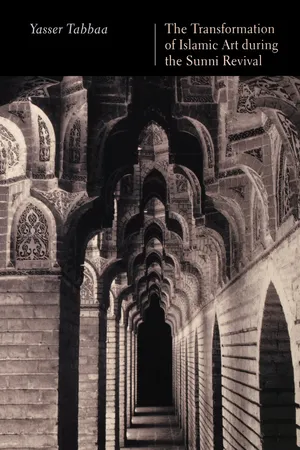
The Transformation of Islamic Art during the Sunni Revival
- 224 pages
- English
- PDF
- Available on iOS & Android
The Transformation of Islamic Art during the Sunni Revival
About this book
The transformation of Islamic architecture and ornament during the eleventh and twelfth centuries signaled profound cultural changes in the Islamic world. Yasser Tabbaa explores with exemplary lucidity the geometric techniques that facilitated this transformation, and investigates the cultural processes by which meaning was produced within the new forms. Iran, Iraq, and Syria saw the development of proportional calligraphy, vegetal and geometric arabesque, muqarnas (stalactite) vaulting, and other devices that became defining features of medieval Islamic architecture. Ultimately, the forms and themes described in this book shaped the development of Mamluk architecture in Egypt and Syria, and by extension, the entire course of North African and Andalusian architecture as well. These innovations developed and were disseminated in a highly charged atmosphere of confrontation between the Seljuk and post-Seljuk proponents of the traditionalist Sunni revival and their main opponents in Fatimid Egypt. These forms stood as visual signs of allegiance to the orthodox Abbasid caliphate and of difference from the heterodox Fatimids. Tabbaa proposes that their rapid spread throughout the Islamic world operated within a system of reciprocating, ceremonial gestures, which conveyed a new and formal language that helped negotiate the gap between the myth of a unified Sunni Islam and its actual political fragmentation. In subject matter and approach, The Transformation of Islamic Art during the Sunni Revival makes original contributions to the study of art, revealing that this relatively neglected sector of medieval art and architecture is of critical importance for reevaluating the entire field of Islamic studies. It challenges the essentialist and positivist approaches that still permeate the study of Islamic art, and offers a historical and semiotic alternative for exploring meaning within ruptures of change.
Frequently asked questions
- Essential is ideal for learners and professionals who enjoy exploring a wide range of subjects. Access the Essential Library with 800,000+ trusted titles and best-sellers across business, personal growth, and the humanities. Includes unlimited reading time and Standard Read Aloud voice.
- Complete: Perfect for advanced learners and researchers needing full, unrestricted access. Unlock 1.4M+ books across hundreds of subjects, including academic and specialized titles. The Complete Plan also includes advanced features like Premium Read Aloud and Research Assistant.
Please note we cannot support devices running on iOS 13 and Android 7 or earlier. Learn more about using the app.
Information
Table of contents
- Cover
- Title
- Copyright
- Contents
- List of Illustrations
- Preface and Acknowledgments
- Introduction
- 1 The Sunni Revival
- 2 The Transformation of Qur‘anic Writing
- 3 The Public Text
- 4 The Girih Mode: Vegetal and Geometric Arabesque
- 5 Muqarnas Vaulting and Ash‘ari Occasionalism
- 6 Stone Muqarnas and Other Special Devices
- 7 The Mediation of Symbolic Forms
- Notes
- Abbreviations
- Bibliography
- Index