- 80 pages
- English
- ePUB (mobile friendly)
- Available on iOS & Android
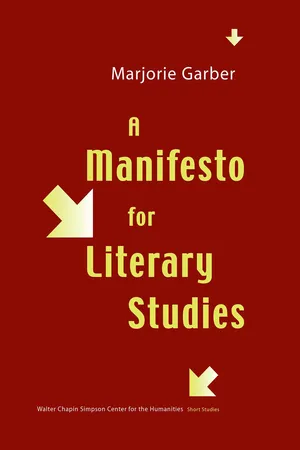
A Manifesto for Literary Studies
About this book
" A Manifesto for Literary Studies, " writes Marjorie Garber, "is an attempt to remind us of the specificity of what it means to ask literary questions, and the pleasure of thinking through and with literature. It is a manifesto in the sense that it invites strong declarations and big ideas, rather than impeccable small contributions to edifices long under construction." Known for her timely challenges to the preconceptions and often unquestioned boundaries that circumscribe our culture, Garber's beautifully crafted arguments situate "big public questions of intellectual importance" - such as human nature and historical correctness - within the practice of literary historians and critics. This manifesto revives the ancient craft whose ultimate focus is language in action. In this book, Garber passionately states that "the future importance of literary studies - and, if we care about such things, its intellectual and cultural prestige both among the other disciplines and in the world - will come from taking risks, and not from playing it safe."
Frequently asked questions
- Essential is ideal for learners and professionals who enjoy exploring a wide range of subjects. Access the Essential Library with 800,000+ trusted titles and best-sellers across business, personal growth, and the humanities. Includes unlimited reading time and Standard Read Aloud voice.
- Complete: Perfect for advanced learners and researchers needing full, unrestricted access. Unlock 1.4M+ books across hundreds of subjects, including academic and specialized titles. The Complete Plan also includes advanced features like Premium Read Aloud and Research Assistant.
Please note we cannot support devices running on iOS 13 and Android 7 or earlier. Learn more about using the app.
Information
Table of contents
- Cover
- Short Studies from the Walter Chapin Simpson Center for the Humanities
- Title Page
- Copyright
- Contents
- Introduction: Asking Literary Questions
- Who Owns “Human Nature”?
- Historical Correctness: The Use and Abuse of History for Literature