- 696 pages
- English
- ePUB (mobile friendly)
- Available on iOS & Android
eBook - ePub
TOGAF® Version 9.1
About this book
For trainers free additional material of this book is available. This can be found under the "Training Material" tab. Log in with your trainer account to access the material.
TOGAF is a framework - a detailed method and a set of supporting tools - for developing an enterprise architecture, developed by members of The Open Group Architecture Forum.
TOGAF Version 9.1 is a maintenance update to TOGAF 9, addressing comments raised since the introduction of TOGAF 9 in 2009. It retains the major features and structure of TOGAF 9, thereby preserving existing investment in TOGAF, and adds further detail and clarification to what is already proven.It may be used freely by any organization wishing to develop an enterprise architecture for use within that organization (subject to the Conditions of Use).
This Book is divided into seven parts:
Part I - Introduction
This part provides a high-level introduction to the key concepts of enterprise architecture and in particular the TOGAF approach. It contains the definitions of terms used throughout TOGAF and release notes detailing the changes between this version and the previous version of TOGAF.
Part II - Architecture Development Method
This is the core of TOGAF. It describes the TOGAF Architecture Development Method (ADM) – a step-by-step approach to developing an enterprise architecture.
Part III - ADM Guidelines & Techniques
This part contains a collection of guidelines and techniques available for use in applying TOGAF and the TOGAF ADM.
Part IV - Architecture Content Framework
This part describes the TOGAF content framework, including a structured metamodel for architectural artifacts, the use of re-usable architecture building blocks, and an overview of typical architecture deliverables.
Part V - Enterprise Continuum & Tools
This part discusses appropriate taxonomies and tools to categorize and store the outputs of architecture activity within an enterprise.
Part VI - TOGAF Reference Models
This part provides a selection of architectural reference models, which includes the TOGAF Foundation Architecture, and the Integrated Information Infrastructure Reference Model (III-RM).
Part VII Architecture Capability Framework
This section looks at roles, Governance, compliance skills and much more practical guidance
Information
Topic
EducationSubtopic
Architecture GeneralTOGAF Version 9.1
Part I:
Introduction
The Open Group
Chapter 1
Introduction
TOGAF is a framework — a detailed method and a set of supporting tools — for developing an enterprise architecture. It may be used freely by any organization wishing to develop an enterprise architecture for use within that organization (see Section 4.5.1).
TOGAF is developed and maintained by members of The Open Group, working within the Architecture Forum (refer to www.opengroup.org/architecture). The original development of TOGAF Version 1 in 1995 was based on the Technical Architecture Framework for Information Management (TAFIM), developed by the US Department of Defense (DoD). The DoD gave The Open Group explicit permission and encouragement to create TOGAF by building on the TAFIM, which itself was the result of many years of development effort and many millions of dollars of US Government investment.
Starting from this sound foundation, the members of The Open Group Architecture Forum have developed successive versions of TOGAF and published each one on The Open Group public web site.
If you are new to the field of enterprise architecture and/or TOGAF, you are recommended to read the
Executive Overview (refer to Section 1.2), where you will find answers to questions such as:

1.1 Structure of the TOGAF Document
The structure of the TOGAF documentation reflects the structure and content of an Architecture
Capability within an enterprise, as shown in Figure 1-1.
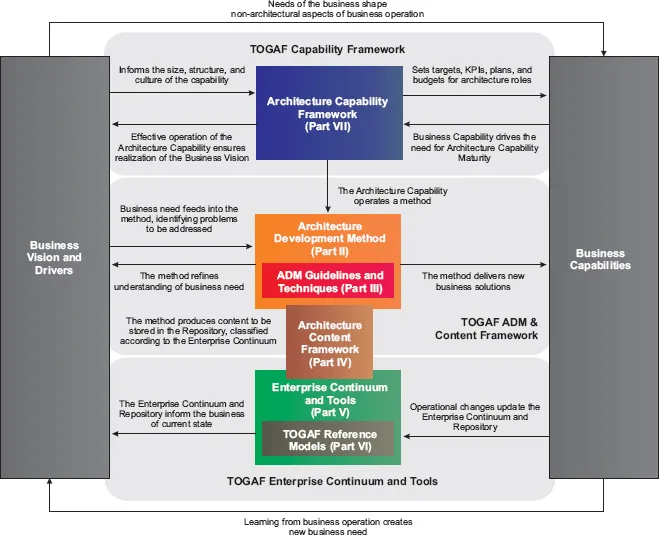
Figure 1-1 Structure of the TOGAF Document
There are seven parts to the TOGAF document:
PART I | (Introduction) This part provides a high-level introduction to the key concepts of enterprise architecture and in particular the TOGAF approach. It contains the definitions of terms used throughout TOGAF and release notes detailing the changes between this version and the previous version of TOGAF. |
PART II | (Architecture Development Method) This is the core of TOGAF. It describes the TOGAF Architecture Development Method (ADM) — a step-by-step approach to developing an enterprise architecture. |
PART III | (ADM Guidelines and Techniques) This part contains a collection of guidelines and techniques available for use in applying TOGAF and the TOGAF ADM. |
PART IV | (Architecture Content Framework) This part describes the TOGAF content framework, including a structured metamodel for architectural artifacts, the use of re-usable architecture building blocks, and an overview of typical architecture deliverables. |
PART V | (Enterprise Continuum & Tools) This part discusses appropriate taxonomies and tools to categorize and store the outputs of architecture activity within an enterprise. |
PART VI | (TOGAF Reference Models) This part provides a selection of architectural reference models, which includes the TOGAF Foundation Architecture, and the Integrated Information Infrastructure Reference Model (III-RM). |
PART VII | (Architecture Capability Framework) This part discusses the organization, processes, skills, roles, and responsibilities required to establish and operate an architecture function within an enterprise. |
The intention of dividing the TOGAF specification into these independent parts is to allow for different areas of specialization to be considered in detail and potentially addressed in isolation. Although all parts work together as a whole, it is also feasible to select particular parts for adoption while excluding others. For example, an organization may wish to adopt the ADM process, but elect not to use any of the materials relating to Architecture Capability.
As an open framework, such use is encouraged, particularly in the following situations:
1.2 Executive Overview
This section provides an executive overview of enterprise architecture, the basic concepts of what it is (not just another name for IT Architecture), and why it is needed. It provides a summary of the benefits of establishing an enterprise architecture and adopting TOGAF to achieve that.
What is an enterprise?
TOGAF defines “enterprise” as any collection of organizations that has a common set of goals. For example, an enterprise could be a government agency, a whole corporation, a division of a corporation, a single department, or a chain of geographically distant organizations linked together by common ownership.
The term “enterprise” in the context of “enterprise architecture” can be used to denote both an entire enterprise — encompassing all of its information and technology services, processes, and infrastructure — and a specific domain within the enterprise. In both cases, the architecture crosses multiple systems, and multiple functional groups within the enterprise.
Confusion often arises from the evolving nature of the term “enterprise”. An extended enterprise nowadays frequently includes partners, suppliers, and customers. If the goal is to integrate an extended enterprise, then the enterprise comprises the partners, suppliers, and customers, as well as internal business units.
The business operating model concept is useful to determine the nature and scope of the enterprise architecture within an organization. Large corporations and government agencies may comprise multiple enterprises, and may develop and maintain a number of independent enterprise architectures to address each one. However, there is often much in common about the information systems in each enterprise, and there is usually great potential for ga...
Table of contents
- Cover
- Title Page
- Copyright
- Contents
- List of Figures
- Preface
- About The Open Group
- Participants
- Trademarks
- Acknowledgements
- Referenced Documents
- Part I. Introduction
- Part II. Architecture Development Method (ADM)
- Part III. ADM Guidelines and Techniques
- Part IV. Architecture Content Framework
- Part V. Enterprise Continuum and Tools
- Part VI. TOGAF Reference Models
- Part VII. Architecture Capability Framework
- Part VIII. Appendices
- Index
Trusted by 375,005 students
Access to over 1.5 million titles for a fair monthly price.
Study more efficiently using our study tools.
Frequently asked questions
Yes, you can cancel anytime from the Subscription tab in your account settings on the Perlego website. Your subscription will stay active until the end of your current billing period. Learn how to cancel your subscription
No, books cannot be downloaded as external files, such as PDFs, for use outside of Perlego. However, you can download books within the Perlego app for offline reading on mobile or tablet. Learn how to download books offline
Perlego offers two plans: Essential and Complete
- Essential is ideal for learners and professionals who enjoy exploring a wide range of subjects. Access the Essential Library with 800,000+ trusted titles and best-sellers across business, personal growth, and the humanities. Includes unlimited reading time and Standard Read Aloud voice.
- Complete: Perfect for advanced learners and researchers needing full, unrestricted access. Unlock 1.5M+ books across hundreds of subjects, including academic and specialized titles. The Complete Plan also includes advanced features like Premium Read Aloud and Research Assistant.
We are an online textbook subscription service, where you can get access to an entire online library for less than the price of a single book per month. With over 1.5 million books across 990+ topics, we’ve got you covered! Learn about our mission
Look out for the read-aloud symbol on your next book to see if you can listen to it. The read-aloud tool reads text aloud for you, highlighting the text as it is being read. You can pause it, speed it up and slow it down. Learn more about Read Aloud
Yes! You can use the Perlego app on both iOS and Android devices to read anytime, anywhere — even offline. Perfect for commutes or when you’re on the go.
Please note we cannot support devices running on iOS 13 and Android 7 or earlier. Learn more about using the app
Please note we cannot support devices running on iOS 13 and Android 7 or earlier. Learn more about using the app
Yes, you can access TOGAF® Version 9.1 by The Open Group in PDF and/or ePUB format, as well as other popular books in Education & Architecture General. We have over 1.5 million books available in our catalogue for you to explore.